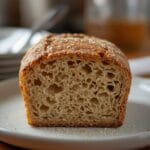
Description
This recipe for rustic rye sourdough bread delivers a hearty, flavorful loaf with a distinctive tangy rye taste. It uses a slow-rise method to develop deep flavors and a satisfying texture, perfect for sandwiches, toast, or alongside soup. The process is straightforward, making it accessible for home bakers to create a traditional, rustic loaf.
Ingredients
Instructions
1. Activate Your Starter and Mix the Wet Ingredients: In a large mixing bowl, combine your active rye sourdough starter with the warm water and molasses. Stir well until the starter is mostly dissolved and the molasses is fully incorporated. The mixture should look cloudy and slightly frothy.
2. Combine Dry Ingredients: In a separate bowl, whisk together the rye flour, all-purpose flour, salt, and optional caraway seeds. Make sure the salt is evenly distributed throughout the flours.
3. Form the Dough: Gradually add the dry ingredients to the wet ingredients, mixing with a sturdy spoon or your hands until a shaggy dough forms. It will be sticky, but resist the urge to add more flour at this stage. Once combined, cover the bowl with plastic wrap or a damp kitchen towel.
4. First Rise (Bulk Fermentation): Let the dough rest at room temperature (ideally 68-72 F) for 8 to 12 hours, or until it has noticeably increased in size and looks bubbly. If your kitchen is cooler, it might take longer. This slow rise is essential for flavor development.
5. Shape the Loaf: Gently turn the dough out onto a lightly floured surface. Fold the edges of the dough towards the center a few times to create some tension on the surface, forming a round or oval loaf. Avoid overworking the dough.
6. Second Rise (Proofing): Place the shaped dough into a lightly floured proofing basket (banneton) or a bowl lined with a floured kitchen towel, seam-side up. Cover loosely and let it rise for another 2 to 4 hours, or until it looks puffy and springs back slowly when gently poked.
7. Preheat Oven and Dutch Oven: About 30 minutes before baking, place a Dutch oven with its lid into your oven and preheat to 450 F (232 C). Getting the Dutch oven very hot is key for a great crust.
8. Bake the Bread: Carefully remove the hot Dutch oven from the oven. Gently invert the proofed dough into the hot Dutch oven. Score the top of the dough with a sharp knife or razor blade (a simple cross or a few parallel lines work well). Cover with the lid and bake for 30 minutes. Remove the lid and continue baking for another 10-20 minutes, or until the crust is deep golden brown and the internal temperature reaches 200-210 F (93-99 C).
9. Cool Completely: Transfer the baked loaf to a wire rack and let it cool completely for at least 1-2 hours before slicing. This allows the internal structure to set and prevents a gummy texture.
- Prep Time: 20 minutes
- Cook Time: 40-50 minutes
- Category: bread
- Method: baking
- Cuisine: european
Nutrition
- Serving Size: 1 slice
Keywords: sourdough, rye bread, rustic bread, homemade bread, baking, slow rise, dutch oven, tangy, hearty, sandwich bread