Description
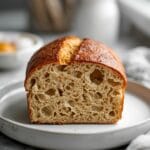
Baking a beautiful sourdough batard might seem intimidating, but it’s entirely achievable for even the most novice home baker. This recipe focuses on creating a high-hydration loaf using sourdough discard, resulting in a wonderfully rustic and flavorful bread perfect for your everyday sandwiches or as a delightful accompaniment to any meal. Forget complex techniques and hours of waiting. We’ll guide you through each step to transform simple ingredients into a golden-crusted, tender-crumbed sourdough loaf that will impress your family and friends. Get ready to enjoy the satisfaction of baking your own delicious bread from scratch!
Ingredients
Instructions
1. Combine Wet Ingredients and Discard: In a large mixing bowl, whisk together the warm water and sourdough discard until well combined. The discard doesn’t need to be perfectly dissolved, just mostly incorporated.
2. Add Dry Ingredients: Add the all-purpose flour, salt, and optional instant yeast to the wet mixture. Use a sturdy spoon or your hands to mix everything together until a shaggy dough forms and no dry streaks of flour remain. It will be sticky, which is normal for a high-hydration dough.
3. First Rise (Bulk Fermentation): Lightly grease another large bowl with olive oil. Transfer the dough to the greased bowl, turning it once to coat. Cover the bowl with plastic wrap or a damp kitchen towel and let it rise in a warm spot for 2-4 hours, or until it has visibly increased in size by about 50-75%. If you used instant yeast, it might rise faster.
4. Shape the Batard: Gently turn the dough out onto a lightly floured surface. Avoid deflating it too much. Gently stretch and fold the dough into a rectangular shape. Then, starting from one of the longer sides, roll the dough tightly into a log, pinching the seam closed as you go. Gently cup your hands around the ends and roll it slightly to create a batard (oval) shape.
5. Second Rise (Proofing): Lightly flour a proofing basket (banneton) or a bowl lined with a floured kitchen towel. Carefully transfer the shaped dough, seam-side up, into the prepared basket/bowl. Cover loosely with plastic wrap and let it proof at room temperature for 1-2 hours, or until it looks puffy and has increased in size. Alternatively, for a deeper flavor and easier baking schedule, you can refrigerate it overnight (8-12 hours).
6. Preheat Oven and Dutch Oven: About 30-45 minutes before baking, place a Dutch oven with its lid into your oven and preheat to 450 F (232 C). Getting the Dutch oven very hot is crucial for a great crust.
7. Score and Bake: Carefully remove the hot Dutch oven from the oven. Gently invert the dough from the proofing basket into the hot Dutch oven. Using a sharp knife or a bread lame, score the top of the dough with a few shallow cuts (about 1/2 inch deep) – this helps the bread expand beautifully. Place the lid back on the Dutch oven and bake for 30 minutes.
8. Final Bake and Cool: Remove the lid from the Dutch oven and continue baking for another 15-20 minutes, or until the crust is deeply golden brown and sounds hollow when tapped on the bottom. Carefully remove the bread from the Dutch oven and transfer it to a wire rack to cool completely before slicing. This cooling step is vital for the crumb to set properly.
- Prep Time: 20 minutes
- Cook Time: 45-50 minutes
- Category: bread
- Method: baking
- Cuisine: american
Nutrition
- Serving Size: 1 slice
Keywords: sourdough, bread, batard, discard, baking, rustic, homemade, easy, high hydration, dutch oven