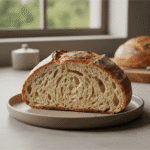
Description
This guide helps you understand the essential signs that your sourdough dough is perfectly proofed and ready for baking, ensuring a successful bake with excellent texture and taste. It covers visual cues, tactile tests, and common pitfalls to avoid.
Ingredients
Instructions
1. Observe the Overall Volume Increase: After bulk fermentation, your dough should have visibly increased in size, typically by 30-50% for many recipes, or even doubled depending on the starter activity and flour type. Look for a significant, but not excessive, expansion. If it hasn’t changed much, it likely needs more time. If it looks like it’s about to burst, it might be over-proofed.
2. Examine the Surface for Bubbles: The surface of your dough, especially after bulk fermentation, should show small bubbles. These are signs of active yeast and bacteria producing gas. A smooth, tight surface with no bubbles might indicate under-proofing, while a very bubbly, almost frothy surface could suggest it’s getting close to over-proofed.
3. Perform the “Jiggle Test”: Gently shake your proofing basket (banneton) or container. The dough should jiggle slightly, like a very firm jelly. If it feels dense and doesn’t jiggle much, it’s likely under-proofed. If it jiggles excessively and feels very loose, it might be over-proofed and could collapse when baked.
4. Try the “Poke Test” for Final Proofing: This is one of the most reliable indicators. Lightly flour your finger and gently press it into the dough about half an inch deep. If the indentation springs back immediately: The dough is under-proofed and needs more time. If the indentation springs back slowly, leaving a slight dimple: The dough is perfectly proofed and ready to bake. If the indentation stays completely, and the dough feels very slack: The dough is likely over-proofed.
5. Check for an Airy, Web-Like Structure (Optional): If you’re unsure, you can gently pull a small piece of dough from the main mass (during bulk fermentation, not final proofing) and stretch it. You should see a delicate, web-like network of gluten strands, often with tiny air pockets. This indicates good gluten development and gas production.
6. Consider the Dough’s Aroma: A well-proofed sourdough dough will have a pleasant, slightly tangy, yeasty aroma. An overly sour or alcoholic smell can sometimes indicate over-proofing, while a very bland smell might suggest it needs more time to develop flavor.
- Prep Time: 10 minutes
- Cook Time: 0 minutes
- Category: baking
- Method: proofing
- Cuisine: american
Nutrition
- Serving Size: 1 slice
Keywords: sourdough, proofing, baking, dough, fermentation, bread, technique, guide, homemade, artisan