
Embarking on the sourdough journey can seem daunting, but with the right tools, it becomes an incredibly rewarding and enjoyable experience.
You don’t need a professional bakery setup to create delicious, artisan-style bread at home. Instead, focusing on a few key essentials will set you up for success from your very first loaf.
This guide is designed for the absolute beginner, highlighting the indispensable items that will make your sourdough baking process smooth, efficient, and fun. Forget the overwhelming lists of specialized equipment; we’re focusing on practical, must-have tools that will genuinely elevate your baking.
Table of Contents
- What You’ll Love About This Quick And Easy Recipe
- Everything You Need To Make This Recipe Without Stress
- Time Needed From Start To Finish
- How To Make It Step By Step With Visual Cues
- Easy Variations And Serving Ideas That Fit Real Life
- Common Slip-Ups And How To Avoid Them
- How To Store It And Make It Ahead Without Ruining Texture

Essential Sourdough Baking Tools Guide
- Total Time: 2-3 hours (initial setup and first bake)
- Yield: 1 loaf
Description
This guide outlines the indispensable tools for beginner sourdough bakers, focusing on practical, must-have items that simplify the process and ensure consistent results. It covers everything from cultivating a starter to baking the final loaf, emphasizing how each tool contributes to a successful and enjoyable sourdough journey.
Ingredients
Instructions
1. Cultivating Your Sourdough Starter in the Glass Jar: Begin by mixing flour and water in your large glass jar. This wide-mouthed vessel is perfect for easy stirring and monitoring your starter’s activity. You’ll observe bubbles and growth, indicating a healthy, active starter ready for baking.
2. Measuring Ingredients Precisely with the Kitchen Scale: For all your sourdough recipes, use the digital kitchen scale to measure flour, water, and starter. Accuracy is paramount in sourdough, and a scale ensures consistent results every time, eliminating the guesswork of volumetric measurements.
3. Mixing and Handling Dough in the Large Bowl: Combine your measured ingredients in the large non-reactive mixing bowl. This provides ample space for mixing by hand or with a Danish dough whisk, allowing the dough to develop without sticking to the sides.
4. Shaping Dough with the Bench Scraper and Dough Scraper: After bulk fermentation, turn your dough out onto a lightly floured surface. Use the metal bench scraper to divide the dough if making multiple loaves, and the plastic dough scraper to gently fold and shape your dough into a round or oval. These tools prevent sticking and help maintain the dough’s structure.
5. Proofing Dough in the Banneton: Once shaped, transfer your dough seam-side up into a floured banneton. The banneton provides support during the final proofing stage, helping the dough maintain its shape and creating a beautiful spiral pattern on the crust. Cover it with a clean kitchen towel.
6. Scoring Dough with the Lame: Preheat your Dutch oven while the dough proofs. Just before baking, carefully invert your dough onto a piece of parchment paper. Use the lame to make a swift, confident score on the surface of the dough. This allows for controlled oven spring and creates an artistic pattern.
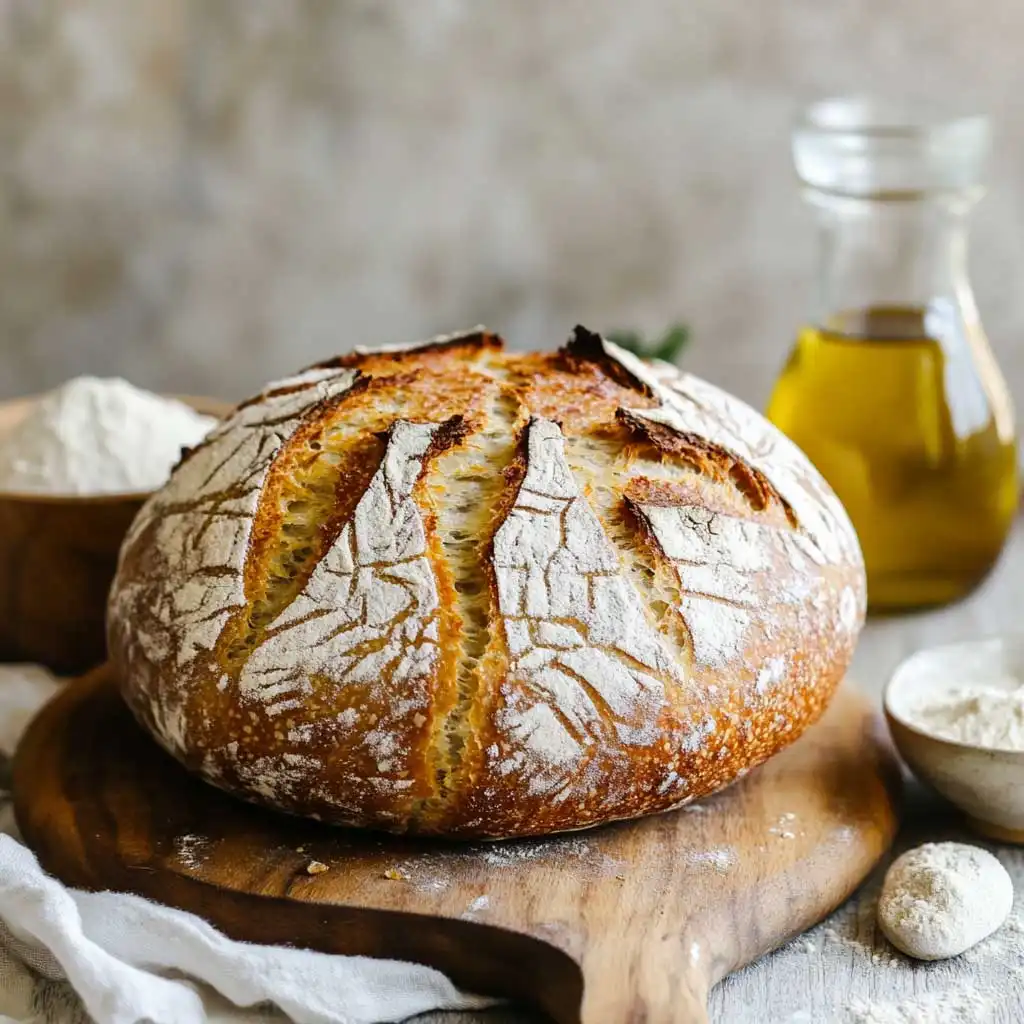
7. Baking in the Dutch Oven: Carefully lower the parchment paper with the scored dough into the preheated Dutch oven. Cover with the lid and bake. The Dutch oven traps steam, creating a perfect environment for a beautiful crust and excellent oven spring, mimicking a professional bakery oven.
8. Cooling on a Wire Rack: Once baked, carefully remove the loaf from the Dutch oven and transfer it to a wire rack. This allows air to circulate around the entire loaf, preventing the bottom from becoming soggy and ensuring an even cool-down.
- Prep Time: 1-2 hours (initial setup)
- Cook Time: 1 hour
- Category: baking
- Method: baking
- Cuisine: american
Nutrition
- Serving Size: 1 slice
Keywords: sourdough, baking, tools, equipment, beginner, bread, homemade, kitchen, essentials, guide
What You’ll Love About This Quick And Easy Recipe
While this article isn’t a recipe in the traditional sense, it’s a guide to making your sourdough *recipe* journey quick and easy. The beauty of having the right tools is that they simplify every step, from feeding your starter to shaping and baking your bread. This approach is perfect for anyone new to sourdough who wants to avoid common frustrations and dive straight into the satisfying world of homemade bread. It’s ideal for busy individuals or families looking to incorporate a wholesome, homemade element into their diet without adding stress. By understanding and acquiring these essential tools, you’ll find that sourdough baking becomes less of a chore and more of a delightful ritual.
Everything You Need To Make This Recipe Without Stress
Starting your sourdough adventure requires a few fundamental items that will make a significant difference in your success. These aren’t fancy gadgets, but rather practical tools that streamline the process and ensure consistent results. Having these on hand before you begin will prevent last-minute scrambles and allow you to focus on the joy of baking.
INGREDIENTS:
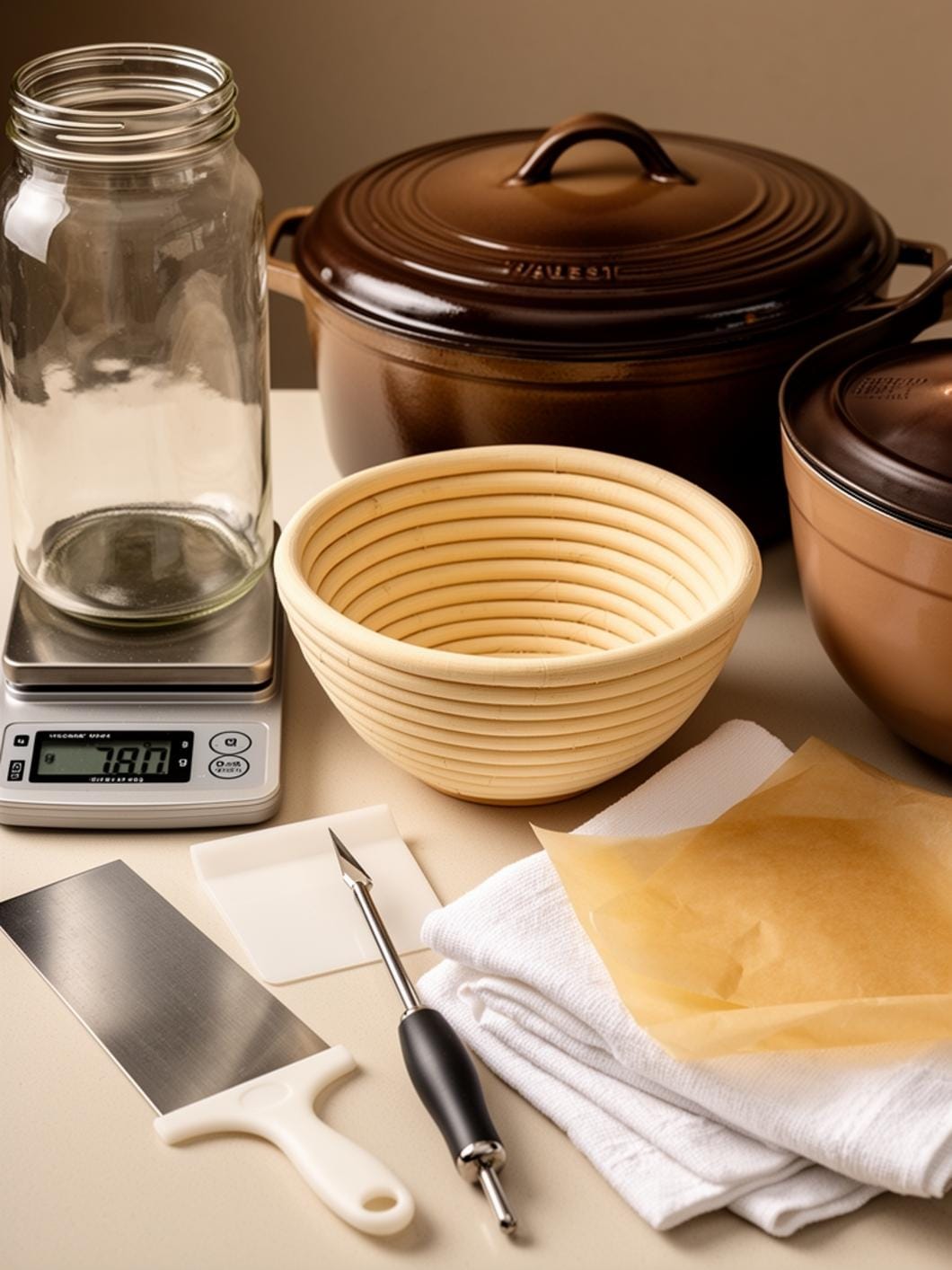
- Large glass jar (at least 16 oz, wide-mouthed)
- Kitchen scale (digital, accurate to 1 gram)
- Dough scraper (plastic or metal)
- Banneton (proofing basket, round or oval)
- Dutch oven (enameled cast iron, 5-7 quart)
- Lame (scoring tool)
- Bench scraper (metal)
- Large mixing bowl (non-reactive, 4-6 quart)
- Clean kitchen towels (lint-free)
- Parchment paper
For the large glass jar, a Mason jar or a repurposed pickle jar works perfectly. The key is a wide mouth for easy stirring and cleaning, and enough capacity for your starter to grow. When selecting a kitchen scale, prioritize one that measures in grams, as sourdough recipes are almost universally written with precise weight measurements for accuracy. A simple digital scale is usually inexpensive and highly effective. For your mixing bowl, stainless steel or glass are excellent non-reactive choices. Avoid reactive metals like aluminum, which can interact with the acidity of sourdough.
Time Needed From Start To Finish
This isn’t a timed recipe, but rather a guide to acquiring and understanding your tools. The “time needed” here refers to the initial setup and learning curve for sourdough baking, which these tools significantly reduce.
- Initial Tool Acquisition: 1-2 hours (shopping online or in-store)
- Learning Tool Usage: Integrated into your first few baking sessions, these tools simplify the process from day one, rather than adding extra time.
By having these essentials ready, you’ll save time and frustration during each baking session, making the entire sourdough process feel more efficient and enjoyable.
How To Make It Step By Step With Visual Cues
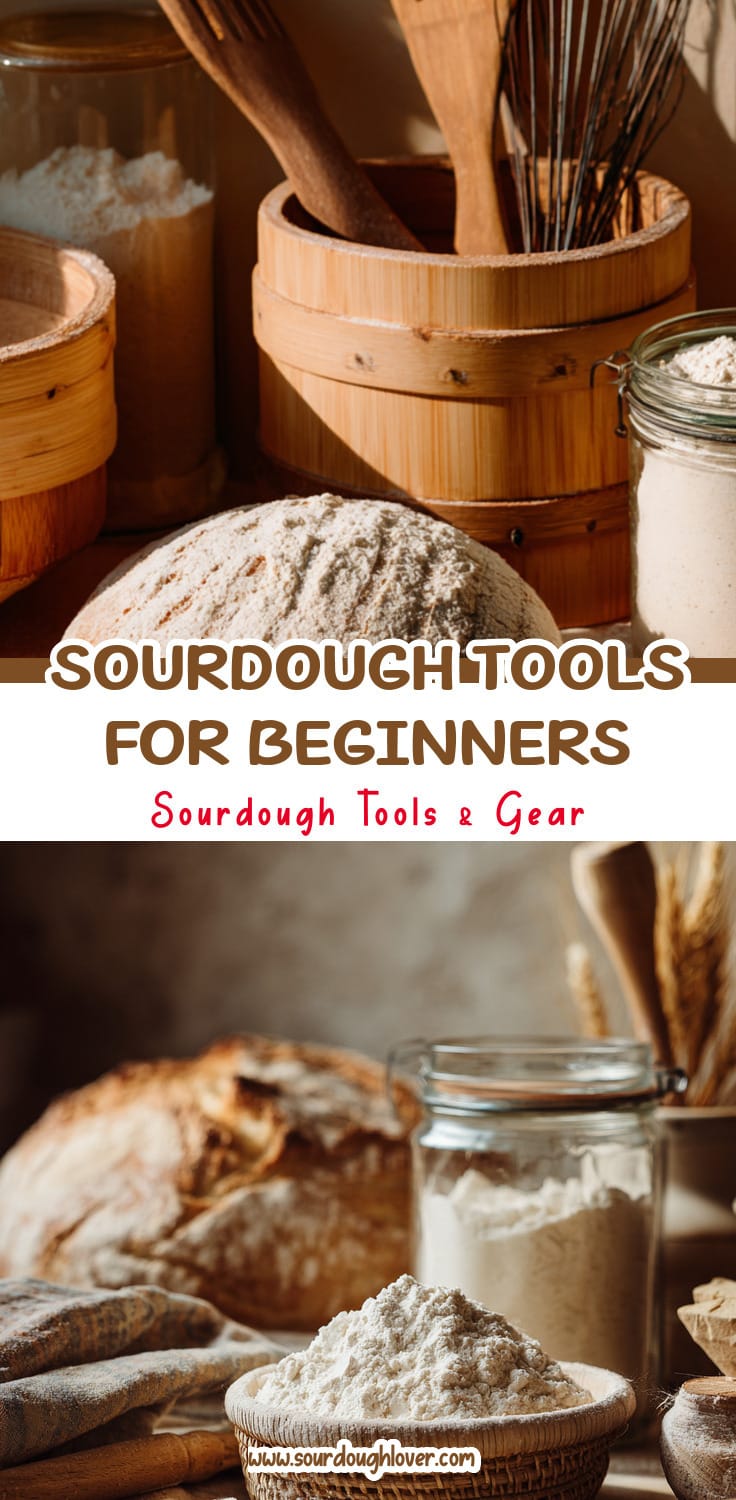
While this guide focuses on tools rather than a specific recipe, here’s how these essential items will be used in your typical sourdough baking process, giving you a clear picture of their utility.
- Cultivating Your Sourdough Starter in the Glass Jar: Begin by mixing flour and water in your large glass jar. This wide-mouthed vessel is perfect for easy stirring and monitoring your starter’s activity. You’ll observe bubbles and growth, indicating a healthy, active starter ready for baking.
- Measuring Ingredients Precisely with the Kitchen Scale: For all your sourdough recipes, use the digital kitchen scale to measure flour, water, and starter. Accuracy is paramount in sourdough, and a scale ensures consistent results every time, eliminating the guesswork of volumetric measurements.
- Mixing and Handling Dough in the Large Bowl: Combine your measured ingredients in the large non-reactive mixing bowl. This provides ample space for mixing by hand or with a Danish dough whisk, allowing the dough to develop without sticking to the sides.
- Shaping Dough with the Bench Scraper and Dough Scraper: After bulk fermentation, turn your dough out onto a lightly floured surface. Use the metal bench scraper to divide the dough if making multiple loaves, and the plastic dough scraper to gently fold and shape your dough into a round or oval. These tools prevent sticking and help maintain the dough’s structure.
- Proofing Dough in the Banneton: Once shaped, transfer your dough seam-side up into a floured banneton. The banneton provides support during the final proofing stage, helping the dough maintain its shape and creating a beautiful spiral pattern on the crust. Cover it with a clean kitchen towel.
- Scoring Dough with the Lame: Preheat your Dutch oven while the dough proofs. Just before baking, carefully invert your dough onto a piece of parchment paper. Use the lame to make a swift, confident score on the surface of the dough. This allows for controlled oven spring and creates an artistic pattern.
- Baking in the Dutch Oven: Carefully lower the parchment paper with the scored dough into the preheated Dutch oven. Cover with the lid and bake. The Dutch oven traps steam, creating a perfect environment for a beautiful crust and excellent oven spring, mimicking a professional bakery oven.
- Cooling on a Wire Rack: Once baked, carefully remove the loaf from the Dutch oven and transfer it to a wire rack. This allows air to circulate around the entire loaf, preventing the bottom from becoming soggy and ensuring an even cool-down.
Easy Variations And Serving Ideas That Fit Real Life
While these are tools, not a recipe, understanding their versatility can enhance your overall baking experience. For instance, your large mixing bowl isn’t just for sourdough; it’s perfect for mixing cookies, cakes, or even large salads for family dinners. The kitchen scale, beyond sourdough, is invaluable for any precise baking or even portion control.
The Dutch oven, a sourdough essential, is also a fantastic piece of cookware for stews, braises, and roasting chickens, making it a truly multi-functional investment for any kitchen. Your bench scraper can be used to clean up flour from your countertop after baking, or even to chop vegetables. The clean kitchen towels are not only for covering dough but also for general kitchen tasks, proving that these “sourdough essentials” are genuinely versatile kitchen workhorses.
Common Slip-Ups And How To Avoid Them
Even with the right tools, beginners can encounter a few common pitfalls. Knowing what to watch out for can save you a lot of frustration.
- Using Volumetric Measurements Instead of Weight: This is perhaps the biggest beginner mistake. Sourdough baking demands precision, and cups/spoons are notoriously inaccurate for flour and water. Always use your digital kitchen scale for all ingredients to ensure consistent hydration and dough consistency.
- Not Activating Your Starter Properly: Before baking, ensure your starter is active and bubbly. If it’s sluggish, it won’t provide the lift your bread needs. Feed it regularly and wait until it doubles in size before using it. Your clear glass jar makes it easy to observe this activity.
- Over-flouring the Banneton: Too much flour in your proofing basket can lead to a thick, gummy layer on your crust. A light dusting is all that’s needed to prevent sticking. Rice flour is often recommended as it’s less absorbent than wheat flour.
- Not Scoring Deeply Enough: A shallow score with your lame won’t allow the dough to expand properly, leading to a dense crumb and a less attractive crust. Be confident and make a swift, deep cut.
- Opening the Dutch Oven Lid Too Early: Resist the urge to peek during the initial covered baking phase. The trapped steam is crucial for oven spring and crust development. Wait until the recipe specifies removing the lid.
- Cutting Into Hot Bread: It’s tempting, but cutting into a hot loaf of sourdough can ruin its texture, making it gummy inside. Allow your bread to cool completely on a wire rack for at least 1-2 hours (or longer for larger loaves) to allow the internal structure to set.
How To Store It And Make It Ahead Without Ruining Texture
These tools are for the baking process itself, but proper storage of your sourdough starter and baked bread is crucial.
Your sourdough starter, housed in its large glass jar, can be stored at room temperature if you’re baking frequently (feeding daily), or in the refrigerator if you bake less often (feeding weekly). Always ensure the lid is loose or just resting on top to allow for gas exchange.
For your freshly baked sourdough bread, once it has cooled completely on the wire rack, store it at room temperature. A simple linen bread bag or a paper bag works well for 1-2 days to maintain a crisp crust. For longer storage, you can wrap it tightly in plastic wrap or aluminum foil, then place it in a freezer bag and freeze for up to a few months. Thaw at room temperature and refresh in a warm oven for a few minutes to bring
FAQs
- Can I make these ahead? Yes—prep ahead, refrigerate, then serve when ready.
- How long do leftovers last? Store covered in the fridge for 3–4 days for best texture.
- Can I adjust sweetness? Yes—add more or less sweetener to taste.
- Can I change the fruit? Yes—swap strawberries for blueberries, raspberries, or sliced banana.