
Unlocking the secrets to a perfect homemade sourdough starter begins with a crucial choice: the right flour.
Many aspiring bakers wonder which type will yield the most active and robust starter, and the answer lies in understanding the unique properties each flour brings to the fermentation process. This guide will walk you through the essential details, ensuring your sourdough journey starts on the strongest possible footing.
Creating a vibrant sourdough starter from scratch is a rewarding experience that forms the foundation for delicious, naturally leavened bread. By focusing on the best flour choices, you’ll cultivate a healthy, active starter ready to bring incredible flavor and texture to your baking adventures.

How to Make a Sourdough Starter: The Best Flour Choices
- Total Time: 7-14 days
- Yield: 1 sourdough starter
Description
This guide focuses on the critical first step of creating a vibrant sourdough starter: choosing the right flour. It details the process of nurturing a starter from scratch, emphasizing the importance of unbleached all-purpose, whole wheat, and rye flours, along with filtered water. The recipe outlines daily feeding and observation over 7-14 days to cultivate a healthy, active starter ready for baking.
Ingredients
Instructions
1. Prepare Your Container: Start with a clean, large glass jar. A 1-quart size is ideal, as your starter will grow. Ensure it’s spotless to prevent unwanted bacteria from interfering with your wild yeasts.
2. Combine Initial Ingredients: In your clean jar, combine 50 grams (about 1/4 cup) of whole wheat flour or rye flour with 50 grams (about 1/4 cup) of filtered, room-temperature water. Mix thoroughly with a spoon until there are no dry spots and the mixture forms a thick paste. This initial boost from whole grain flour provides a rich food source for wild yeasts.
3. Cover and Rest: Loosely cover the jar. A piece of cheesecloth secured with a rubber band, a coffee filter, or even a loose-fitting lid works perfectly. The goal is to allow air circulation while preventing contaminants. Place the jar in a warm spot, ideally between 70-78 F (21-26 C), away from direct sunlight.
4. First 24-Hour Observation: After 24 hours, you might see a few tiny bubbles or no activity at all. This is normal. The wild yeasts are just beginning to wake up and multiply.
5. The First Feeding (Day 2): Discard about half of your starter (around 50 grams). To the remaining 50 grams of starter, add 50 grams of all-purpose flour and 50 grams of filtered water. Mix well until smooth. Cover and return to your warm spot. Discarding half ensures there’s enough food for the remaining yeasts to thrive and prevents the starter from getting too large.
6. Continue Daily Feedings (Days 3-7+): Repeat the feeding process every 24 hours: discard half, then feed with equal parts flour and water. You should start to see more consistent activity – bubbles, a slight rise, and a pleasant, tangy aroma. If using a rubber band around the jar at the starter’s level, you can visually track its growth.
7. Transition to Twice-Daily Feedings (Optional): Once your starter is consistently doubling in size within 6-8 hours after feeding, you can transition to feeding it twice a day, every 12 hours, using the same discard-and-feed method. This helps to strengthen it further.
8. Ready for Baking: Your starter is ready when it consistently doubles or triples in size within 4-8 hours after feeding, has many visible bubbles, and smells pleasantly sour, like ripe fruit or yogurt. It should also pass the “float test”: drop a small spoonful into a glass of water; if it floats, it’s ready to bake with!
- Prep Time: 10 minutes
- Cook Time: 0 minutes
- Category: baking
- Method: fermentation
- Cuisine: american
Nutrition
- Serving Size: 1 starter
Keywords: sourdough, starter, baking, fermentation, bread, flour, yeast, homemade, natural, wild yeast
What You’ll Love About This Quick And Easy Recipe
This guide is designed for anyone eager to embark on their sourdough journey, from complete beginners to those who’ve tried and struggled before. We focus on the fundamental step of choosing the right flour for your starter, which is often overlooked but critical for success. You’ll love how straightforward the advice is, cutting through common complexities to give you actionable steps. This isn’t about baking bread today, but about building the living foundation for countless loaves to come. It’s perfect for a weekend project or a few minutes each day to nurture your starter, leading to satisfying results for your family’s table.
Everything You Need To Make This Recipe Without Stress
Making a sourdough starter doesn’t require a long list of fancy equipment or obscure ingredients. The beauty of it lies in its simplicity. The most important “ingredient” is patience, followed closely by the right flour and water.
INGREDIENTS:
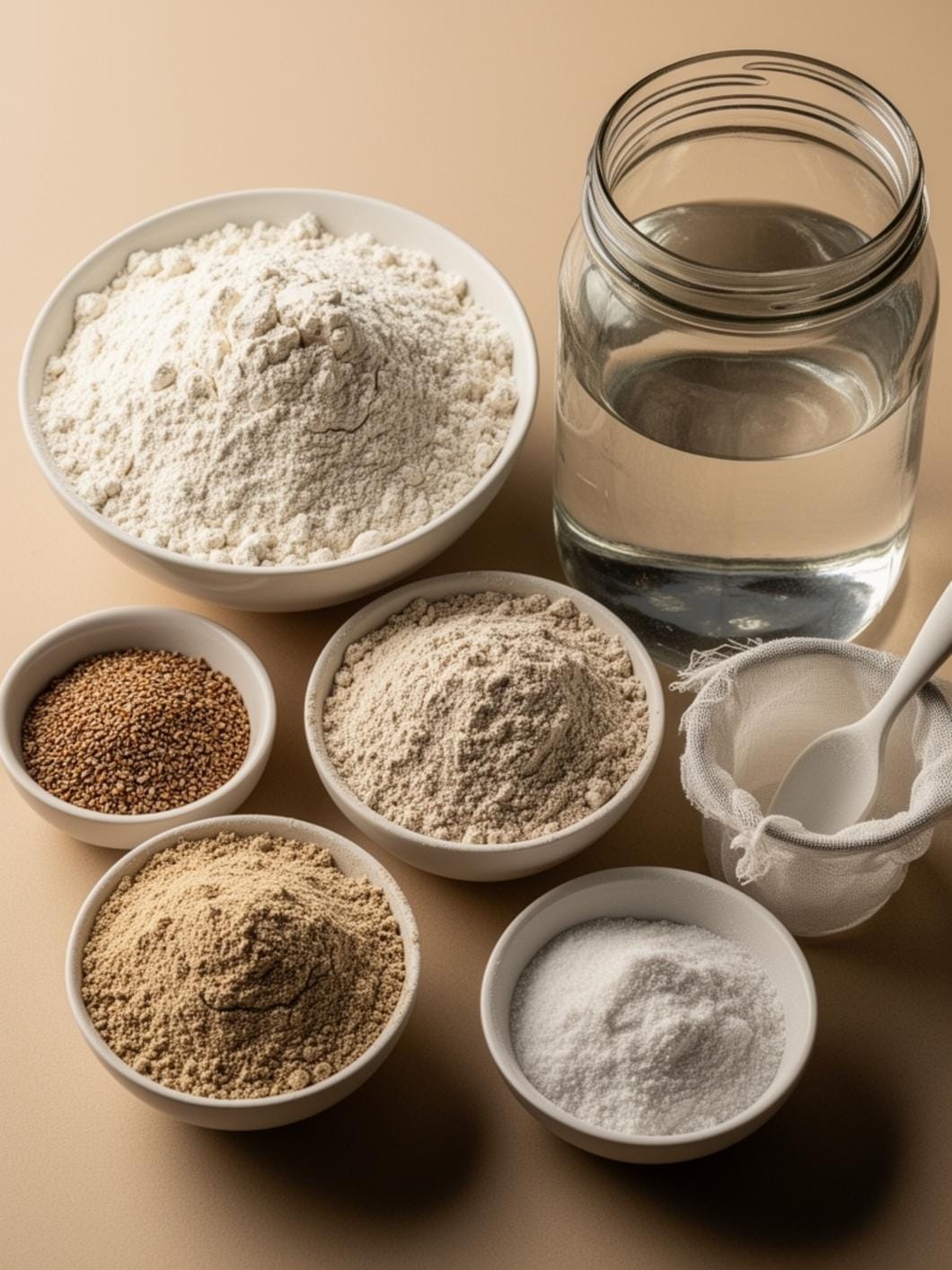
- All-purpose flour (unbleached)
- Whole wheat flour (organic, stone-ground recommended)
- Rye flour
- Filtered water (chlorine-free)
- Large glass jar or container (at least 1-quart capacity)
- Spoon or spatula for mixing
- Breathable cover (cheesecloth, coffee filter, or loose lid)
- Kitchen scale (optional, but highly recommended for accuracy)
When it comes to flour, unbleached all-purpose flour is a great starting point due to its consistent protein content and availability. However, incorporating whole wheat or rye flour can significantly boost your starter’s activity. These flours contain more natural yeasts and nutrients that wild yeasts thrive on. For water, always use filtered or unchlorinated water, as chlorine can inhibit yeast activity. If you only have tap water, let it sit out for 24 hours to allow the chlorine to dissipate.
Time Needed From Start To Finish
Creating a sourdough starter is less about active “cook time” and more about consistent feeding and observation over several days.
- Initial Setup: 5-10 minutes
- Daily Feeding (active time): 2-3 minutes per day
- Total Development Time: 7-14 days (until consistently active)
While the hands-on time is minimal each day, the full process takes about one to two weeks for your starter to become strong and reliable enough for baking. This is a journey of nurturing, not a quick fix.
How To Make It Step By Step With Visual Cues
Building a robust sourdough starter is a simple, daily commitment. Follow these steps to cultivate a thriving culture.
- Prepare Your Container: Start with a clean, large glass jar. A 1-quart size is ideal, as your starter will grow. Ensure it’s spotless to prevent unwanted bacteria from interfering with your wild yeasts.
- Combine Initial Ingredients: In your clean jar, combine 50 grams (about 1/4 cup) of whole wheat flour or rye flour with 50 grams (about 1/4 cup) of filtered, room-temperature water. Mix thoroughly with a spoon until there are no dry spots and the mixture forms a thick paste. This initial boost from whole grain flour provides a rich food source for wild yeasts.
- Cover and Rest: Loosely cover the jar. A piece of cheesecloth secured with a rubber band, a coffee filter, or even a loose-fitting lid works perfectly. The goal is to allow air circulation while preventing contaminants. Place the jar in a warm spot, ideally between 70-78°F (21-26°C), away from direct sunlight.
- First 24-Hour Observation: After 24 hours, you might see a few tiny bubbles or no activity at all. This is normal. The wild yeasts are just beginning to wake up and multiply.
- The First Feeding (Day 2): Discard about half of your starter (around 50 grams). To the remaining 50 grams of starter, add 50 grams of all-purpose flour and 50 grams of filtered water. Mix well until smooth. Cover and return to your warm spot. Discarding half ensures there’s enough food for the remaining yeasts to thrive and prevents the starter from getting too large.
- Continue Daily Feedings (Days 3-7+): Repeat the feeding process every 24 hours: discard half, then feed with equal parts flour and water. You should start to see more consistent activity – bubbles, a slight rise, and a pleasant, tangy aroma. If using a rubber band around the jar at the starter’s level, you can visually track its growth.
- Transition to Twice-Daily Feedings (Optional): Once your starter is consistently doubling in size within 6-8 hours after feeding, you can transition to feeding it twice a day, every 12 hours, using the same discard-and-feed method. This helps to strengthen it further.
- Ready for Baking: Your starter is ready when it consistently doubles or triples in size within 4-8 hours after feeding, has many visible bubbles, and smells pleasantly sour, like ripe fruit or yogurt. It should also pass the “float test”: drop a small spoonful into a glass of water; if it floats, it’s ready to bake with!
Easy Variations And Serving Ideas That Fit Real Life
While a sourdough starter isn’t a dish to be served, its variations lie in the types of flour you use to maintain it, which in turn influences the flavor profile of your future bread.
- Flour Blends for Flavor: Once your starter is established, you can experiment with different flour blends for feeding. A 50/50 mix of unbleached all-purpose and whole wheat flour is a popular choice for a balanced starter. For a more robust, earthy flavor, feed with 100% rye flour occasionally.
- Maintaining a Smaller Starter: If you don’t bake frequently, you can maintain a smaller starter. Instead of 50g each of flour and water, use 25g or even 10g, adjusting the discard amount proportionally. This reduces flour waste.
- “Stiff” Starter: Some bakers prefer a “stiff” starter, which has a lower hydration (less water relative to flour). This can lead to a milder flavor. To achieve this, feed with a ratio like 1 part starter, 2 parts flour, and 1 part water (e.g., 50g starter, 100g flour, 50g water).
- Discard Recipes: Don’t let your discarded starter go to waste! It’s not active enough for leavening bread, but it’s perfect for adding tang and moisture to other recipes. Think sourdough discard pancakes, waffles, crackers, flatbreads, or even savory muffins. These are excellent ways to use up the discard and introduce a subtle sourdough flavor to your family’s meals.
Common Slip-Ups And How To Avoid Them
Creating a sourdough starter is forgiving, but there are a few common pitfalls that can slow down your progress or lead to frustration.
- Using Chlorinated Water: Chlorine can kill the beneficial wild yeasts and bacteria you’re trying to cultivate. Always use filtered, bottled, or previously boiled and cooled tap water. If using tap water, let it sit out in an open container for 24 hours to allow the chlorine to evaporate.
- Not Feeding Regularly Enough: Especially in the initial stages, consistent daily feeding is crucial. Skipping feedings can starve your starter, making it sluggish or prone to mold. Once established and refrigerated, feeding frequency can be reduced.
- Feeding Too Much or Too Little: An imbalance in the flour-to-water ratio or not discarding enough can lead to a weak starter. Always aim for equal parts by weight (1:1:1 ratio of starter:flour:water) unless intentionally adjusting for a stiffer starter. Discarding half ensures the remaining yeasts have ample food.
- Keeping It Too Cold or Too Hot: Extreme temperatures can hinder yeast activity. A consistent room temperature between 70-78°F (21-26°C) is ideal. Too cold, and it will be sluggish; too hot, and it might develop off-flavors or ferment too quickly. Avoid placing it in direct sunlight.
- Not Using a Breathable Cover: A tightly sealed lid can create an anaerobic environment, which isn’t ideal for the types of yeasts and bacteria we want. A loose lid, cheesecloth, or coffee filter allows for crucial air exchange.
- Giving Up Too Soon: It can take up to two weeks for a starter to become

FAQs
- Can I make these ahead? Yes—prep ahead, refrigerate, then serve when ready.
- How long do leftovers last? Store covered in the fridge for 3–4 days for best texture.
- Can I adjust sweetness? Yes—add more or less sweetener to taste.
- Can I change the fruit? Yes—swap strawberries for blueberries, raspberries, or sliced banana.