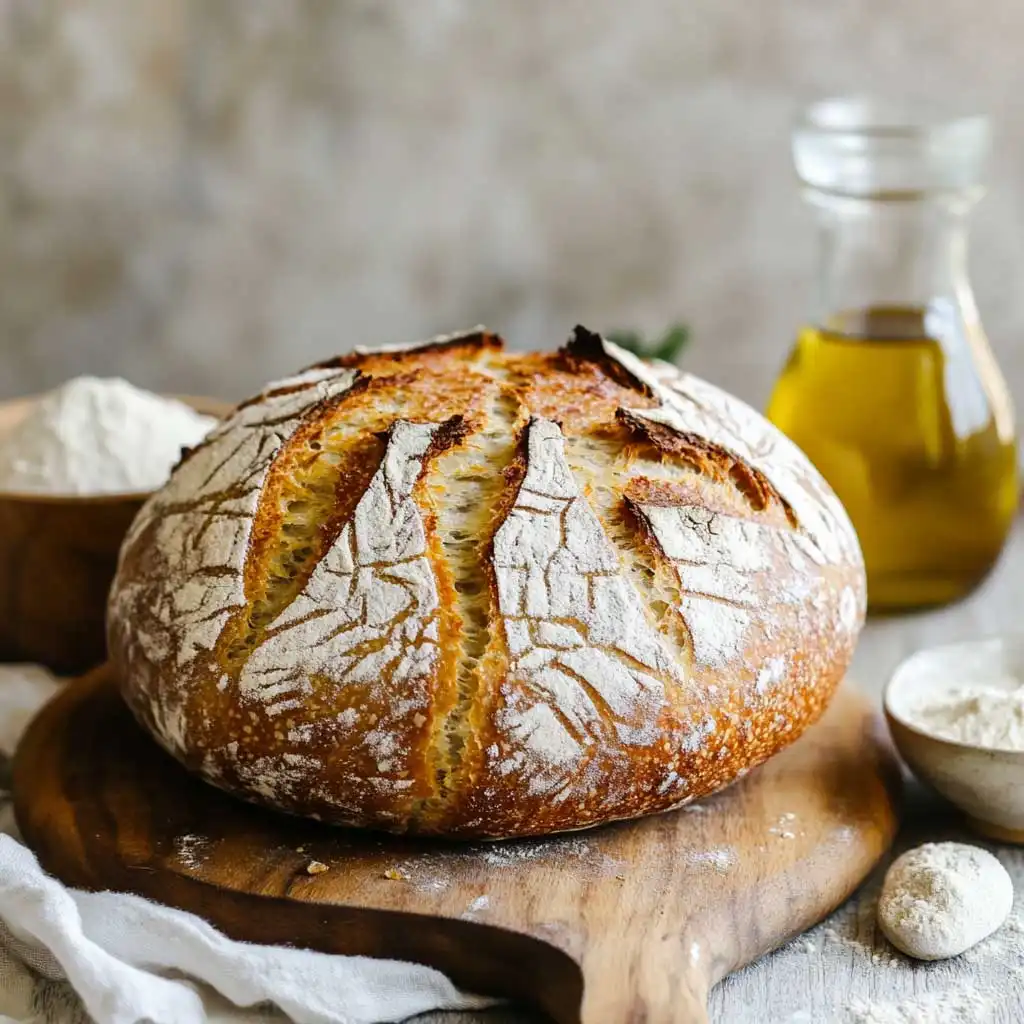

Baking homemade sourdough bread might sound like a long, involved process, but it doesn’t have to be! This recipe is designed for busy home cooks who want the satisfaction of a freshly baked loaf without the multi-day commitment. We’re talking about a delicious, rustic sourdough that you can start and finish all in the same day.
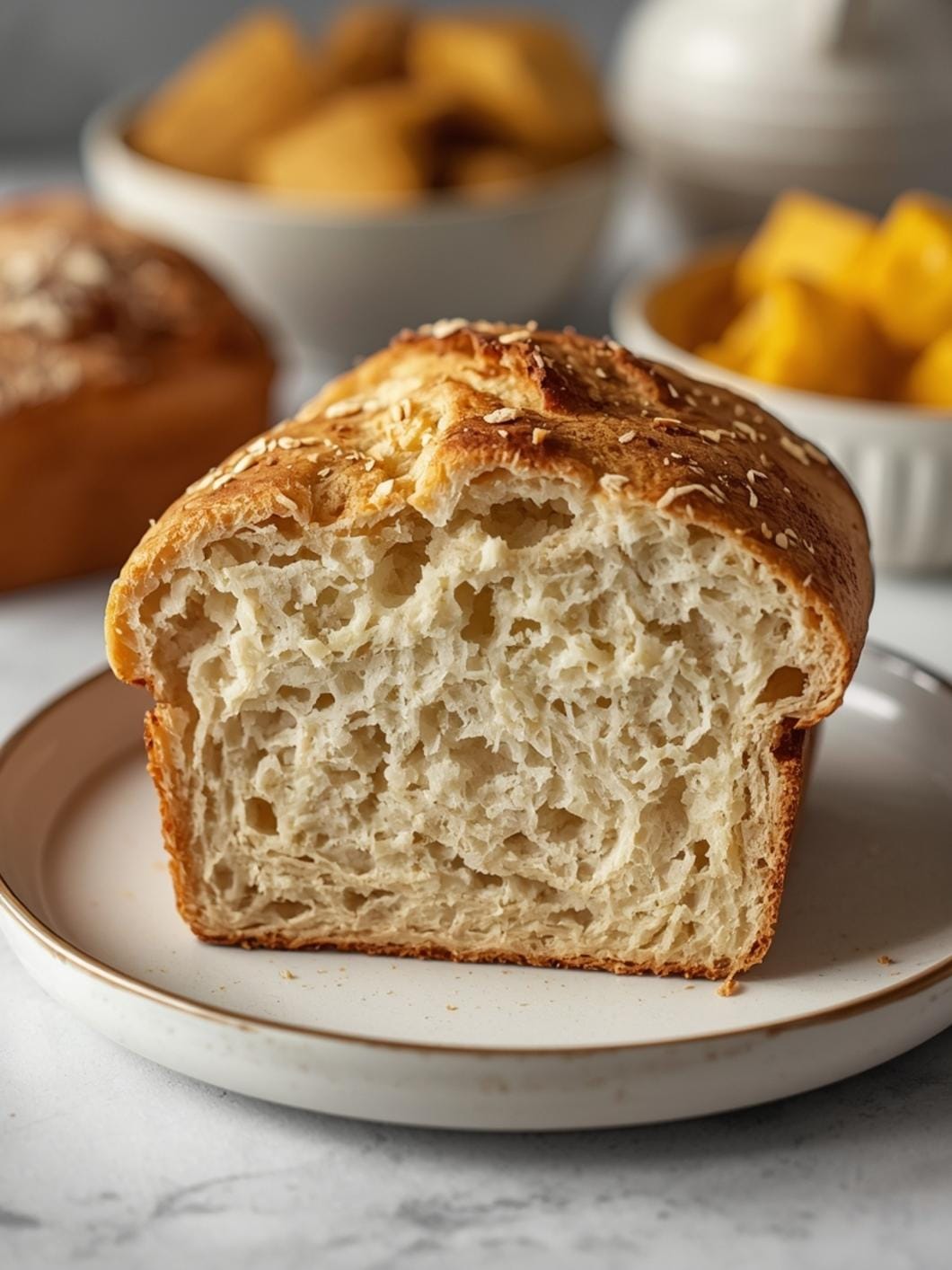
Forget about complex schedules or needing to feed a starter for days on end. This approach simplifies everything, allowing even beginner bakers to achieve a beautiful, flavorful loaf. Get ready to impress your family and fill your home with that irresistible aroma of warm, homemade bread.

Same-Day Sourdough Bread
- Total Time: 5-7 hours
- Yield: 1 loaf 1x
Description
This recipe is designed for busy home cooks who want the satisfaction of a freshly baked loaf without the multi-day commitment. We’re talking about a delicious, rustic sourdough that you can start and finish all in the same day. This approach simplifies everything, allowing even beginner bakers to achieve a beautiful, flavorful loaf.
Ingredients
Instructions
1. 1. Combine Starter and Water: In a large mixing bowl, gently whisk together your active sourdough starter and the warm water until the starter is mostly dissolved and the mixture looks milky. This ensures even distribution of the starter throughout your dough.
2. 2. Add Flour and Salt: Add the bread flour and fine sea salt to the wet mixture. Use a sturdy spoon or your hands to mix everything until a shaggy dough forms and no dry flour remains. It will be sticky and a bit messy at this stage.
3. 3. Initial Rest (Autolyse): Cover the bowl with a clean kitchen towel or plastic wrap and let the dough rest for 30 minutes. This “autolyse” period allows the flour to fully hydrate, making the dough easier to work with and helping with gluten development.
4. 4. First Set of Folds: After the rest, lightly wet your hands. Gently grab a portion of the dough from one side, stretch it upwards, and fold it over itself towards the center of the bowl. Rotate the bowl a quarter turn and repeat this stretching and folding action 3-4 more times, until you’ve gone all the way around. The dough will start to feel a bit smoother and more elastic. Cover and let rest for 30 minutes.
5. 5. Repeat Folds (3-4 Times): Repeat the stretching and folding process every 30-45 minutes for a total of 3-4 sets. With each set, you’ll notice the dough becoming progressively stronger, smoother, and more elastic. It will hold its shape better. After the last set of folds, cover the bowl and let the dough rise at room temperature until it has almost doubled in size, which can take 2-4 hours depending on your kitchen temperature and starter activity. Look for a bubbly surface and a jiggly texture.
6. 6. Shape the Loaf: Lightly flour your work surface. Gently turn the dough out onto the flour. Carefully shape the dough into a round or oval loaf. The goal is to create surface tension, so gently pull the edges of the dough towards the center and then flip it over, using the surface tension to create a smooth, taut top.
7. 7. Prepare for Baking: Preheat your oven to 450 F (230 C) with a Dutch oven or heavy pot inside for at least 30 minutes. Carefully transfer your shaped dough to a piece of parchment paper, then gently lower it into the preheated Dutch oven. Score the top of the dough with a sharp knife or razor blade (a simple “X” or a single slash works great) to allow for expansion.
8. 8. Bake the Bread: Cover the Dutch oven with its lid and bake for 30 minutes. Remove the lid and continue baking for another 10-15 minutes, or until the crust is deeply golden brown and sounds hollow when tapped on the bottom. Carefully remove the bread from the Dutch oven and transfer it to a wire rack to cool completely before slicing. This cooling step is crucial for the internal structure to set.
- Prep Time: 15 minutes
- Cook Time: 40 minutes
- Category: main dish
- Method: baking
- Cuisine: american
Nutrition
- Serving Size: 1/10 loaf
Keywords: sourdough, bread, homemade, baking, easy, rustic, yeast-free, artisan, same-day, starter
What You’ll Love About This Quick And Easy Recipe
This easy sourdough bread recipe is a game-changer for anyone who loves the taste of authentic sourdough but doesn’t have days to dedicate to the process. It’s perfect for beginners because it streamlines traditional methods, focusing on simplicity without sacrificing flavor or texture. You’ll love the chewy crust and soft, airy interior that comes from a good sourdough, all achievable within a single day. This recipe is ideal for a weekend baking project, a special weeknight dinner, or anytime you crave fresh bread to accompany a meal. It’s a fantastic way to elevate a simple soup or salad, or to make the most incredible sandwiches. Plus, the satisfaction of pulling a warm, golden-brown loaf from your own oven is truly unbeatable.
Everything You Need To Make This Recipe Without Stress
Gathering your ingredients before you start is key to a smooth baking experience. This recipe uses straightforward items you likely already have in your pantry, with the star being an active sourdough starter. Don’t worry if you’re new to sourdough; an active starter simply means it’s been fed recently and is bubbly and ready to go.
INGREDIENTS:

- 100 grams active sourdough starter
- 350 grams warm water (around 90-95°F or 32-35°C)
- 500 grams bread flour
- 10 grams fine sea salt
- Olive oil or non-stick spray for the bowl
For the bread flour, you can use any good quality bread flour available at your local grocery store. Bread flour has a higher protein content than all-purpose flour, which helps create that desirable chewy texture in sourdough. If you don’t have fine sea salt, regular table salt can be used, but you might want to reduce the amount slightly as it can be saltier by volume. As for the sourdough starter, if you don’t have one, you can often get a small amount from a friend who bakes, or purchase one online. Just make sure it’s active and bubbly before you begin.
Time Needed From Start To Finish
This recipe is designed for same-day baking, meaning you can enjoy fresh sourdough without the overnight wait. While it does involve some waiting periods for the dough to rise, the hands-on time is minimal.
- Prep Time: 15 minutes (mixing ingredients, initial shaping)
- Proofing Time: 4-6 hours (this is the bulk of the waiting, but it’s hands-off)
- Baking Time: 30-40 minutes
- Total Time: Approximately 5-7 hours (allowing for active starter and dough development)
How To Make It Step By Step With Visual Cues

Follow these simple steps to create your delicious same-day sourdough loaf. Pay attention to the texture and appearance of the dough as you go; these are your best guides.
- Combine Starter and Water: In a large mixing bowl, gently whisk together your active sourdough starter and the warm water until the starter is mostly dissolved and the mixture looks milky. This ensures even distribution of the starter throughout your dough.
- Add Flour and Salt: Add the bread flour and fine sea salt to the wet mixture. Use a sturdy spoon or your hands to mix everything until a shaggy dough forms and no dry flour remains. It will be sticky and a bit messy at this stage.
- Initial Rest (Autolyse): Cover the bowl with a clean kitchen towel or plastic wrap and let the dough rest for 30 minutes. This “autolyse” period allows the flour to fully hydrate, making the dough easier to work with and helping with gluten development.
- First Set of Folds: After the rest, lightly wet your hands. Gently grab a portion of the dough from one side, stretch it upwards, and fold it over itself towards the center of the bowl. Rotate the bowl a quarter turn and repeat this stretching and folding action 3-4 more times, until you’ve gone all the way around. The dough will start to feel a bit smoother and more elastic. Cover and let rest for 30 minutes.
- Repeat Folds (3-4 Times): Repeat the stretching and folding process every 30-45 minutes for a total of 3-4 sets. With each set, you’ll notice the dough becoming progressively stronger, smoother, and more elastic. It will hold its shape better. After the last set of folds, cover the bowl and let the dough rise at room temperature until it has almost doubled in size, which can take 2-4 hours depending on your kitchen temperature and starter activity. Look for a bubbly surface and a jiggly texture.
- Shape the Loaf: Lightly flour your work surface. Gently turn the dough out onto the flour. Carefully shape the dough into a round or oval loaf. The goal is to create surface tension, so gently pull the edges of the dough towards the center and then flip it over, using the surface tension to create a smooth, taut top.
- Prepare for Baking: Preheat your oven to 450°F (230°C) with a Dutch oven or heavy pot inside for at least 30 minutes. Carefully transfer your shaped dough to a piece of parchment paper, then gently lower it into the preheated Dutch oven. Score the top of the dough with a sharp knife or razor blade (a simple “X” or a single slash works great) to allow for expansion.
- Bake the Bread: Cover the Dutch oven with its lid and bake for 30 minutes. Remove the lid and continue baking for another 10-15 minutes, or until the crust is deeply golden brown and sounds hollow when tapped on the bottom. Carefully remove the bread from the Dutch oven and transfer it to a wire rack to cool completely before slicing. This cooling step is crucial for the internal structure to set.
Easy Variations And Serving Ideas That Fit Real Life
This same-day sourdough is incredibly versatile and can be enjoyed in countless ways. For a simple family meal, serve thick slices alongside a hearty soup or stew. It’s also fantastic toasted with butter and jam for breakfast.
- Garlic Herb Bread: Before the final bake, brush the top of the loaf with melted butter mixed with minced garlic and dried herbs like rosemary or oregano.
- Cheesy Sourdough: During the final shaping, gently fold in 1/2 cup of shredded cheddar or Gruyere cheese.
- Kid-Friendly Dippers: Cut the cooled bread into cubes and serve with a warm marinara sauce for dipping, or a simple olive oil and balsamic vinegar mixture.
- Sandwich Perfection: Use thick slices for gourmet sandwiches. The sturdy crust and soft interior hold up well to fillings.
- Party Appetizer: Slice thinly and toast to make crostini for bruschetta or cheese boards.
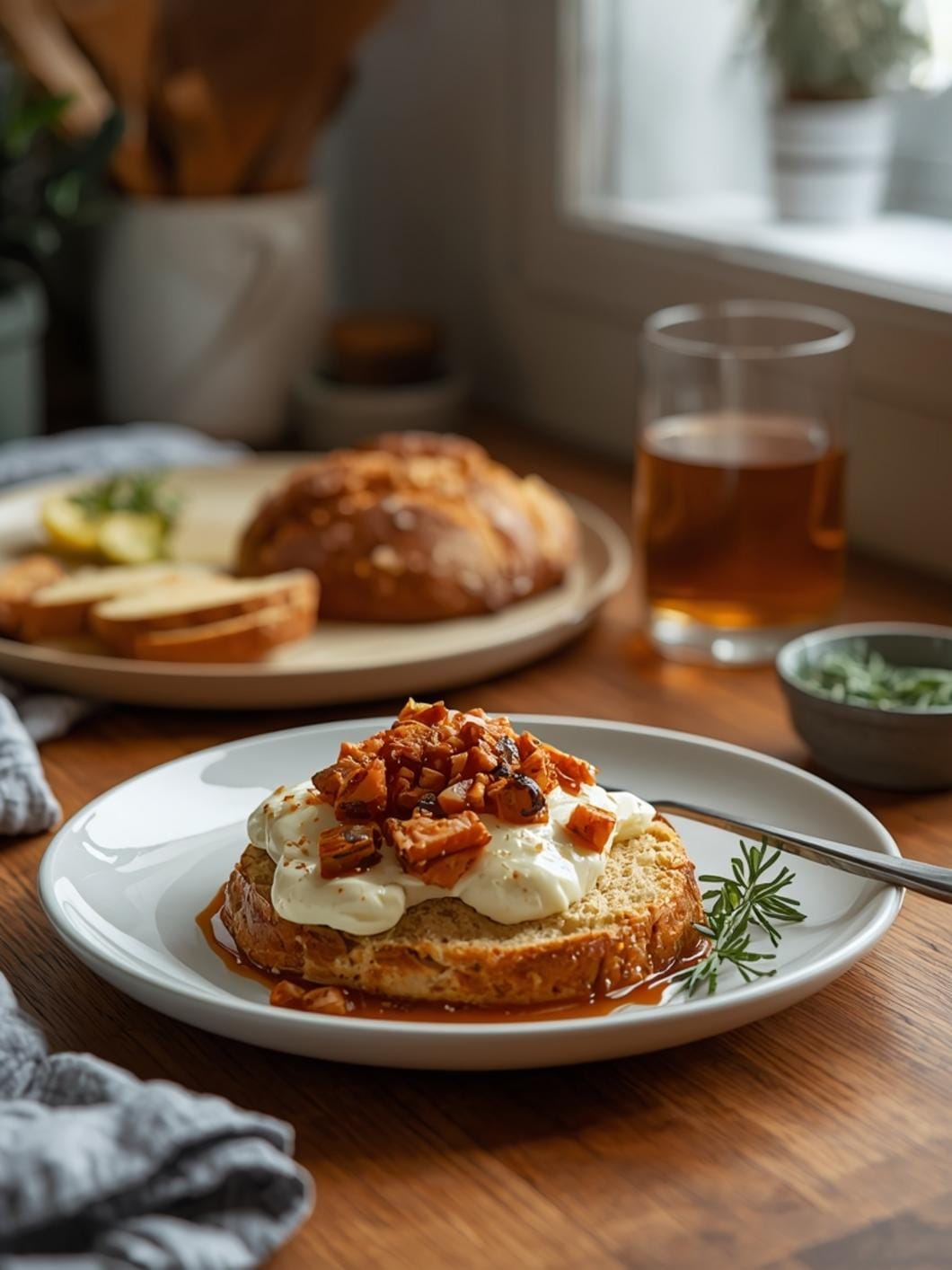
- Sweet Treat: Toast slices and spread with cream cheese and a drizzle of honey or a sprinkle of cinnamon sugar.
Common Slip-Ups And How To Avoid Them
Even with an easy recipe, a few common pitfalls can trip up a beginner. Knowing what to watch out for will help you achieve a perfect loaf every time.
- Not Using an Active Starter: If your starter isn’t bubbly and active (meaning it was fed 4-12 hours prior and has risen and fallen slightly), your dough won’t rise properly. Always check your starter’s vitality before you begin.
- Over-Flouring the Work Surface: Too much flour during shaping can make the dough dry and prevent it from sealing properly, leading to a less cohesive crumb. Use just enough to prevent sticking.
- Not Cooling Completely: It’s tempting to slice into a warm loaf, but cutting hot bread can make the interior gummy and dense. The bread continues to cook and set as it cools, so patience is key for the best texture.
- Under-Proofing or Over-Proofing: Under-proofed dough will be dense and have a tight crumb, while over-proofed dough can collapse and be difficult to handle. Look for visual cues: the dough should be jiggly, slightly domed, and have a few bubbles on the surface. A good test is the “poke test” – gently poke the dough with a wet finger; if it springs back slowly, it’s ready. If it springs back immediately, it needs more time. If it leaves a deep indentation, it might be over-proofed.
- Not Using a Dutch Oven (or similar): A Dutch oven creates a steamy environment that helps the crust develop beautifully and allows the bread to rise fully before the crust hardens. If you don’t have one, you can try
FAQs
- Can I make these ahead? Yes—prep ahead, refrigerate, then serve when ready.
- How long do leftovers last? Store covered in the fridge for 3–4 days for best texture.
- Can I adjust sweetness? Yes—add more or less sweetener to taste.
- Can I change the fruit? Yes—swap strawberries for blueberries, raspberries, or sliced banana.