
Craving that satisfying crunch and chewy interior of homemade sourdough bread but don’t own a Dutch oven? You’re in the right place! This guide is dedicated to showing you how to achieve fantastic sourdough loaves right in your regular kitchen, no special equipment needed. We’ll explore simple, effective techniques that deliver delicious results every time.
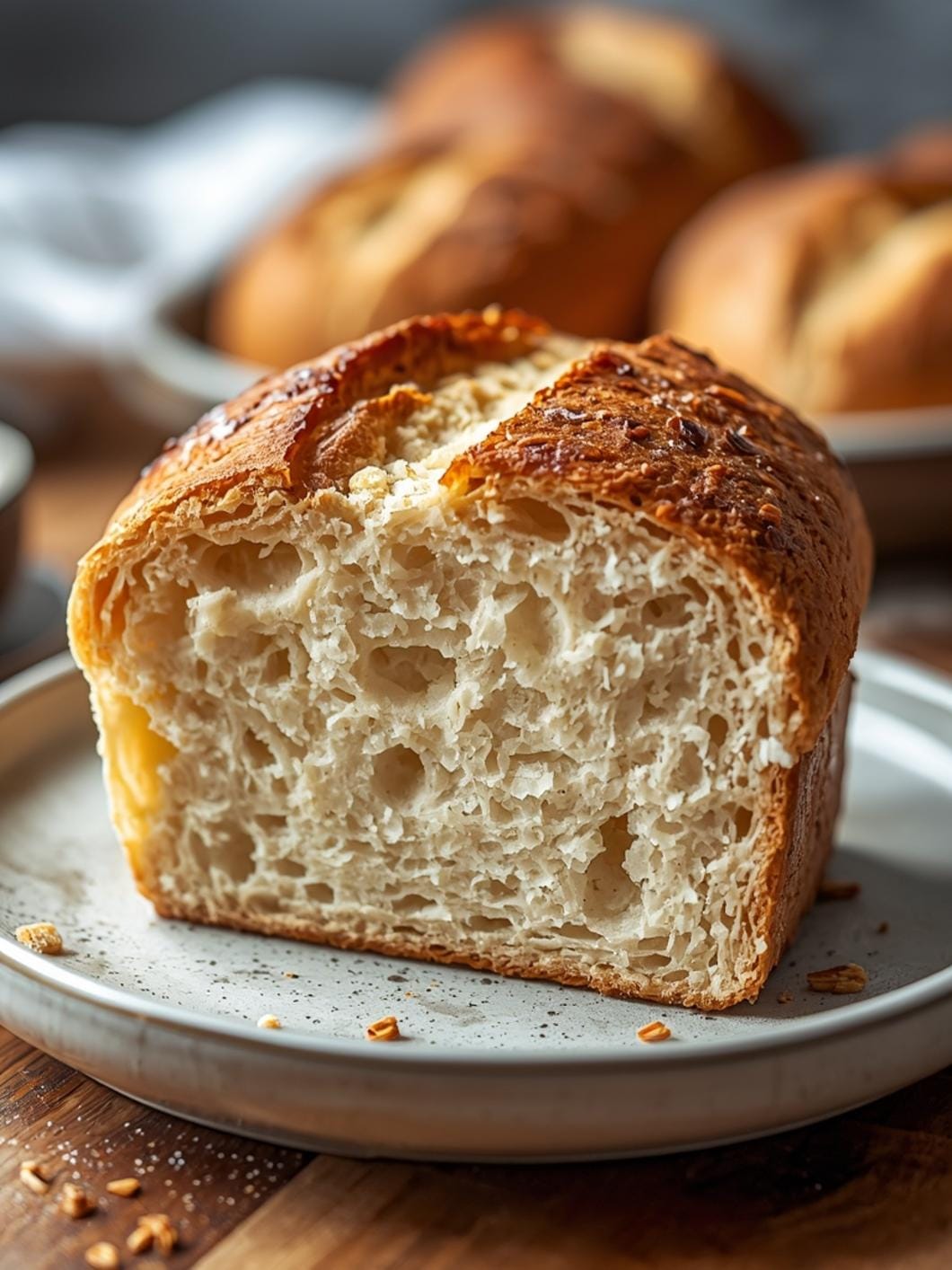
Forget the myth that a Dutch oven is essential for crusty sourdough. With a few clever tricks and readily available kitchen items, you can bake beautiful, flavorful bread that will impress everyone. Get ready to bake some amazing sourdough without the fuss!

No-Dutch-Oven Sourdough Bread
- Total Time: 12-24 hours
- Yield: 1 loaf 1x
Description
Learn to bake delicious, crusty sourdough bread without a Dutch oven using simple techniques and readily available kitchen items. This recipe focuses on creating a steamy environment in a regular oven to achieve a fantastic loaf.
Ingredients
Instructions
1. 1. Mixing the Dough: In a large bowl, combine the active sourdough starter and warm water. Stir until the starter is mostly dissolved. Add the flour and salt. Mix with a spoon or your hands until no dry flour remains and a shaggy dough forms. Cover the bowl with a damp towel or plastic wrap and let it rest for 30 minutes (autolyse).
2. 2. Performing Stretch and Folds: After the rest, perform your first set of stretch and folds. With wet hands, grab a portion of the dough from the edge, stretch it upwards, and fold it over the center. Rotate the bowl a quarter turn and repeat. Do this 4-6 times until the dough tightens. Repeat this process every 30-45 minutes for a total of 3-4 sets over 2-3 hours. This builds strength in the dough.
3. 3. Bulk Fermentation: After the stretch and folds, let the dough rest, covered, at room temperature for another 2-5 hours, or until it has increased in volume by about 30-50% and feels airy. The exact time depends on your room temperature and starter activity.
4. 4. Shaping the Loaf: Gently turn the dough out onto a lightly floured surface. Shape it into a round or oval loaf. You want to create tension on the surface of the dough. If using a proofing basket (banneton), dust it generously with rice flour or all-purpose flour. Place the shaped dough seam-side up into the basket.
5. 5. Cold Proofing: Cover the proofing basket with plastic wrap or a damp towel and refrigerate for 8-16 hours. This slows down fermentation, develops flavor, and makes the dough easier to handle.
6. 6. Preheating Your Oven and Baking Surface: About an hour before baking, place your chosen baking surface (a heavy baking sheet, pizza stone, or cast iron skillet) in the oven. Preheat the oven to 475 F (245 C). Crucially, place a separate oven-safe pan (like a cast iron skillet or broiler pan) on the bottom rack of your oven.
7. 7. Creating Steam and Baking: Carefully remove the hot baking surface from the oven. Gently invert your cold-proofed dough onto it. Score the top of the dough with a sharp razor blade or knife. Immediately transfer the baking surface with the dough back into the hot oven. Pour about 1 cup of boiling water into the hot pan on the bottom rack (be careful of the steam!). Quickly close the oven door.
8. 8. Finishing the Bake: Bake for 20 minutes with the steam. Then, carefully remove the pan of water from the oven. Reduce the oven temperature to 450 F (230 C) and continue baking for another 15-20 minutes, or until the crust is deep golden brown and sounds hollow when tapped on the bottom. Let the bread cool completely on a wire rack before slicing.
- Prep Time: 20-30 minutes
- Cook Time: 30-40 minutes
- Category: bread
- Method: baking
- Cuisine: american
Nutrition
- Serving Size: 1/10 loaf
Keywords: sourdough, bread, no dutch oven, homemade, baking, crusty, easy, starter, fermentation, yeast-free
What You’ll Love About This Quick And Easy Recipe
This collection of recipes is designed for the home baker who wants to enjoy the incredible taste of sourdough without the need for specialized equipment like a Dutch oven. It’s perfect for beginners who might feel intimidated by traditional sourdough methods, as well as experienced bakers looking for a simpler approach. You’ll love the flexibility and ease of these techniques, which allow you to bake delicious, crusty bread using standard baking sheets, pizza stones, or even cast iron skillets. These recipes are ideal for everyday baking, Sunday brunch, or simply enjoying a fresh, warm slice with dinner. They demystify sourdough, making it accessible and enjoyable for everyone in the family.
Everything You Need To Make This Recipe Without Stress
Making sourdough without a Dutch oven relies on creating a steamy environment in your regular oven. The ingredients themselves are straightforward and common for sourdough baking. You’ll need a good quality active sourdough starter, flour, water, and salt. The key is in how you handle the dough and create steam during the baking process.
INGREDIENTS:
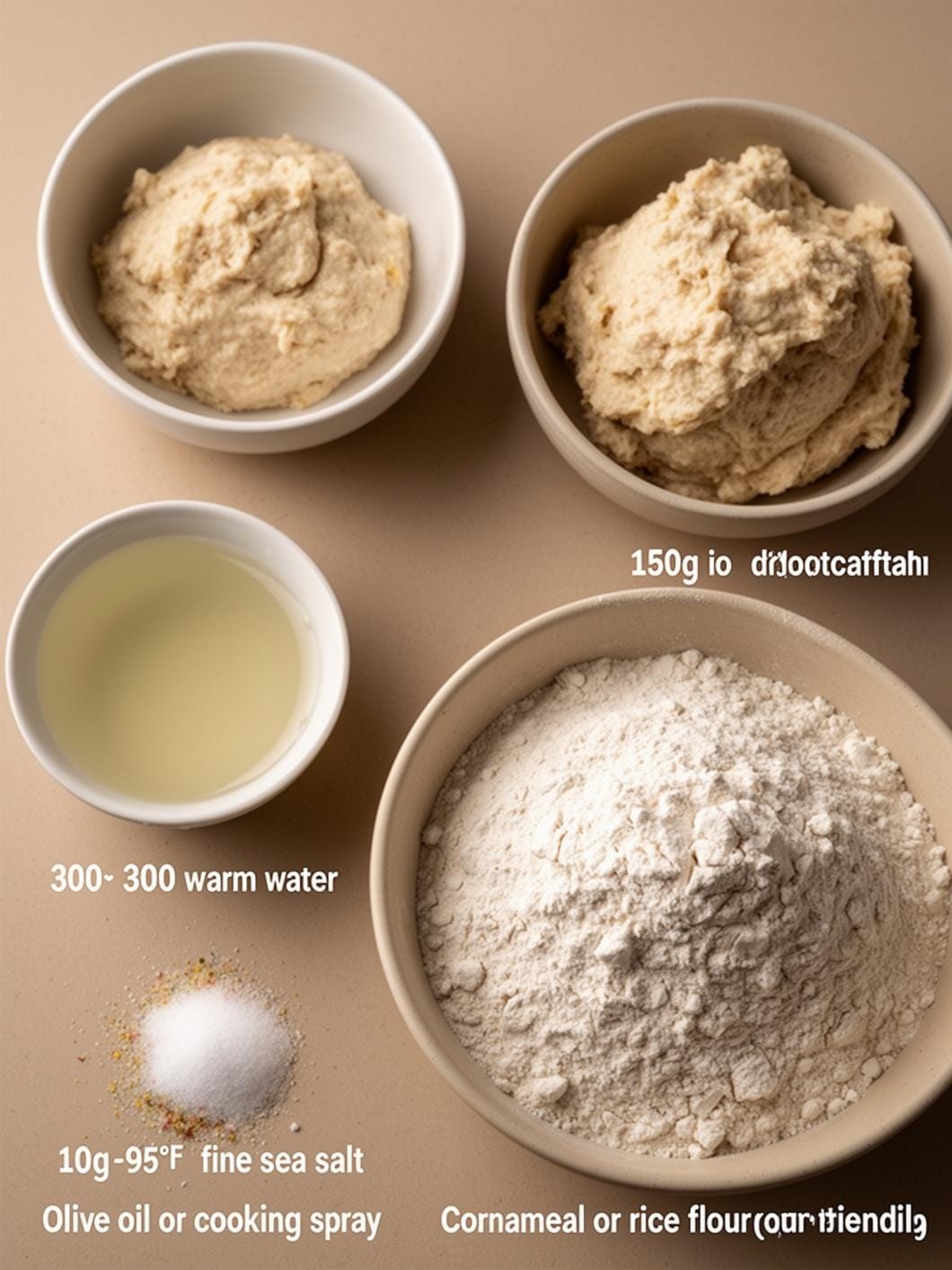
- 150 grams active sourdough starter (fed and bubbly)
- 300 grams warm water (around 90-95°F / 32-35°C)
- 500 grams bread flour (or all-purpose flour)
- 10 grams fine sea salt
- Olive oil or cooking spray for greasing
- Cornmeal or rice flour for dusting (optional, for non-stick)
For the flour, using bread flour will give you a chewier crumb and a better crust due to its higher protein content, but all-purpose flour works perfectly well too, especially for a first attempt. Ensure your sourdough starter is active and bubbly; this is crucial for a good rise. If you don’t have a starter, you can find many guides online to create one, or ask a friend for a portion of theirs. For the salt, fine sea salt or kosher salt are preferred over table salt for better flavor and easier dissolution.
Time Needed From Start To Finish
The beauty of these no-Dutch-oven sourdough methods is that while sourdough baking always involves some waiting for fermentation, the active hands-on time is quite minimal.
- Prep Time: 20-30 minutes (mixing, folding, shaping)
- Bulk Fermentation: 4-8 hours (depending on room temperature and starter activity)
- Cold Proofing (Optional but Recommended): 8-16 hours
- Bake Time: 30-40 minutes
- Total Time (Active): Approximately 1 hour
- Total Time (Including Fermentation/Proofing): 12-24 hours
While the overall process spans a day or two, most of this is hands-off time where the dough ferments and develops flavor. The actual work you put in is surprisingly quick.
How To Make It Step By Step With Visual Cues
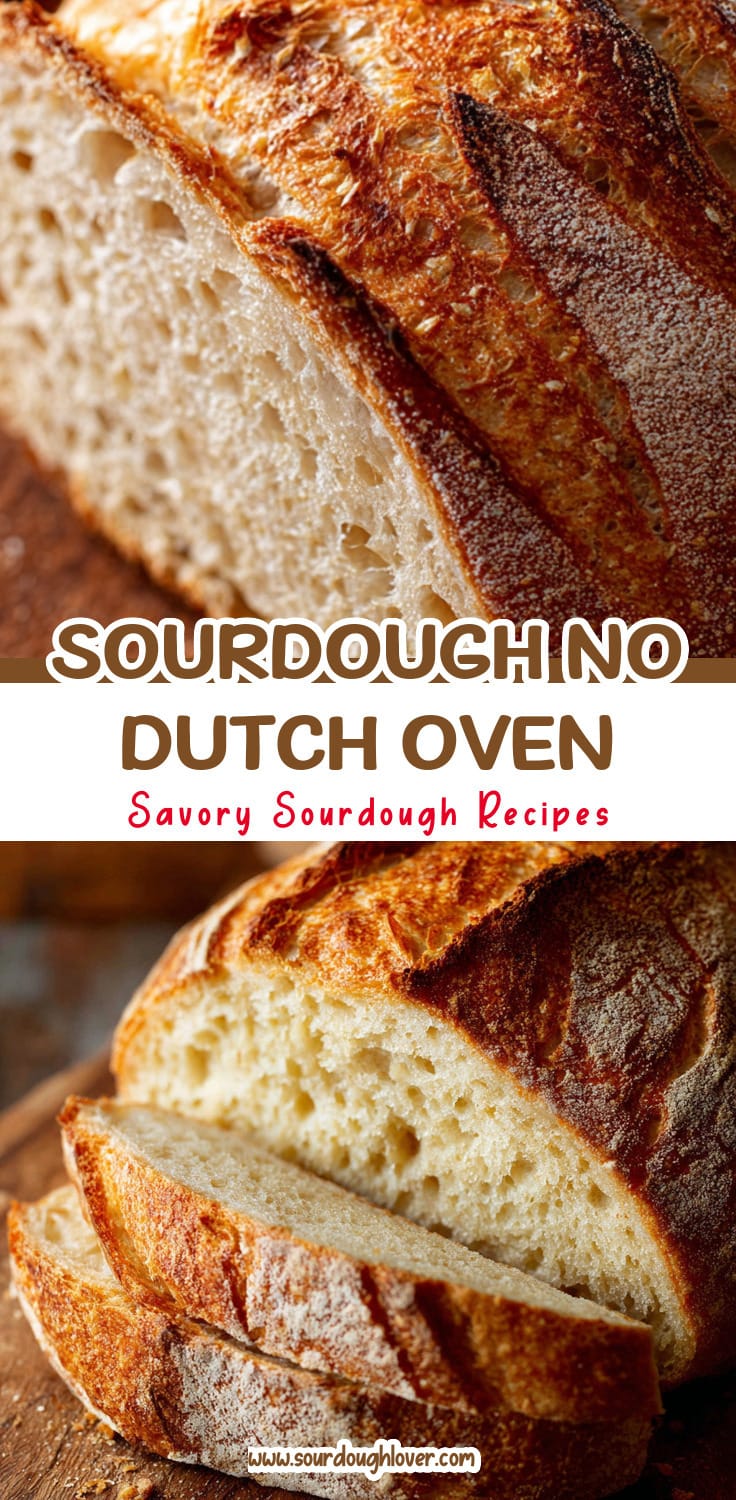
Achieving a great sourdough loaf without a Dutch oven involves a few key steps focused on dough development and creating steam.
- Mixing the Dough: In a large bowl, combine the active sourdough starter and warm water. Stir until the starter is mostly dissolved. Add the flour and salt. Mix with a spoon or your hands until no dry flour remains and a shaggy dough forms. Cover the bowl with a damp towel or plastic wrap and let it rest for 30 minutes (autolyse).
- Performing Stretch and Folds: After the rest, perform your first set of stretch and folds. With wet hands, grab a portion of the dough from the edge, stretch it upwards, and fold it over the center. Rotate the bowl a quarter turn and repeat. Do this 4-6 times until the dough tightens. Repeat this process every 30-45 minutes for a total of 3-4 sets over 2-3 hours. This builds strength in the dough.
- Bulk Fermentation: After the stretch and folds, let the dough rest, covered, at room temperature for another 2-5 hours, or until it has increased in volume by about 30-50% and feels airy. The exact time depends on your room temperature and starter activity.
- Shaping the Loaf: Gently turn the dough out onto a lightly floured surface. Shape it into a round or oval loaf. You want to create tension on the surface of the dough. If using a proofing basket (banneton), dust it generously with rice flour or all-purpose flour. Place the shaped dough seam-side up into the basket.
- Cold Proofing: Cover the proofing basket with plastic wrap or a damp towel and refrigerate for 8-16 hours. This slows down fermentation, develops flavor, and makes the dough easier to handle.
- Preheating Your Oven and Baking Surface: About an hour before baking, place your chosen baking surface (a heavy baking sheet, pizza stone, or cast iron skillet) in the oven. Preheat the oven to 475°F (245°C). Crucially, place a separate oven-safe pan (like a cast iron skillet or broiler pan) on the bottom rack of your oven.
- Creating Steam and Baking: Carefully remove the hot baking surface from the oven. Gently invert your cold-proofed dough onto it. Score the top of the dough with a sharp razor blade or knife. Immediately transfer the baking surface with the dough back into the hot oven. Pour about 1 cup of boiling water into the hot pan on the bottom rack (be careful of the steam!). Quickly close the oven door.
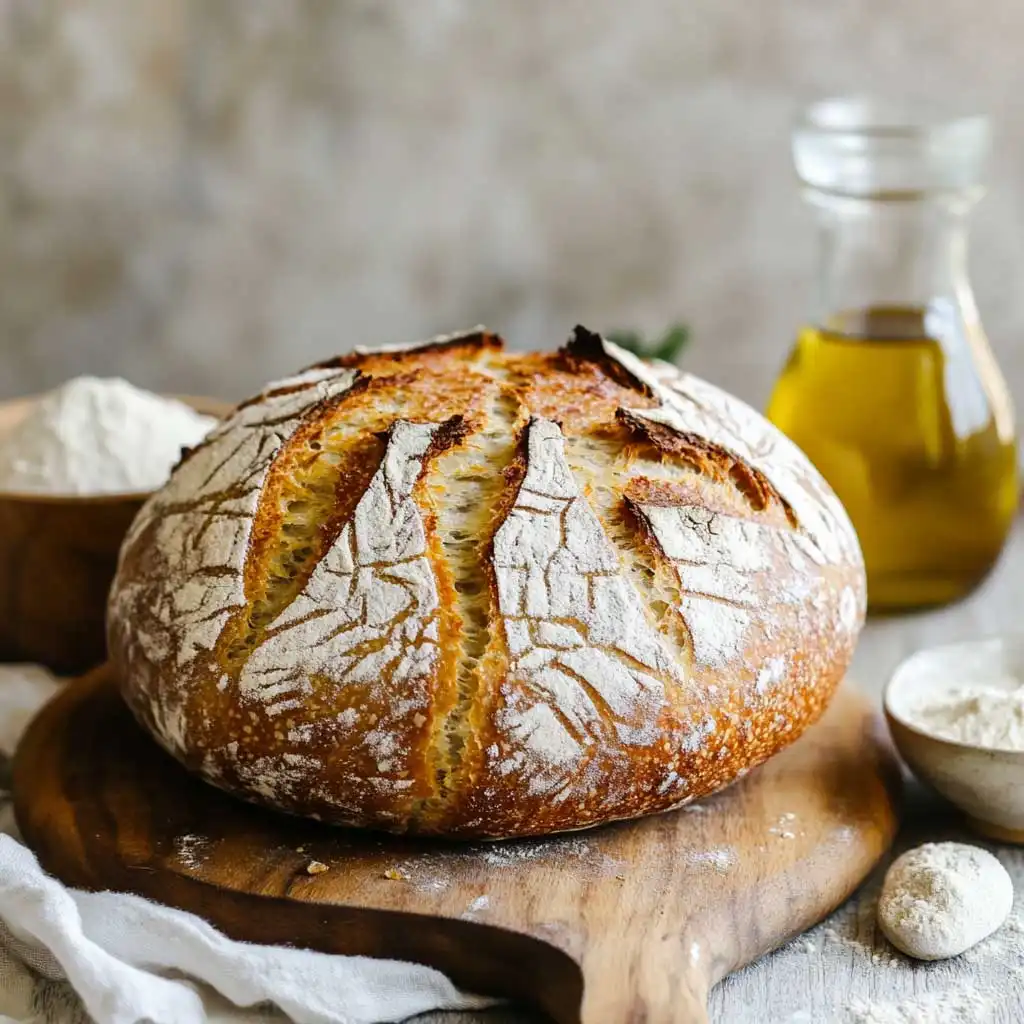
- Finishing the Bake: Bake for 20 minutes with the steam. Then, carefully remove the pan of water from the oven. Reduce the oven temperature to 450°F (230°C) and continue baking for another 15-20 minutes, or until the crust is deep golden brown and sounds hollow when tapped on the bottom. Let the bread cool completely on a wire rack before slicing.
Easy Variations And Serving Ideas That Fit Real Life
Sourdough bread is incredibly versatile and pairs well with almost anything. For a simple and satisfying meal, serve slices with a good quality olive oil for dipping, perhaps with a sprinkle of flaky sea salt and freshly ground black pepper.
- Garlic Herb Bread: Before baking, brush the top of the scored dough with melted butter mixed with minced garlic and dried herbs like rosemary or oregano.
- Cheese Sourdough: Gently fold in 1/2 cup of shredded cheddar or Gruyere cheese during the final shaping step.
- Sandwich Slices: This bread makes phenomenal sandwiches. Think hearty turkey and Swiss, or a classic BLT.
- Bruschetta Base: Toast slices and top with fresh diced tomatoes, basil, garlic, and a drizzle of balsamic glaze.
- Breakfast Toast: Serve thick slices toasted with butter and jam, avocado, or a poached egg.
- Soup Dippers: A crusty slice of sourdough is perfect for soaking up hearty soups and stews.
Common Slip-Ups And How To Avoid Them
Even without a Dutch oven, sourdough baking can have its challenges. Here are some common issues and how to navigate them:
- Flat Loaf: This is often due to an under-active starter or insufficient dough strength. Ensure your starter is bubbly and passes the float test (a small piece floats in water). Also, don’t skip the stretch and folds; they build the gluten structure needed for a good rise.
- Dense Crumb: Similar to a flat loaf, a dense crumb can indicate an under-proofed dough or a weak starter. Give your dough enough time to ferment and proof, watching for visual cues like increased volume and airiness.
- Lack of Crust: The key to a good crust without a Dutch oven is creating steam. If your crust isn’t crispy, you might not have enough steam in the oven, or it escaped too quickly. Ensure your boiling water is truly boiling, and close the oven door quickly after adding it. Some bakers even spray the oven walls with water for extra steam.
- Dough Sticking: If your dough sticks to your proofing basket or baking surface, you might not have floured it enough. Use rice flour for bannetons, as it’s less absorbent than wheat flour and helps prevent sticking. For baking sheets, parchment paper is your friend.
- Over-Proofing: An over-proofed dough will spread out and be difficult to handle, often resulting in a flat, dense loaf. The cold proof in the refrigerator helps prevent this by slowing down fermentation. If proofing at room temperature, watch the dough closely and bake

FAQs
- Can I make these ahead? Yes—prep ahead, refrigerate, then serve when ready.
- How long do leftovers last? Store covered in the fridge for 3–4 days for best texture.
- Can I adjust sweetness? Yes—add more or less sweetener to taste.
- Can I change the fruit? Yes—swap strawberries for blueberries, raspberries, or sliced banana.