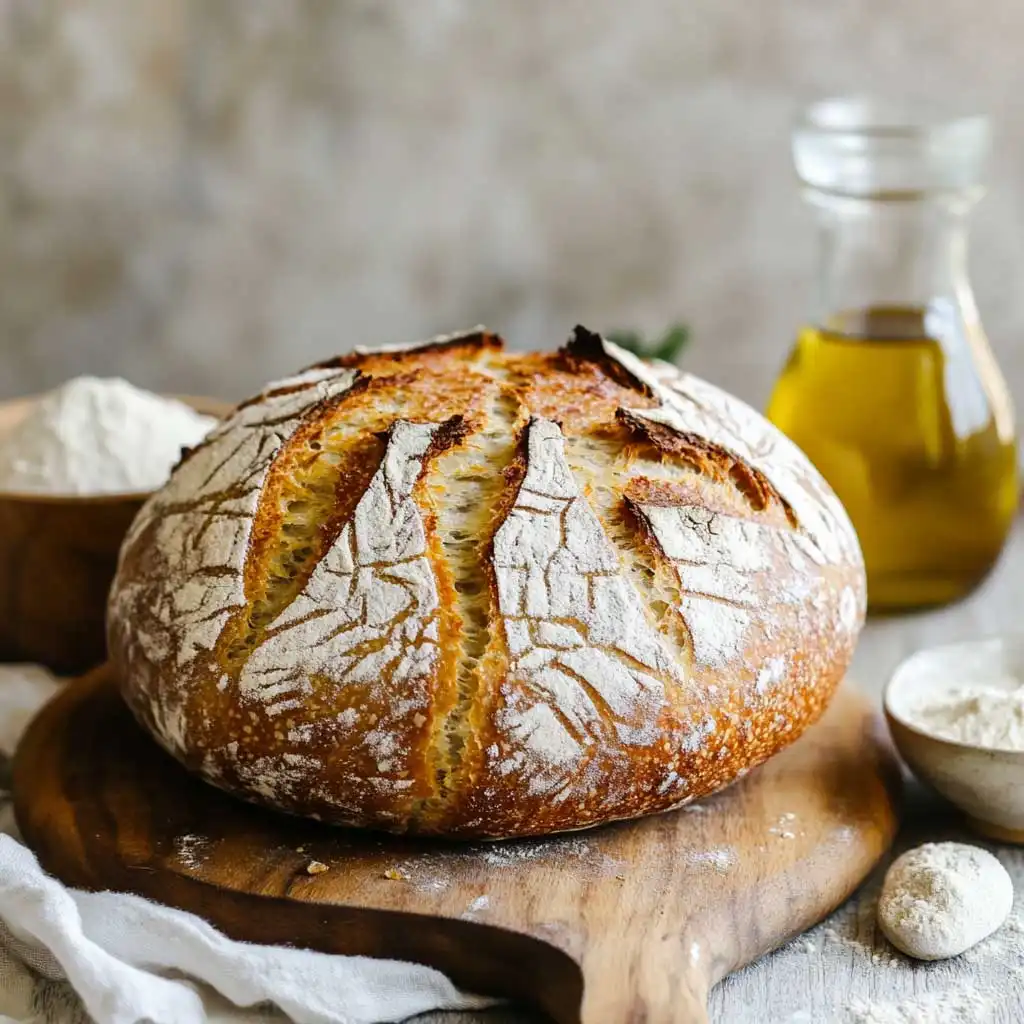

Learning to score sourdough bread can feel intimidating, but it’s one of the most rewarding steps in baking your own loaves.
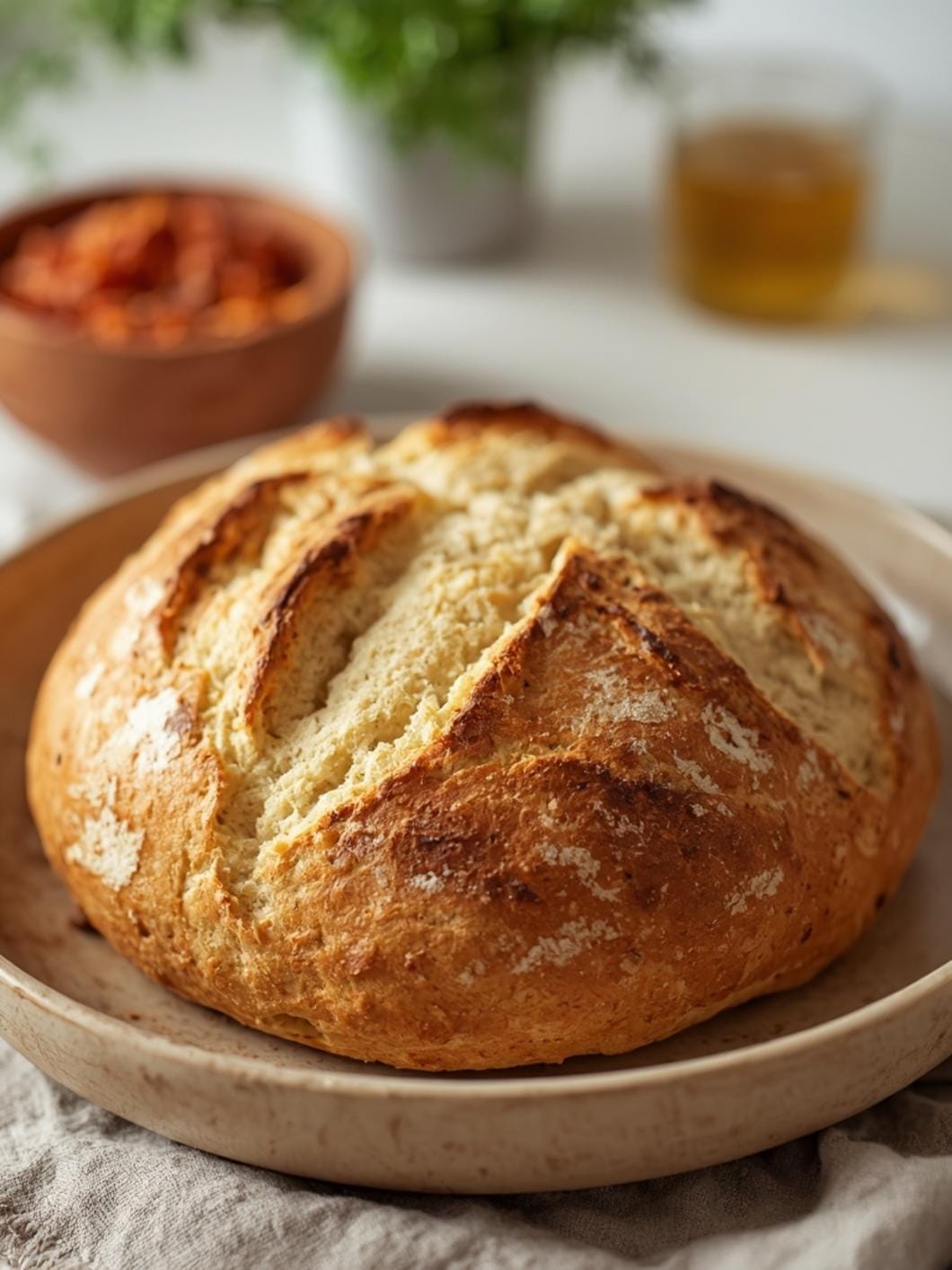
A beautiful score isn’t just for looks; it helps guide the oven spring, allowing your bread to expand properly and prevent uncontrolled cracking. This guide focuses on simple, beginner-friendly patterns that will make your homemade sourdough look professional without requiring advanced techniques.
Whether you’re new to sourdough or just want to expand your repertoire of designs, these easy scoring patterns will help you achieve stunning results every time. We’ll cover practical, achievable cuts that enhance your bread’s appearance and structure, making your baking journey even more enjoyable.
Table of Contents
- What You’ll Love About This Quick And Easy Recipe
- Everything You Need To Make This Recipe Without Stress
- Time Needed From Start To Finish
- How To Make It Step By Step With Visual Cues
- Easy Variations And Serving Ideas That Fit Real Life
- Common Slip-Ups And How To Avoid Them
- How To Store It And Make It Ahead Without Ruining Texture

Easy Sourdough Scoring Patterns for Beginners
- Total Time: 2-5 minutes
- Yield: 1 loaf 1x
Description
Learn simple, beginner-friendly sourdough scoring patterns that enhance your bread’s appearance and structure, guiding oven spring and preventing uncontrolled cracking. This guide focuses on practical cuts like the cross, single arc, four-quadrant square, leaf, and wheat stalk, perfect for achieving professional-looking loaves with minimal effort.
Ingredients
Instructions
1. Prepare Your Dough and Tools: Ensure your proofed sourdough loaf is cold, ideally straight from the refrigerator. This helps the dough maintain its structure during scoring. Have your lame or a very sharp knife ready.
2. The Simple Cross (Basic Expansion): For a classic, effective score, hold your lame at a 45-degree angle to the dough surface. Make one long, confident cut across the top of the loaf, about 1/2 to 3/4 inch deep. Then, make a second cut perpendicular to the first, forming a cross. This pattern allows for excellent oven spring and a beautiful ear.
3. The Single Arc (Elegant Simplicity): Position your lame at a 45-degree angle. Starting from one side of the loaf, make a single, graceful curved cut that spans most of the loaf’s surface. Imagine drawing a shallow “C” or a gentle arc. This creates a lovely, elongated ear and an elegant appearance.
4. The Four-Quadrant Square (Structured Design): For a more structured look, make two parallel cuts across the top of the loaf, about 1/2 inch deep and a few inches apart. Then, make two more parallel cuts perpendicular to the first set, creating a grid of four squares. This pattern encourages even expansion across the loaf.
5. The Leaf Pattern (Decorative Touch): Start by making a single central cut down the length of the loaf, about 1/2 inch deep. Then, on either side of this central cut, make several small, shallow diagonal cuts, angling them slightly towards the center cut. These smaller cuts should only be about 1/4 inch deep. This creates a beautiful leaf-like effect as the bread bakes.
6. The Wheat Stalk (Artistic Flair): Make one long, shallow cut down the center of the loaf, not too deep. Then, on either side of this central line, make a series of short, parallel diagonal cuts, angling them away from the center line. These should be very shallow, just breaking the surface of the dough. This mimics the look of a wheat stalk.
7. Spritz with Water (Optional but Recommended): After scoring, you can lightly spritz the loaf with water using a spray bottle. This helps create a crispier crust and can enhance the “ear” formation.
8. Bake Immediately: Place your scored loaf into your preheated oven or Dutch oven as per your sourdough recipe’s instructions. The cuts will expand beautifully during baking.
- Prep Time: 2-5 minutes
- Cook Time: Varies (baking time for the loaf itself)
- Category: baking
- Method: scoring
- Cuisine: american
Nutrition
- Serving Size: 1 loaf
Keywords: sourdough, scoring, baking, bread, patterns, beginner, artisan, homemade, technique, oven spring
What You’ll Love About This Quick And Easy Recipe
This approach to sourdough scoring is perfect for anyone who wants to add a touch of artistry to their homemade bread without the stress of complex designs. It’s ideal for beginner bakers looking to elevate their loaves, as well as experienced bakers who appreciate simple elegance. You’ll love how quickly you can master these patterns, transforming a plain loaf into a bakery-worthy masterpiece. This guide is designed for busy individuals and families who want impressive results without spending hours on intricate details. Serve these beautifully scored loaves at family dinners, weekend brunches, or as a thoughtful gift for friends and neighbors. It’s a fantastic way to showcase your baking skills with minimal effort.
Everything You Need To Make This Recipe Without Stress
This guide doesn’t require any special ingredients, just your prepared sourdough loaf ready for scoring. The key tools are simple and accessible, ensuring a smooth and stress-free experience as you learn these easy patterns.
INGREDIENTS:
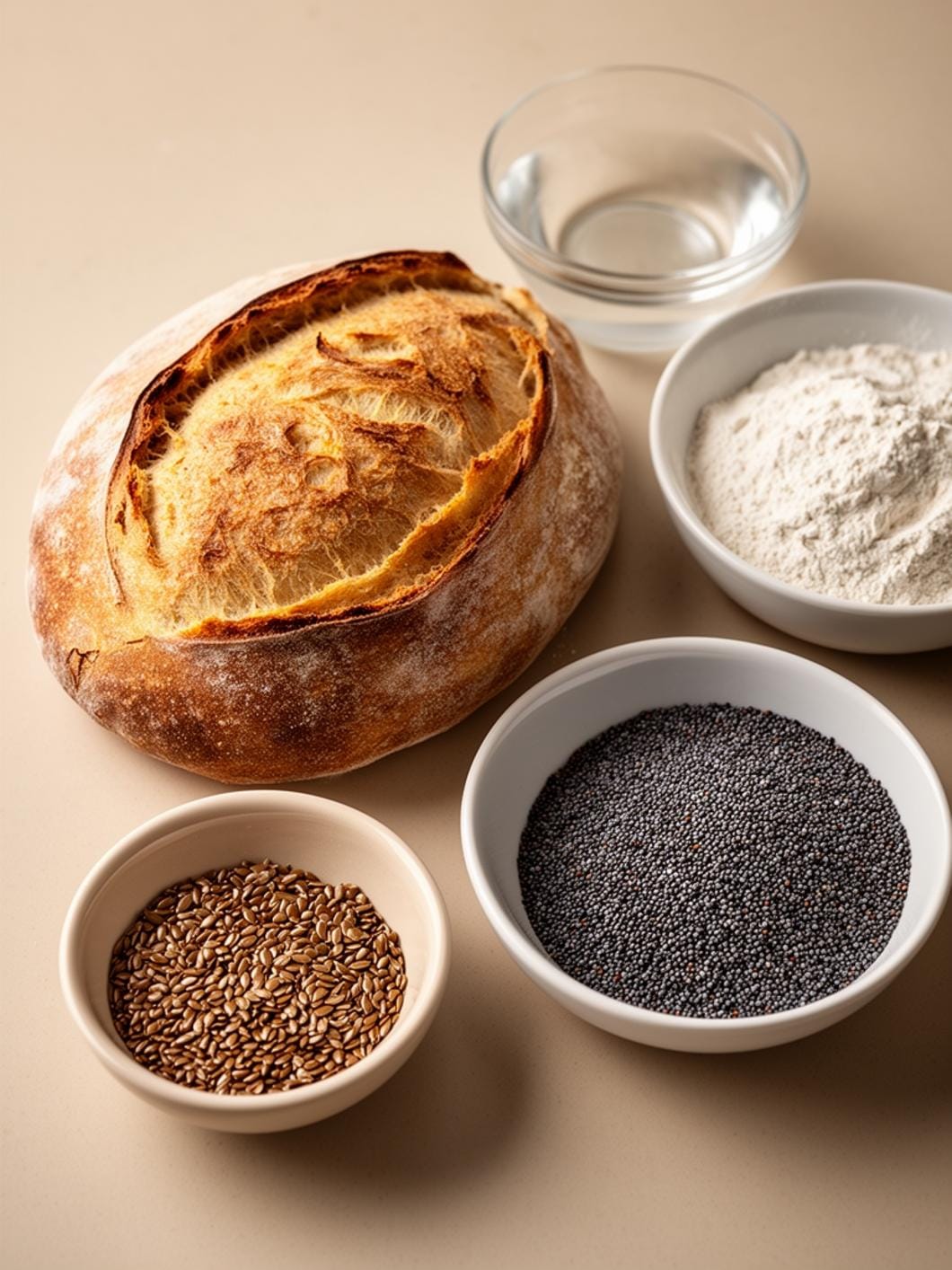
- 1 proofed sourdough loaf, ready for baking
You won’t need any specific brands for your sourdough loaf; just use your favorite recipe or starter. The focus here is on the scoring technique, not the dough itself. For scoring, a sharp lame (a razor blade holder) is highly recommended for clean cuts, but a very sharp knife or even a clean, new razor blade held carefully can also work in a pinch.
Time Needed From Start To Finish
The actual scoring process for these easy patterns is incredibly quick.
- Prep time: 2-5 minutes (once your dough is ready)
- Cook time: Varies based on your sourdough recipe (baking time for the loaf itself)
- Total time: 2-5 minutes of active scoring time
This timing reflects only the scoring step; your overall sourdough baking timeline will depend on your specific recipe for preparing the dough.
How To Make It Step By Step With Visual Cues
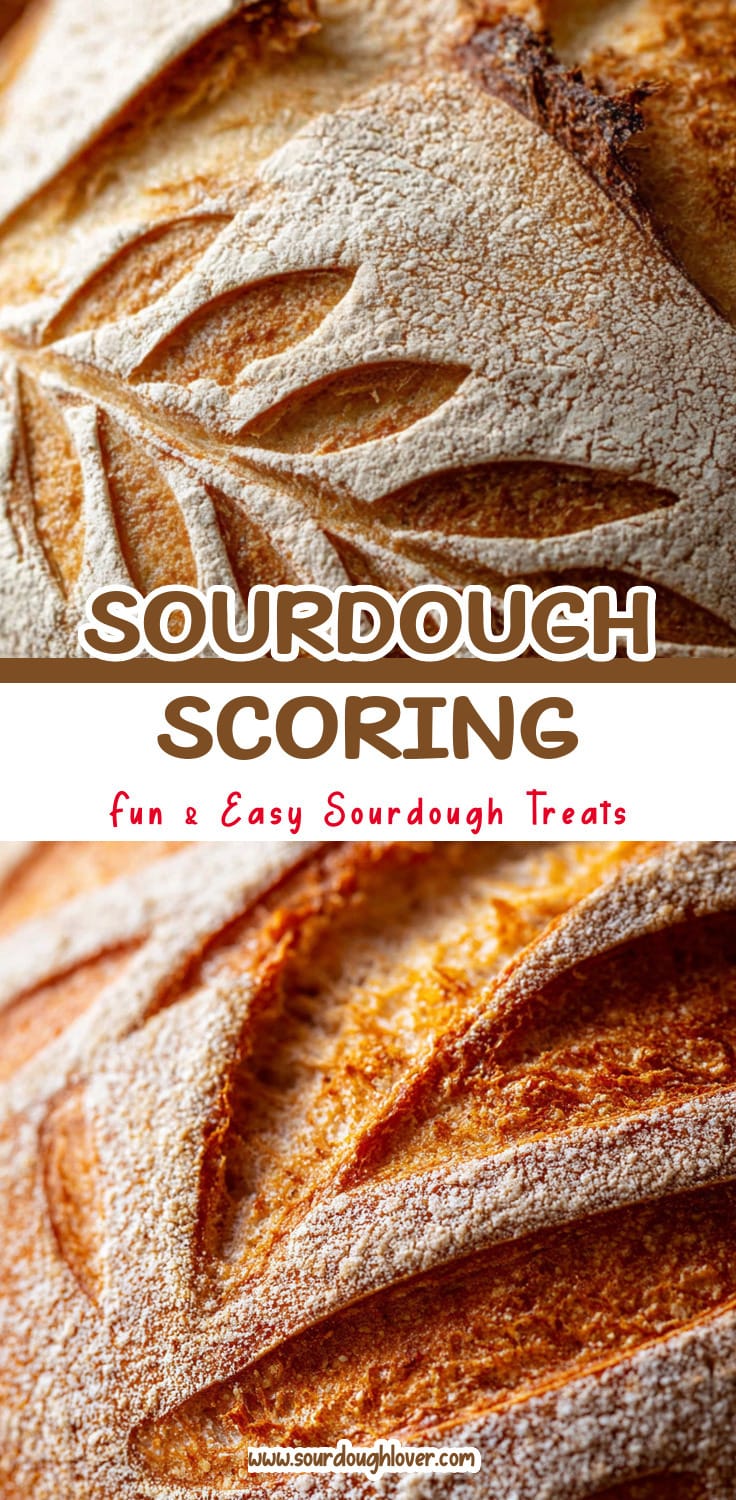
Scoring your sourdough loaf is the final step before it goes into the oven. Make sure your dough is well-proofed and chilled, as this makes scoring easier and helps the patterns hold their shape.
- Prepare Your Dough and Tools: Ensure your proofed sourdough loaf is cold, ideally straight from the refrigerator. This helps the dough maintain its structure during scoring. Have your lame or a very sharp knife ready.
- The Simple Cross (Basic Expansion): For a classic, effective score, hold your lame at a 45-degree angle to the dough surface. Make one long, confident cut across the top of the loaf, about 1/2 to 3/4 inch deep. Then, make a second cut perpendicular to the first, forming a cross. This pattern allows for excellent oven spring and a beautiful ear.
- The Single Arc (Elegant Simplicity): Position your lame at a 45-degree angle. Starting from one side of the loaf, make a single, graceful curved cut that spans most of the loaf’s surface. Imagine drawing a shallow “C” or a gentle arc. This creates a lovely, elongated ear and an elegant appearance.
- The Four-Quadrant Square (Structured Design): For a more structured look, make two parallel cuts across the top of the loaf, about 1/2 inch deep and a few inches apart. Then, make two more parallel cuts perpendicular to the first set, creating a grid of four squares. This pattern encourages even expansion across the loaf.
- The Leaf Pattern (Decorative Touch): Start by making a single central cut down the length of the loaf, about 1/2 inch deep. Then, on either side of this central cut, make several small, shallow diagonal cuts, angling them slightly towards the center cut. These smaller cuts should only be about 1/4 inch deep. This creates a beautiful leaf-like effect as the bread bakes.
- The Wheat Stalk (Artistic Flair): Make one long, shallow cut down the center of the loaf, not too deep. Then, on either side of this central line, make a series of short, parallel diagonal cuts, angling them away from the center line. These should be very shallow, just breaking the surface of the dough. This mimics the look of a wheat stalk.
- Spritz with Water (Optional but Recommended): After scoring, you can lightly spritz the loaf with water using a spray bottle. This helps create a crispier crust and can enhance the “ear” formation.
- Bake Immediately: Place your scored loaf into your preheated oven or Dutch oven as per your sourdough recipe’s instructions. The cuts will expand beautifully during baking.
Easy Variations And Serving Ideas That Fit Real Life
These simple scoring patterns are versatile and can be adapted to any sourdough loaf. They are perfect for everyday baking or for when you want to impress guests.
- Kid-Friendly Designs: For a fun twist, let older kids try simple patterns like the cross or a single arc under supervision. You can also use small cookie cutters (lightly floured) to press very shallow, decorative shapes onto the surface before scoring, then make your main expansion cuts around them.
- Flavor Swaps: While scoring doesn’t change the flavor, a beautifully scored loaf makes any bread taste better! Consider adding inclusions to your sourdough like cheese, herbs, or dried fruits, and then use these simple scores to highlight the artisanal quality.
- Party and Buffet Serving: A loaf with an elegant score is a fantastic centerpiece for any gathering. Serve it with a simple olive oil dip, a selection of cheeses, or a hearty soup. The visual appeal adds a gourmet touch to even the simplest meal.
- Optional Toppings: After scoring but before baking, you can lightly dust your loaf with flour (for contrast), or sprinkle with seeds (like sesame, poppy, or flax) for added texture and visual interest.
Common Slip-Ups And How To Avoid Them
Even with simple scoring, a few common issues can arise. Knowing how to prevent them will lead to more consistent, beautiful results.
- Dough Is Too Warm/Sticky: If your dough is at room temperature, it can be soft and challenging to score cleanly, leading to jagged or collapsed cuts. Solution: Always score a cold loaf, ideally straight from the refrigerator after its final proof. This firms up the dough, making it easier to achieve crisp lines.
- Cuts Are Too Shallow or Too Deep: Cuts that are too shallow won’t allow for proper oven spring, leading to uncontrolled cracking elsewhere. Cuts that are too deep can cause the loaf to spread too much and lose its shape. Solution: Aim for a depth of 1/2 to 3/4 inch for primary expansion cuts, and 1/4 inch for decorative, shallow cuts. Practice helps you gauge the right depth.
- Blade Dragging or Tearing: A dull blade will drag through the dough instead of slicing cleanly, resulting in messy, uneven scores. Solution: Always use a very sharp lame or razor blade. Replace blades frequently. If using a knife, ensure it’s razor-sharp.
- Hesitant Cuts: Slow, hesitant cuts can also lead to dragging and tearing. Solution: Be confident and swift with your movements. A quick, decisive stroke is better than a slow, tentative one.
- Not Angling the Blade Correctly: Holding the blade straight up (90 degrees) will create a flat opening. Angling the blade at 45 degrees allows for the creation of a beautiful “ear” – a flap of crust that peels back during baking. Solution: Always aim for a 45-degree angle for your main expansion cuts to encourage a good ear.
How To Store It And Make It Ahead Without Ruining Texture
Scoring is a last-minute step before baking, so there’s no “making ahead” the scoring itself. However, proper storage of your baked, scored loaf is key to enjoying its beauty and flavor.
- Storing Baked Bread: Once your beautifully scored sourdough has cooled completely, store it at room temperature. For short-term storage (1-2 days), a linen bread bag or a paper bag will help keep the crust crisp while preventing the interior from drying out too quickly. For longer storage (up to a week), a sealed plastic bag or airtight container will keep it softer, though the crust may soften.
- Freezing for Longer Storage: To enjoy your expertly scored loaf for weeks, slice it once completely cool and freeze the slices in an airtight freezer bag. You can also freeze the entire loaf, wrapped tightly in plastic wrap and then foil. Thaw at room temperature or toast individual slices directly from frozen.
- Reheating: To revive a day-old loaf and bring
FAQs
- Can I make these ahead? Yes—prep ahead, refrigerate, then serve when ready.
- How long do leftovers last? Store covered in the fridge for 3–4 days for best texture.
- Can I adjust sweetness? Yes—add more or less sweetener to taste.
- Can I change the fruit? Yes—swap strawberries for blueberries, raspberries, or sliced banana.