
Crafting your own pizza at home becomes an incredibly satisfying experience when you start with a fantastic dough.

This recipe for homemade sourdough pizza dough transforms a simple meal into something truly special, bringing a wonderful depth of flavor and that perfect chewy texture to your crust.
Using your active sourdough starter, you’ll create a dough that’s not only delicious but also surprisingly easy to manage, making it ideal for a fun family dinner or a casual get-together with friends. Get ready to elevate your pizza night with a crust that truly shines!

Homemade Sourdough Pizza Dough
- Total Time: 6-8 hours (same-day) or 12-24 hours (cold ferment)
- Yield: 2 medium pizzas 1x
Description
Craft your own delicious pizza at home with this easy sourdough pizza dough recipe. It delivers a flavorful, chewy crust with minimal fuss, perfect for family dinners or entertaining. This recipe is a game-changer for anyone with an active sourdough starter, offering a unique tang and satisfying texture that elevates any pizza night.
Ingredients
Instructions
1. Combine the Starter and Water: In a large mixing bowl, gently whisk together your active sourdough starter and the warm water until the starter is mostly dissolved and the mixture is cloudy. This ensures even distribution of the starter throughout the dough.
2. Add Flour and Salt: Add the all-purpose flour and fine sea salt to the bowl. Use a wooden spoon or your hands to mix everything together until a shaggy dough forms and there are no dry spots of flour remaining. It will look a bit rough and uneven at this stage.
3. Initial Kneading and Rest (Autolyse): Turn the dough out onto a lightly floured surface. Knead for about 2-3 minutes, just until the ingredients are well combined. It won’t be smooth yet. Form it into a ball, cover it with the bowl, and let it rest for 20-30 minutes. This resting period, called autolyse, allows the flour to fully hydrate, making the dough easier to work with.
4. Incorporate Olive Oil and Final Kneading: After the rest, flatten the dough slightly and drizzle the tablespoon of olive oil over it. Knead the dough for 5-7 minutes until it becomes smooth, elastic, and passes the “windowpane test” (you should be able to stretch a small piece thin enough to see light through it without tearing). If it’s too sticky, lightly flour your hands, not the surface.
5. Bulk Fermentation: Form the dough into a smooth ball and place it in a lightly oiled bowl. Cover the bowl tightly with plastic wrap or a damp kitchen towel. Let it ferment at room temperature (around 70-75 F / 21-24 C) for 4-6 hours, or until it has visibly increased in size by about 50-75% and looks bubbly. Alternatively, you can place it in the refrigerator for 12-24 hours for a slower, colder fermentation, which develops more flavor.
6. Divide and Shape: Gently turn the dough out onto a lightly floured surface. Divide it into two equal portions for two medium pizzas. Gently shape each portion into a tight ball by pulling the edges underneath. Place the dough balls on a lightly floured baking sheet, cover loosely with plastic wrap, and let them proof at room temperature for 1-2 hours before stretching and baking. They should feel puffy and soft.
7. Preheat and Stretch: About 30-60 minutes before baking, preheat your oven to its highest setting (usually 500-550 F / 260-290 C) with a pizza stone or steel inside. Once ready, gently stretch each dough ball into your desired pizza shape on a lightly floured surface or directly on parchment paper for easy transfer. Avoid using a rolling pin, as it can press out too much air.
8. Top and Bake: Transfer the stretched dough to a pizza peel dusted with semolina or flour (or keep it on parchment paper). Add your favorite sauce, cheese, and toppings. Slide the pizza onto the hot pizza stone or steel and bake for 8-15 minutes, or until the crust is golden brown and the cheese is bubbly and melted.
- Prep Time: 15 minutes
- Cook Time: 8-15 minutes
- Category: main dish
- Method: baking
- Cuisine: italian
Nutrition
- Serving Size: 1/2 pizza
Keywords: sourdough, pizza, dough, homemade, crust, baking, italian, easy, fermented, dinner
What You’ll Love About This Quick And Easy Recipe
This sourdough pizza dough recipe is a game-changer for anyone who loves pizza and has an active sourdough starter. What makes it so special is its ability to deliver an incredibly flavorful and chewy crust with minimal fuss. It’s perfect for busy weeknights when you want something a bit more elevated than store-bought dough, but don’t have hours to spend on complicated baking projects. Families will adore this recipe because it allows for a fun, interactive meal where everyone can customize their own pizza toppings. It’s also a fantastic way to utilize your sourdough starter, giving it a purpose beyond just making bread. Serve it for a casual Friday night dinner, a weekend lunch, or even as a base for creative appetizers when entertaining. The natural tang from the sourdough starter adds a unique complexity that you simply can’t get from commercial yeast alone, making every bite a delightful experience. It’s designed for home cooks who appreciate good food but need practical, straightforward instructions to get there.
Everything You Need To Make This Recipe Without Stress
Gathering your ingredients for this sourdough pizza dough is straightforward, focusing on pantry staples you likely already have if you maintain a sourdough starter. The beauty of this recipe lies in its simplicity and the quality of a few key components. You don’t need any fancy equipment, just your hands, a mixing bowl, and some patience.
INGREDIENTS:
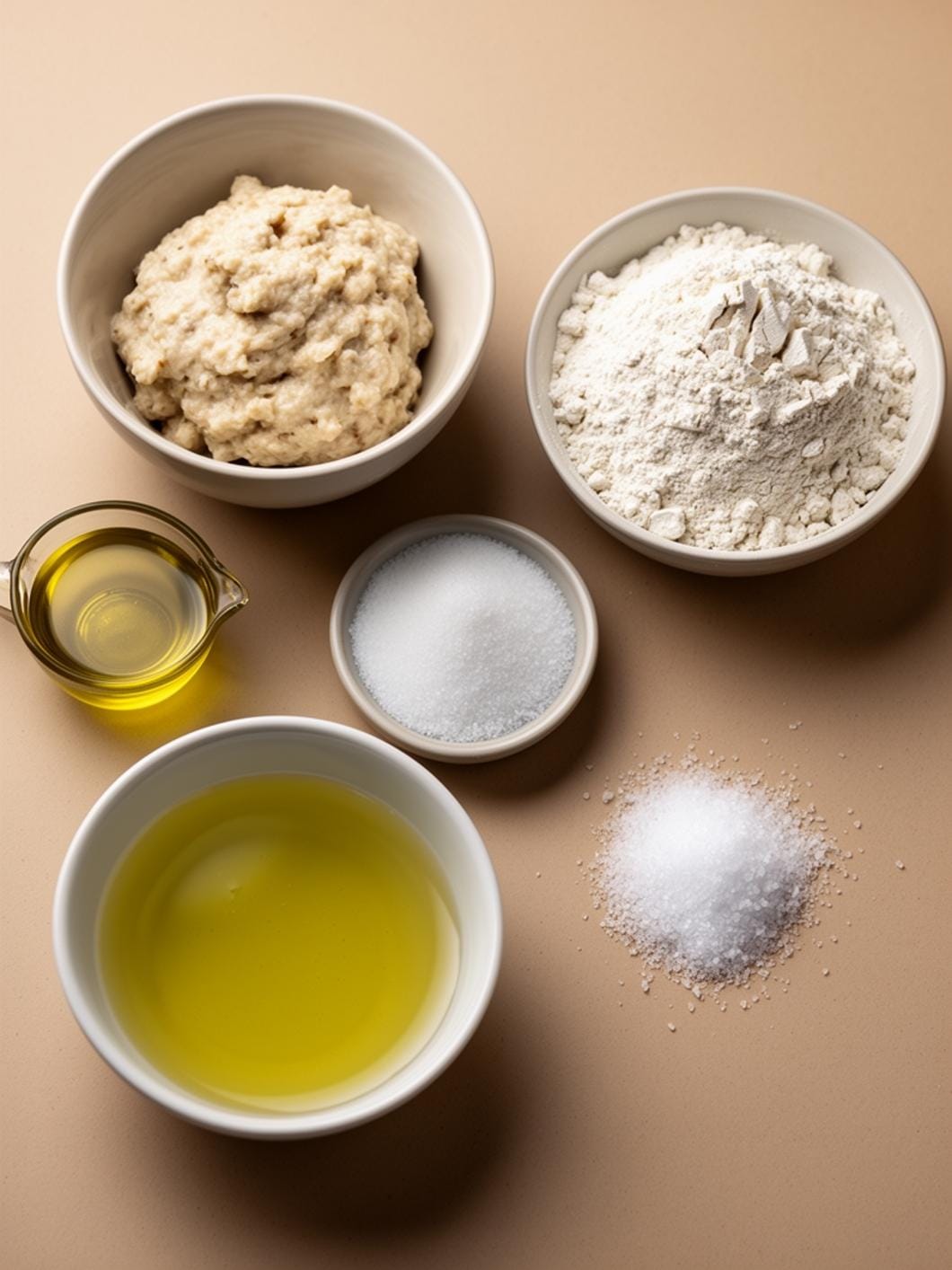
- 100 grams active sourdough starter
- 150 grams warm water (around 90-100°F / 32-38°C)
- 250 grams all-purpose flour
- 5 grams fine sea salt
- 1 tablespoon olive oil, plus more for greasing
For the all-purpose flour, any standard brand will work perfectly. If you prefer a slightly chewier crust, you can substitute up to half of the all-purpose flour with bread flour. When it comes to salt, fine sea salt or kosher salt are ideal as they dissolve easily and distribute evenly throughout the dough. Avoid using iodized table salt, as it can sometimes impart a metallic taste. The olive oil adds a lovely richness and helps with the dough’s texture and elasticity. A good quality extra virgin olive oil will lend the best flavor, but any olive oil you have on hand will do the trick. Ensure your sourdough starter is active and bubbly, as this is crucial for the dough to rise properly and develop its characteristic flavor.
Time Needed From Start To Finish
While sourdough baking often implies long waits, this pizza dough recipe is designed to be relatively quick and manageable within a day, allowing you to enjoy homemade pizza without excessive planning.
Prep time: 15 minutes (active mixing and kneading) Bulk fermentation: 4-6 hours (or overnight in the fridge) Proofing: 1-2 hours (after shaping) Total time: 6-8 hours (same-day bake) or 12-24 hours (cold ferment)
The active hands-on time is minimal, making it a great recipe to fit into a busy schedule. The bulk of the time is spent waiting for the dough to ferment, which is mostly hands-off. If you opt for an overnight cold ferment in the refrigerator, you can spread the process over two days, making it even more convenient for meal planning.
How To Make It Step By Step With Visual Cues

Making sourdough pizza dough is a rewarding process, and these steps will guide you to a perfectly pliable and flavorful crust.
- Combine the Starter and Water: In a large mixing bowl, gently whisk together your active sourdough starter and the warm water until the starter is mostly dissolved and the mixture is cloudy. This ensures even distribution of the starter throughout the dough.
- Add Flour and Salt: Add the all-purpose flour and fine sea salt to the bowl. Use a wooden spoon or your hands to mix everything together until a shaggy dough forms and there are no dry spots of flour remaining. It will look a bit rough and uneven at this stage.
- Initial Kneading and Rest (Autolyse): Turn the dough out onto a lightly floured surface. Knead for about 2-3 minutes, just until the ingredients are well combined. It won’t be smooth yet. Form it into a ball, cover it with the bowl, and let it rest for 20-30 minutes. This resting period, called autolyse, allows the flour to fully hydrate, making the dough easier to work with.
- Incorporate Olive Oil and Final Kneading: After the rest, flatten the dough slightly and drizzle the tablespoon of olive oil over it. Knead the dough for 5-7 minutes until it becomes smooth, elastic, and passes the “windowpane test” (you should be able to stretch a small piece thin enough to see light through it without tearing). If it’s too sticky, lightly flour your hands, not the surface.
- Bulk Fermentation: Form the dough into a smooth ball and place it in a lightly oiled bowl. Cover the bowl tightly with plastic wrap or a damp kitchen towel. Let it ferment at room temperature (around 70-75°F / 21-24°C) for 4-6 hours, or until it has visibly increased in size by about 50-75% and looks bubbly. Alternatively, you can place it in the refrigerator for 12-24 hours for a slower, colder fermentation, which develops more flavor.
- Divide and Shape: Gently turn the dough out onto a lightly floured surface. Divide it into two equal portions for two medium pizzas. Gently shape each portion into a tight ball by pulling the edges underneath. Place the dough balls on a lightly floured baking sheet, cover loosely with plastic wrap, and let them proof at room temperature for 1-2 hours before stretching and baking. They should feel puffy and soft.
- Preheat and Stretch: About 30-60 minutes before baking, preheat your oven to its highest setting (usually 500-550°F / 260-290°C) with a pizza stone or steel inside. Once ready, gently stretch each dough ball into your desired pizza shape on a lightly floured surface or directly on parchment paper for easy transfer. Avoid using a rolling pin, as it can press out too much air.
- Top and Bake: Transfer the stretched dough to a pizza peel dusted with semolina or flour (or keep it on parchment paper). Add your favorite sauce, cheese, and toppings. Slide the pizza onto the hot pizza stone or steel and bake for 8-15 minutes, or until the crust is golden brown and the cheese is bubbly and melted.
Easy Variations And Serving Ideas That Fit Real Life
This sourdough pizza dough is incredibly versatile, allowing for endless creative variations and serving ideas that fit any family’s taste and schedule.
For a fun kid-friendly pizza night, let each child stretch their own small dough ball and choose their favorite toppings. Classic pepperoni and mozzarella are always a hit. You can even cut the dough into smaller, individual “pizza bites” or mini calzones for an easy-to-handle snack.
Flavor swaps for the dough itself are simple. For a garlic herb crust, knead in a teaspoon of dried Italian herbs and a half teaspoon of garlic powder during the final kneading step. For a slightly sweeter, richer dough, you could add a tablespoon of honey or maple syrup along with the water and starter.
When serving for a party or buffet, instead of large pizzas, make several smaller, personal-sized pizzas with different topping combinations. This allows guests to try a variety and caters to different dietary preferences. Think a classic Margherita, a pesto chicken, or a veggie-loaded option. You can also bake the dough into focaccia bread by pressing it into a well-oiled baking sheet, dimpling it with your fingers, drizzling with olive oil, sprinkling with flaky sea salt and rosemary, and baking until golden.
Consider serving your pizza with a fresh side salad to balance the richness, or a simple bowl of warm marinara sauce for dipping the crusts. For a more indulgent touch, a drizzle of hot honey over a pepperoni pizza is surprisingly delicious. Don’t forget a sprinkle of fresh basil or a dusting of Parmesan cheese right after it comes out of the oven for that extra touch of freshness and flavor.
Common Slip-Ups And How To Avoid Them
Even experienced bakers can encounter small challenges, and knowing how to navigate common sourdough pizza dough issues will ensure your success.
One frequent slip-up is using an inactive sourdough starter. If your starter isn’t bubbly and active (meaning it doubles or triples in size after feeding), your dough won’t rise properly. *To avoid this:* Always feed your starter 4-

FAQs
- Can I make these ahead? Yes—prep ahead, refrigerate, then serve when ready.
- How long do leftovers last? Store covered in the fridge for 3–4 days for best texture.
- Can I adjust sweetness? Yes—add more or less sweetener to taste.
- Can I change the fruit? Yes—swap strawberries for blueberries, raspberries, or sliced banana.