
Bringing your sourdough starter back to life after its chilly nap in the fridge is a fundamental skill for any home baker.

It ensures you always have a vibrant, active starter ready to transform into delicious loaves, pizzas, or even pancakes. This guide will walk you through the simple, foolproof steps to awaken your starter, making sure it’s bubbly and strong for your next baking adventure.
You don’t need to be a sourdough expert to master this process. With just a little attention and a few feedings, your sleepy starter will be thriving again, ready to lend its unique flavor and lift to all your favorite baked goods. Let’s get that starter bubbling!
Table of Contents
- What You’ll Love About This Quick And Easy Recipe
- Everything You Need To Make This Recipe Without Stress
- Time Needed From Start To Finish
- How To Make It Step By Step With Visual Cues
- Easy Variations And Serving Ideas That Fit Real Life
- Common Slip-Ups And How To Avoid Them
- How To Store It And Make It Ahead Without Ruining Texture

How to Revive Sourdough Starter from the Fridge
- Total Time: 24-48 hours
- Yield: 1 active sourdough starter
Description
Bringing your sourdough starter back to life after its chilly nap in the fridge is a fundamental skill for any home baker. It ensures you always have a vibrant, active starter ready to transform into delicious loaves, pizzas, or even pancakes. This guide will walk you through the simple, foolproof steps to awaken your starter, making sure it’s bubbly and strong for your next baking adventure.
Ingredients
Instructions
1. Remove from the Fridge and Discard: Take your sourdough starter out of the refrigerator. You’ll likely see a layer of dark liquid on top, called “hooch.” This is normal and indicates your starter is hungry. Gently pour off most of the hooch. Then, discard all but about 50-100 grams (1/4 to 1/2 cup) of your starter. This step is crucial to ensure you have enough food for the remaining starter to thrive.
2. First Feeding – Equal Parts: To the remaining starter in your clean jar, add an equal amount of flour and warm water. For example, if you kept 50 grams of starter, add 50 grams of all-purpose flour and 50 grams of warm water (around 75-80 F or 24-27 C). Stir everything together thoroughly until there are no dry spots of flour remaining. The mixture should have the consistency of thick pancake batter.
3. Mark and Wait: Place a rubber band or use a marker on the outside of your jar to indicate the level of the starter immediately after feeding. This will help you visually track its rise. Cover the jar loosely with a lid or plastic wrap (don’t seal it tightly, as the starter needs to breathe) and place it in a warm spot in your kitchen (around 70-75 F or 21-24 C).
4. Observe and Feed Again: After 8-12 hours, check your starter. You should see some bubbles forming, and it might have risen slightly. If it has risen and fallen, or if it’s just showing a few bubbles, it’s time for another feeding. Discard all but 50-100 grams of the starter again, and repeat Step 2 (add equal parts flour and water).
5. Repeat Until Active: Continue this feeding cycle (discarding and feeding equal parts flour and water every 8-12 hours) until your starter consistently doubles in size within 4-8 hours after feeding, and is full of bubbles. When you drop a small spoonful into water, it should float. This is your cue that it’s active and ready for baking.
6. Maintain or Refrigerate: Once your starter is active, you can use it for baking immediately. If you’re not baking right away, you can either continue feeding it daily on the counter or feed it one last time and place it back in the refrigerator for storage until your next baking session.
- Prep Time: 5 minutes per feeding
- Cook Time: 0 minutes
- Category: baking
- Method: fermentation
- Cuisine: american
Nutrition
- Serving Size: 1 starter
Keywords: sourdough, starter, revive, baking, bread, fermentation, homemade, active, feed, hooch
What You’ll Love About This Quick And Easy Recipe
This method for reviving your sourdough starter is perfect for anyone who bakes with sourdough occasionally or keeps their starter in the fridge for convenience. It’s incredibly practical because it saves you from having to maintain a starter on your counter daily, which can be time-consuming and wasteful. This approach is ideal for busy families who enjoy homemade bread but don’t have endless hours to dedicate to daily feedings. You’ll love how straightforward it is, turning a seemingly complex task into a simple routine. It’s for anyone who wants an active starter without the constant commitment, ensuring you can bake delicious bread whenever the craving strikes, without stress or fuss.
Everything You Need To Make This Recipe Without Stress
Getting your sourdough starter back to its active state requires just a few basic items you likely already have in your kitchen. There’s no need for special equipment or exotic ingredients. The key is consistency and using the right kind of flour and water to nourish your starter back to health.
INGREDIENTS:
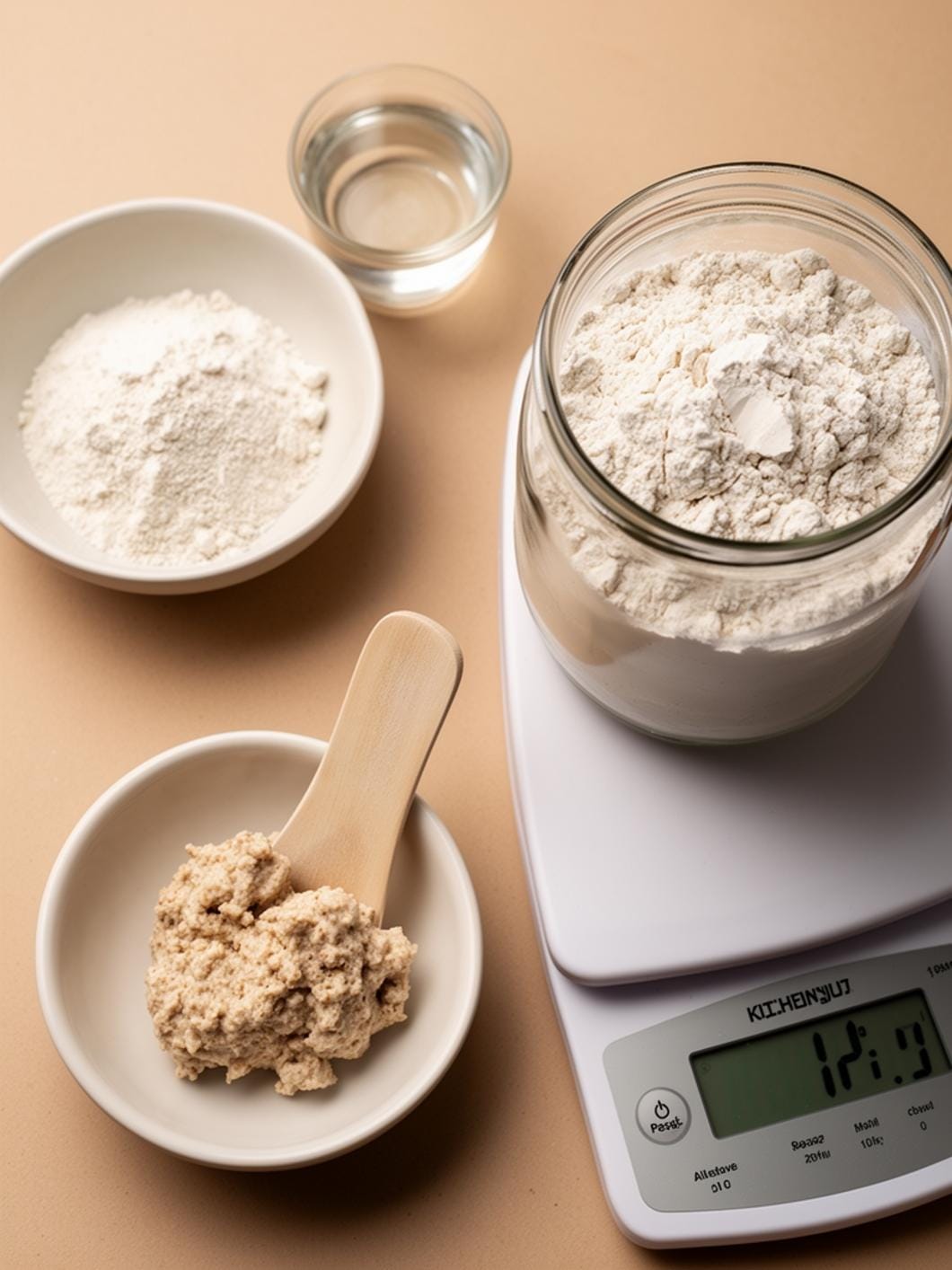
- Sourdough starter (from the fridge)
- All-purpose flour
- Warm water (filtered or unchlorinated is best)
- Clean glass jar or container
- Spoon or spatula for mixing
- Kitchen scale (optional, but highly recommended for accuracy)
For the flour, a good quality unbleached all-purpose flour works wonderfully. You can also use bread flour if that’s what you typically feed your starter. The most important thing is to use the same type of flour consistently, as changing it too often can sometimes upset your starter. As for water, filtered water is preferred because chlorine in tap water can sometimes inhibit the yeast and bacteria in your starter. If you don’t have filtered water, you can boil tap water and let it cool, or simply leave tap water out on the counter for a few hours to allow the chlorine to dissipate.
Time Needed From Start To Finish
Reviving a sourdough starter isn’t a “quick fix” in the sense of instant results, but the active hands-on time is very minimal. The process primarily involves waiting for the starter to become active again after feeding.
- Prep time: 5 minutes (for each feeding)
- Activation time: 8-24 hours (depending on starter strength and room temperature, usually requiring 2-3 feedings)
- Total time: 24-48 hours (from first feeding to fully active starter, ready for baking)
This timeline accounts for the multiple feedings needed to bring your starter back to its peak activity. It’s a patient process, but the reward is a robust starter ready for baking.
How To Make It Step By Step With Visual Cues

Bringing your sourdough starter back to life is a simple process of feeding and waiting. Follow these steps to ensure your starter is bubbly and ready for your next baking project.
- Remove from the Fridge and Discard: Take your sourdough starter out of the refrigerator. You’ll likely see a layer of dark liquid on top, called “hooch.” This is normal and indicates your starter is hungry. Gently pour off most of the hooch. Then, discard all but about 50-100 grams (1/4 to 1/2 cup) of your starter. This step is crucial to ensure you have enough food for the remaining starter to thrive.
- First Feeding – Equal Parts: To the remaining starter in your clean jar, add an equal amount of flour and warm water. For example, if you kept 50 grams of starter, add 50 grams of all-purpose flour and 50 grams of warm water (around 75-80°F or 24-27°C). Stir everything together thoroughly until there are no dry spots of flour remaining. The mixture should have the consistency of thick pancake batter.
- Mark and Wait: Place a rubber band or use a marker on the outside of your jar to indicate the level of the starter immediately after feeding. This will help you visually track its rise. Cover the jar loosely with a lid or plastic wrap (don’t seal it tightly, as the starter needs to breathe) and place it in a warm spot in your kitchen (around 70-75°F or 21-24°C).
- Observe and Feed Again: After 8-12 hours, check your starter. You should see some bubbles forming, and it might have risen slightly. If it has risen and fallen, or if it’s just showing a few bubbles, it’s time for another feeding. Discard all but 50-100 grams of the starter again, and repeat Step 2 (add equal parts flour and water).
- Repeat Until Active: Continue this feeding cycle (discarding and feeding equal parts flour and water every 8-12 hours) until your starter consistently doubles in size within 4-8 hours after feeding, and is full of bubbles. When you drop a small spoonful into water, it should float. This is your cue that it’s active and ready for baking.
- Maintain or Refrigerate: Once your starter is active, you can use it for baking immediately. If you’re not baking right away, you can either continue feeding it daily on the counter or feed it one last time and place it back in the refrigerator for storage until your next baking session.
Easy Variations And Serving Ideas That Fit Real Life
While reviving a starter is a specific process, the “serving ideas” here refer to what you can do with your newly active starter! Once it’s bubbly and strong, the possibilities are endless for family-friendly meals.
- Classic Sourdough Bread: The most obvious use! A fresh loaf of sourdough bread is perfect for sandwiches, toast, or alongside a hearty soup.
- Sourdough Pizza Dough: Use your active starter to make a flavorful pizza crust. It’s a fun family dinner, and everyone can customize their own toppings.
- Sourdough Pancakes or Waffles: For a delicious weekend breakfast, incorporate your starter into pancake or waffle batter. The slight tang adds a wonderful depth of flavor.
- Sourdough Biscuits: Light and fluffy biscuits made with sourdough starter are fantastic with butter and jam, or as a side for a savory meal.
- Sourdough Discard Crackers: Even the “discard” from your feeding process can be used! Turn it into crispy, savory crackers that are great with cheese or dips. This is a fantastic way to minimize waste.
- Sourdough Focaccia: A simple, olive oil-rich focaccia is a crowd-pleaser and excellent for dipping in olive oil or serving with pasta dishes.
Common Slip-Ups And How To Avoid Them
Reviving a sourdough starter is generally forgiving, but a few common mistakes can slow down the process or lead to a less active starter. Knowing what to watch out for can help you succeed.
- Not Discarding Enough: One of the most frequent errors is not discarding enough old starter before feeding. If you don’t discard, you’ll end up with a huge amount of starter that’s difficult to manage and requires excessive amounts of flour to feed properly. Always aim to keep only a small portion (50-100g) to feed.
- Using Cold Water: Water that’s too cold can shock your starter and slow down the yeast activity. Aim for warm water, around 75-80°F (24-27°C), which encourages the yeast and bacteria to become active.
- Sealing the Jar Tightly: Sourdough starters produce gas as they ferment. If you seal the jar tightly, pressure can build up, and in extreme cases, the jar could break. Always cover loosely with a lid, plastic wrap, or a breathable cloth secured with a rubber band.
- Impatience: Sourdough revival takes time. Don’t expect your starter to be fully active after just one feeding, especially if it’s been in the fridge for a while. Be patient, continue with regular feedings, and observe its activity.
- Inconsistent Feeding Ratios: While not an exact science, trying to stick to roughly equal parts starter, flour, and water (by weight) helps maintain a healthy balance. Wildly different ratios can throw off the starter’s ecosystem. Using a kitchen scale makes this much easier and more accurate.
- Using Chlorinated Water: Chlorine can inhibit the beneficial microbes in your starter. If your tap water is heavily chlorinated, let it sit out for a few hours or use filtered water to avoid this issue.
How To Store It And Make It Ahead Without Ruining Texture

FAQs
- Can I make these ahead? Yes—prep ahead, refrigerate, then serve when ready.
- How long do leftovers last? Store covered in the fridge for 3–4 days for best texture.
- Can I adjust sweetness? Yes—add more or less sweetener to taste.
- Can I change the fruit? Yes—swap strawberries for blueberries, raspberries, or sliced banana.