
There’s something timeless and comforting about Rustic Whole Wheat Sourdough. This humble loaf — made without commercial yeast — carries the flavor of tradition and the joy of crafting real food by hand. With just flour, water, salt, and a lively sourdough starter, you can make bread that’s hearty, flavorful, and nourishing. In this guide, you’ll learn everything you need to know — from gathering simple ingredients and tools to perfecting your dough and mastering the bake. Along the way, we’ll share practical tips and insights to help you bake a wholesome loaf of sourdough that feels both rustic and rewarding.

The Heart of Rustic Whole Wheat Sourdough
A Kitchen Memory Turned Tradition
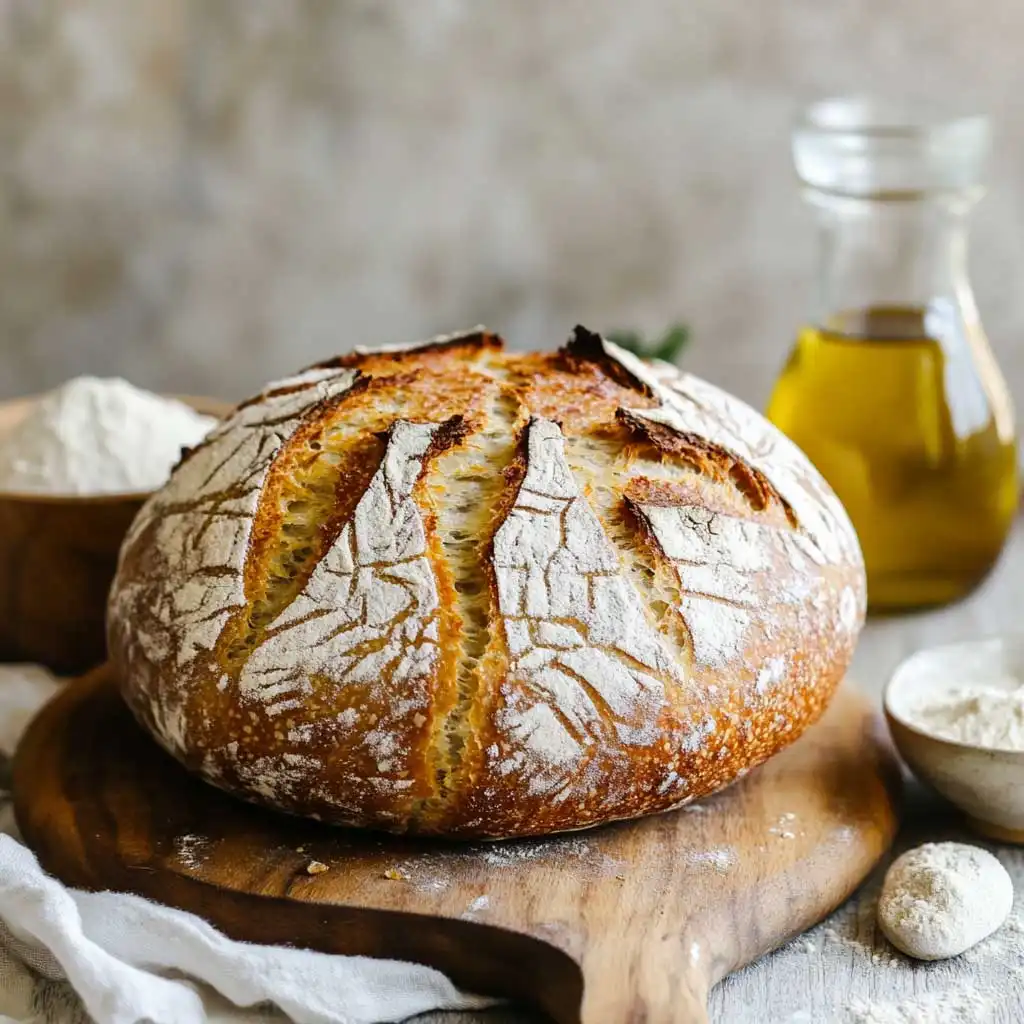
I still remember the first time I pulled a loaf of Whole Wheat Sourdough from my oven — that golden crackled crust, the gentle hiss as it cooled, and the way my kitchen filled with the smell of toasted grain and warmth. I had no idea that a few simple ingredients could transform into something so soulful. That loaf marked the beginning of a quiet weekend ritual, one that I now look forward to more than any bakery visit.
What made it so special wasn’t perfection — there were cracks, uneven scores, and a bit of flour still dusting the crust — but the truth that I had made Rustic No Yeast Bread entirely by hand. No packets of instant yeast, no shortcuts, just the patient rhythm of mixing, folding, waiting, and baking.
Over time, that beginner’s curiosity turned into something deeper — a love for the process itself. The starter became part of my daily rhythm, like tending a tiny, living connection to every home baker who came before me. Each loaf told its own story, varying slightly with the seasons, the humidity, even my mood. Friends began asking for “that Easy Sourdough Bread Recipe,” and what began as an experiment grew into a shared tradition.
Print
Rustic Whole Wheat Sourdough
- Total Time: 6 hours
- Yield: 1 loaf 1x
Description
A simple no-yeast whole wheat sourdough bread with a crisp crust and airy crumb made using just flour, water, salt, and a sourdough starter.
Ingredients
Instructions
1. In a large bowl, combine whole wheat flour and warm water and mix until no dry bits remain.
2. Let the mixture rest for 30–45 minutes for autolyse.
3. Add active sourdough starter and sea salt, then mix and fold until fully incorporated.
4. Cover and bulk ferment at room temperature for 3–5 hours, performing stretch-and-folds every 30–45 minutes during the first two hours.
5. Turn the dough onto a floured surface, shape into a loaf, and place seam-side up in a floured banneton.
6. Proof for 1–2 hours at room temperature or refrigerate overnight for deeper flavor.
7. Preheat a Dutch oven to 475°F (245°C), transfer the dough with parchment, score the top, cover, and bake 20 minutes; remove lid and bake another 20–25 minutes until golden.
8. Cool the loaf on a wire rack for at least one hour before slicing.
- Prep Time: 45 minutes
- Cook Time: 40 minutes
- Category: bread
- Method: baking
- Cuisine: american
Nutrition
- Serving Size: 1 slice
Keywords: rustic whole wheat sourdough, whole wheat sourdough, rustic no yeast bread, easy sourdough bread recipe, recipe using sourdough starter, artisan bread, no-yeast bread, homemade sourdough, sourdough starter, easy yeast bread preparation
The charm of rustic sourdough lies in its imperfections. Each loaf reflects care, patience, and creativity — a reminder that simple, slow food has a beauty all its own. When you bake Whole Wheat Sourdough, you’re doing more than making bread; you’re continuing an old, honest craft that brings warmth to both the kitchen and the table.
Why Homemade Sourdough Just Feels Right
There’s a kind of mindfulness in baking your own bread — in watching a dough rise naturally, in feeling its soft elasticity develop under your hands. Rustic Whole Wheat Sourdough is more than a recipe; it’s a celebration of slowing down and nurturing something real.
Unlike commercial yeast breads, which rise fast and often taste one-dimensional, a no-yeast sourdough develops its character slowly. The natural fermentation brings out earthy depth, a gentle tang, and a chewy texture that truly satisfies. With every bite, you can taste the difference time makes.
From a health perspective, sourdough is easier to digest and may even unlock more nutrients from the whole grains. The fermentation process breaks down gluten, making the bread feel lighter and more nourishing. And since Easy Yeast Bread Preparation requires nothing more than flour, water, salt, and a fed sourdough starter, it’s a process anyone can embrace with a little patience and curiosity.
Homemade sourdough also connects you to your ingredients in a way store-bought bread never can. Each step — from feeding your starter to shaping your loaf — invites a sense of presence and satisfaction. It’s not just about baking; it’s about creating something alive, one loaf at a time.
The result? A slice of bread that feels wholesome, honest, and completely yours — proof that even the simplest rituals can become a source of lasting joy.
Understanding Your Dough — Ingredients, Tools & Timing
Simple Ingredients, Bold Flavor
The secret to a perfect Rustic Whole Wheat Sourdough lies in its simplicity. This bread proves that a short ingredient list can yield incredibly complex flavors when handled with care. Each element has a purpose — from the nutty richness of the flour to the life that the starter brings.
| Ingredient | Amount | Purpose |
|---|---|---|
| Whole wheat flour | 400 g (about 3⅓ cups) | Forms the hearty base of your bread, adding deep flavor and dense nutrition. |
| Active sourdough starter (100% hydration) | 100 g (about ½ cup) | Acts as the natural leavening agent, replacing commercial yeast to give that signature tang and airy structure. |
| Warm water | 300 g (about 1¼ cups) | Hydrates the flour and helps gluten form for elasticity and strength. |
| Sea salt | 8 g (about 1½ tsp) | Enhances flavor, strengthens gluten, and controls fermentation. |
These four ingredients are all you need for a traditional loaf, yet there’s endless room for creativity. For extra flavor and texture, mix in optional additions like sunflower or sesame seeds, chopped nuts, crushed herbs, or even a drizzle of honey. These variations balance the earthy taste of Whole Wheat Sourdough beautifully and make each batch unique.
When choosing your flour, opt for freshly milled or stone-ground varieties if possible — the natural oils and bran present in whole wheat will deepen the bread’s aroma and color. The key is to maintain balance: too much whole grain can make the loaf dense, while incorporating a small portion of bread flour (say 50–100 g) can lighten the crumb if desired.
Remember, in the world of Rustic No Yeast Bread, ingredient quality truly matters. Small changes — filtered water, fine sea salt, or a mature starter — can make the difference between a good loaf and a great one. The goal isn’t perfection, but harmony between these simple, honest components.
Tools That Make It Easier
Just as a musician trusts their instrument, a baker relies on their tools. You don’t need a professional setup to make an Easy Sourdough Bread Recipe, but having the right equipment can help you achieve consistent, bakery-quality results at home. Each item supports a specific stage of your Recipe Using Sourdough Starter, making the process smooth, enjoyable, and efficient.
- Mixing Bowl: A large glass or stainless steel bowl gives the dough room to expand during bulk fermentation.
- Kitchen Scale: A small digital scale guarantees precise measurements by weight for consistent results.
- Bench Scraper or Dough Spatula: Ideal for folding and shaping dough while keeping your work surface clean.
- Banneton Basket: Helps the dough hold its form during final proof and creates that beautiful spiral texture.
- Dutch Oven: The key to a crisp crust; it traps steam for professional bakery-style results.
- Lame or Sharp Knife: Used to score the dough so it expands evenly while baking.
- Thermometer (optional): Used to confirm the loaf’s internal temperature, ideally 200–210°F (93–99°C).
With these essentials, you’ll find baking Rustic Whole Wheat Sourdough both approachable and rewarding. The right tools foster confidence and consistency, helping you create rustic, beautiful loaves time after time.
Step-by-Step Guide — How to Make Artisan Bread Without Yeast
The Sourdough Starter Magic
Every great Rustic Whole Wheat Sourdough begins with a healthy, active starter — the living, bubbling culture that replaces commercial yeast in this Easy Sourdough Bread Recipe. The starter is where wild yeast and beneficial bacteria combine to create natural leavening and complex flavor.
Feeding Your Starter: Feed daily at room temperature or weekly if refrigerated. Mix equal parts starter, flour, and water by weight (for instance, 50 g each). Let it sit until doubled and bubbly — roughly 4–6 hours depending on temperature.
Knowing When It’s Ready: Your starter should be slightly domed, full of bubbles, and smell pleasantly tangy. When a small spoonful floats in water, it’s ready to bake.
Troubleshooting: If your starter is slow, feed it several times at room temperature. If it smells too acidic, discard half before feeding. A layer of liquid (“hooch”) just means it’s hungry; stir it in and refresh. Consistency is key to a dependable Rustic No Yeast Bread.
From Mixing to Baking — The Complete Process
- Mixing & Autolyse: In a large bowl, combine 400 g of whole wheat flour and 300 g of warm water. Mix until combined and rest 30–45 minutes to let the flour hydrate.
- Adding the Starter and Salt: Blend in 100 g of active starter, then mix in 8 g of sea salt. Fold until evenly distributed — the dough will strengthen as it rests.
- Bulk Fermentation: Rest 3–5 hours at about 75°F (24°C). Do stretch-and-fold sets every 30–45 minutes for the first couple of hours. Watch for a 30–50% volume increase and bubbly texture.
- Shaping the Dough: Gently turn onto a floured surface, shape into a round or oval, and place seam side up in a floured banneton.
- Final Proof: Cover and rest 1–2 hours or overnight in the fridge. The “poke test” should show slow, partial spring back.
- Scoring & Baking: Preheat the oven and Dutch oven to 475°F (245°C). Score your dough, place inside, bake covered 20 minutes, then uncovered 20–25 minutes more until golden brown.
- Cooling: Cool on a wire rack at least 1 hour before slicing. This ensures proper texture and flavor development.
Practical Tips: Keep dough warm (around 75°F/24°C); adjust hydration if needed; bake lid-off for extra crunch; and store wrapped in linen for up to three days. A well-fed starter and patience are all you need for your best Whole Wheat Sourdough.
FAQs & Conclusion
Common Questions About Whole Wheat Sourdough
How can I make sourdough bread without commercial yeast?
Rely entirely on your lively sourdough starter to naturally leaven your dough. When it’s bubbly, domed, and passes the float test, it’s ready to power your Rustic Whole Wheat Sourdough.
How do I know when my dough is ready to bake?
Use the poke test: if the indentation springs back slowly, it’s ready. This ensures your timing for an Easy Sourdough Bread Recipe is just right.
What if my sourdough starter isn’t active enough?
Feed it multiple times at room temperature using equal parts flour and water by weight until it doubles in 4–6 hours. That’s when it’s strong enough for your Recipe Using Sourdough Starter.
Can I use all-purpose flour instead of whole wheat?
Yes. All-purpose yields a lighter crumb, while whole wheat gives nutty depth. Try a half-and-half blend for perfect balance in your Easy Yeast Bread Preparation.
How long should I let sourdough bread cool before slicing?
Cool your Rustic No Yeast Bread at least one hour before slicing to set the crumb and prevent gumminess.
Bringing Rustic Baking Home
Baking Rustic Whole Wheat Sourdough is more than a recipe — it’s a heartfelt ritual that connects you to generations of bakers. Each loaf is unique, a testament to your patience and rhythm. Once you master your first Easy Sourdough Bread Recipe, you’ll return to it again and again for its comfort and simplicity.
With just flour, water, salt, and time, you can turn everyday ingredients into nourishment and peace. Whether you bake every week or simply when the mood strikes, this honest loaf brings humble joy to your home.
So, refresh your starter, dust your counter, and create something beautiful. Let your kitchen fill with the tender crackle of a cooling crust — the sound of home, the heart of Rustic Whole Wheat Sourdough.