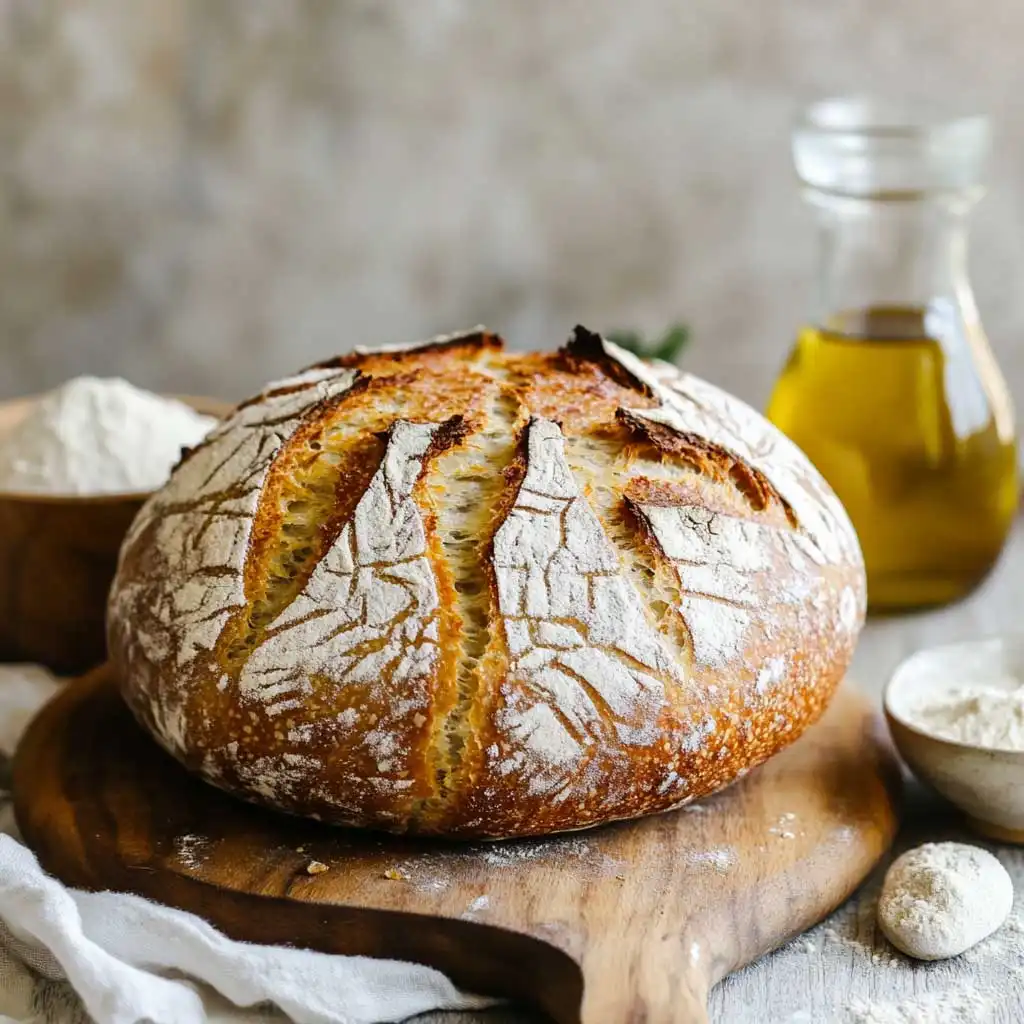

Achieving the perfect sourdough crumb can feel like a mystery, but it doesn’t have to be.
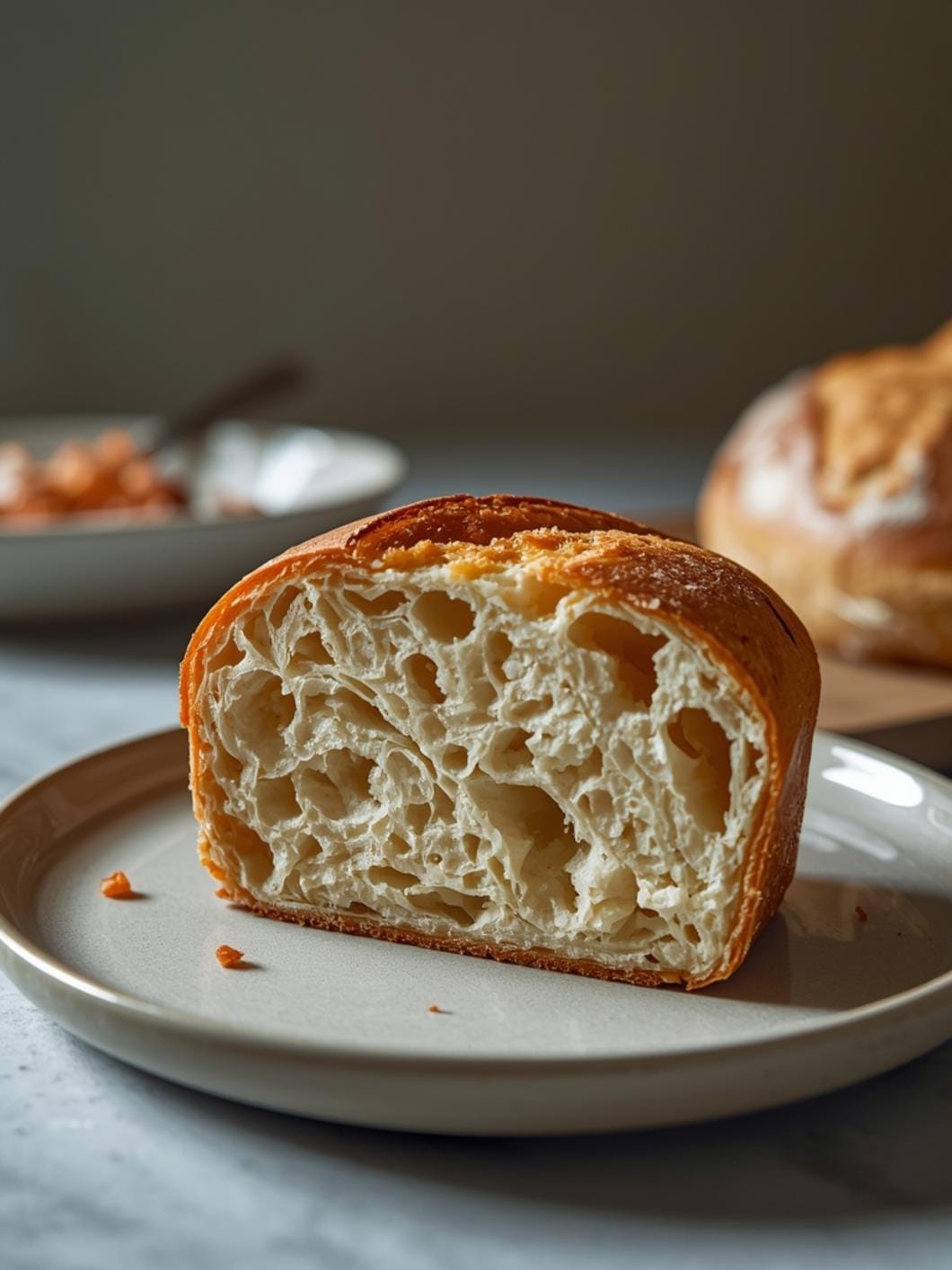
This guide is designed to demystify the process, helping you understand what makes a great crumb and how to consistently achieve it in your homemade loaves. We’ll break down the key characteristics and provide a clear framework for evaluating your bread.
Whether you’re a seasoned sourdough baker or just starting your journey, mastering crumb structure is a crucial step towards baking truly exceptional bread. Get ready to unlock the secrets to a beautifully open, airy, and consistent texture every time you bake.

Sourdough Crumb Structure Cheat Sheet: A Guide to Evaluation and Improvement
- Total Time: 5-10 minutes (evaluation)
- Yield: 1 loaf
Description
This guide helps sourdough bakers understand and evaluate their bread’s crumb structure, offering insights to consistently achieve an open, airy, and consistent texture. It’s a practical tool for troubleshooting and improving homemade sourdough loaves.
Ingredients
Instructions
1. Allow Your Bread to Cool Completely: This is the most crucial first step. Slicing warm sourdough can compress the crumb, making it appear denser than it truly is and giving a false impression of its structure. Wait at least 2-4 hours, or even overnight, for the bread to fully cool.
2. Slice Through the Center of the Loaf: Use a sharp bread knife to make a clean, straight cut right through the middle of your loaf. This central slice will give you the most accurate representation of the overall crumb structure. Avoid tearing or sawing motions that can distort the crumb.
3. Observe the Overall Distribution of Holes (Alveoli): Look at the entire cross-section. Are the holes evenly distributed, or are there large, irregular tunnels with dense areas around them? A good crumb typically has a relatively even distribution, though some artisanal loaves might have a few larger, more irregular holes.
4. Examine the Size and Shape of the Holes: Are the holes small and uniform, or a mix of small and large? Are they round, or more elongated? Small, uniform holes often indicate a tighter crumb, while a mix of sizes, including some larger, irregular ones, suggests a more open crumb. Elongated holes can sometimes point to issues with shaping or gas retention.
5. Assess the Texture and Sheen of the Crumb: Gently press the crumb with your finger. Does it spring back? Is it moist and slightly translucent, or dry and opaque? A well-fermented and baked crumb should be soft, elastic, and have a slight sheen, indicating good gelatinization of starches. A gummy or overly wet crumb suggests underbaking or over-proofing.
6. Compare Your Crumb to a Crumb Chart (Mental or Physical): Now, compare your observations to a typical sourdough crumb chart (which you can find online or create mentally based on experience). Identify where your crumb falls on the spectrum from dense to very open. Note down what you see.
7. Connect Crumb Observations to Your Baking Process: This is where the real learning happens. Based on your crumb’s characteristics, think back to your process: hydration level, starter activity, mixing, bulk fermentation, shaping, proofing, and baking. For example, a dense crumb might suggest an under-active starter, insufficient fermentation, or under-proofing. An overly open, uneven crumb could point to issues with shaping or gas retention.
8. Formulate a Plan for Improvement: Based on your analysis, decide what single variable you might adjust in your next bake. Don’t try to change everything at once. Focus on one aspect, like increasing bulk fermentation time slightly, or refining your shaping technique.
- Prep Time: 5 minutes
- Cook Time: 0 minutes
- Category: baking
- Method: evaluation
- Cuisine: american
Nutrition
- Serving Size: 1 slice
Keywords: sourdough, crumb, baking, bread, evaluation, texture, homemade, troubleshooting, guide, fermentation
What You’ll Love About This Quick And Easy Recipe
This guide isn’t a recipe in the traditional sense, but rather a practical tool for anyone baking sourdough bread. What you’ll love about this “cheat sheet” is its ability to transform your understanding of sourdough. It’s for every home baker who has ever sliced into a loaf and wondered, “Why does it look like this?” or “How can I make it better?” This resource is perfect for those moments when you’re troubleshooting a dense crumb, an overly open crumb, or an inconsistent texture. It helps you diagnose common issues and provides actionable insights to improve your next bake. Think of it as your personal sourdough mentor, available whenever you need to evaluate your bread and refine your technique. It’s a foundational piece of knowledge that enhances every sourdough baking session.
Everything You Need To Make This Recipe Without Stress
This section isn’t about ingredients for a dish, but rather the essential knowledge and tools you’ll need to effectively use this sourdough crumb structure guide. You won’t be gathering flour or yeast, but rather a keen eye and a desire to learn.
INGREDIENTS:
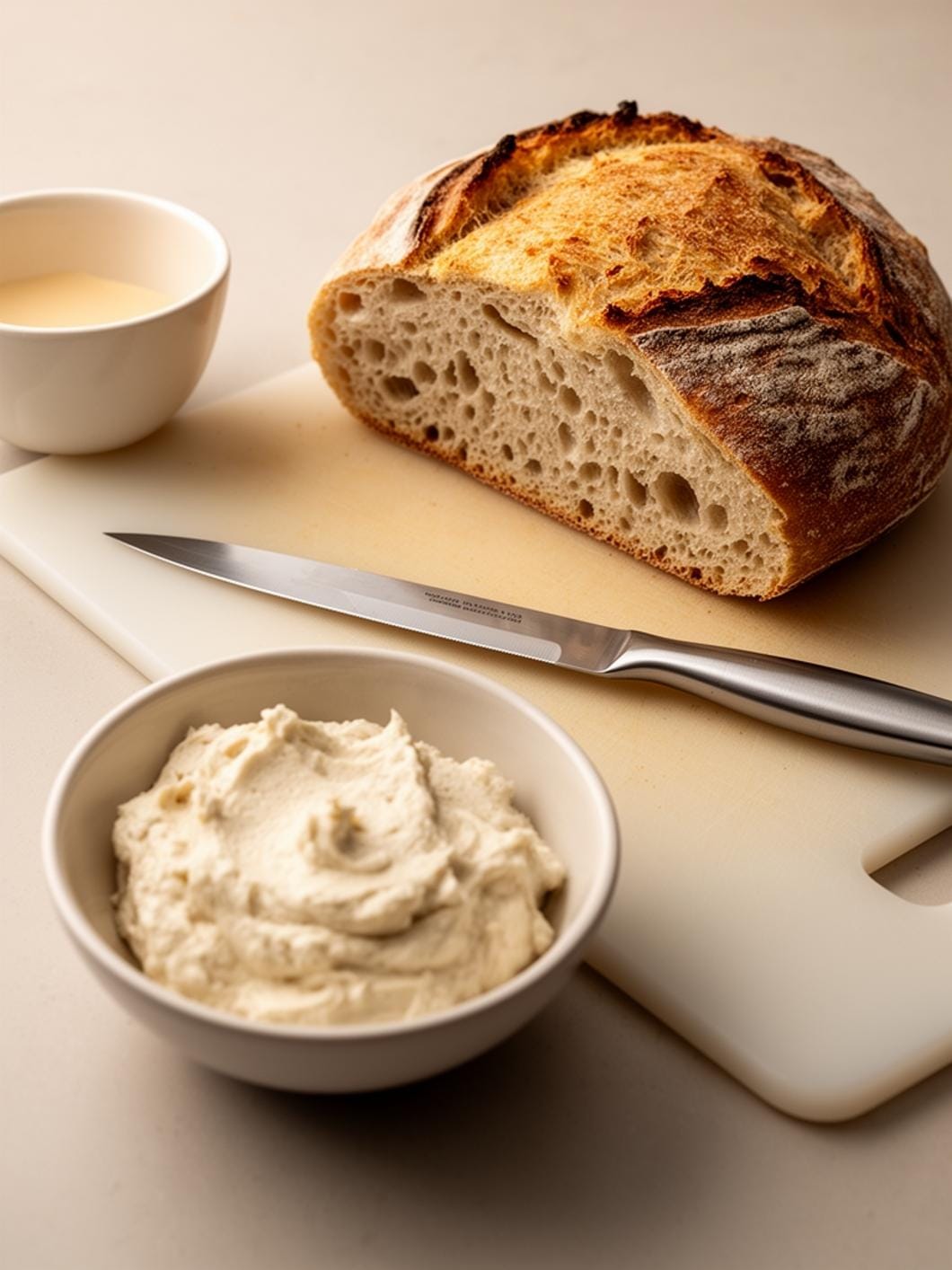
- A freshly baked loaf of sourdough bread (your own, or one you’re evaluating)
- A sharp bread knife
- A clean cutting board
- Good lighting
- A curious and observant mindset
After you’ve baked your sourdough, the “ingredients” for evaluation are simple. A sharp bread knife is crucial for getting a clean slice that truly reveals the crumb structure without tearing or compressing it. Good lighting helps you see the nuances of the crumb, from the size and distribution of the alveoli (holes) to the sheen of the interior. Most importantly, bring an open mind and a willingness to learn from each loaf, regardless of its outcome. This guide works best when you approach it with a desire to understand and improve.
Time Needed From Start To Finish
Since this isn’t a traditional recipe, there’s no “prep time” or “cook time” in the usual sense. However, the time needed to effectively use this guide is minimal and integrated into your baking routine.
- Evaluation Time: 5-10 minutes (after your bread has cooled and been sliced)
- Understanding and Application Time: Ongoing, as you bake more loaves
The real “time” investment is in consistently applying the insights you gain from this guide to your future baking practices. Each evaluation session will become quicker as your eye becomes more trained.
How To Make It Step By Step With Visual Cues
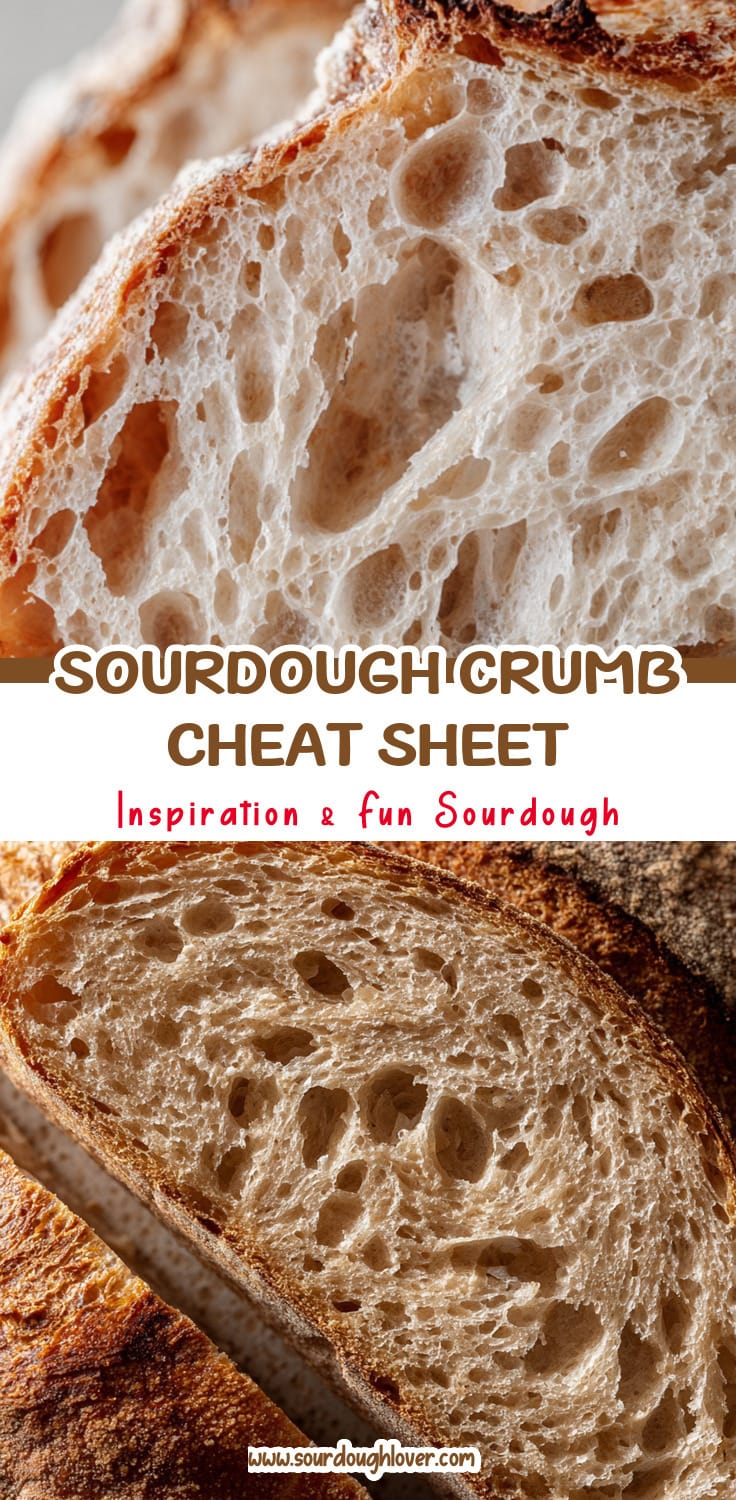
Using this sourdough crumb structure cheat sheet is a process of observation and comparison. Here’s how to effectively evaluate your sourdough bread:
- Allow Your Bread to Cool Completely: This is the most crucial first step. Slicing warm sourdough can compress the crumb, making it appear denser than it truly is and giving a false impression of its structure. Wait at least 2-4 hours, or even overnight, for the bread to fully cool.
- Slice Through the Center of the Loaf: Use a sharp bread knife to make a clean, straight cut right through the middle of your loaf. This central slice will give you the most accurate representation of the overall crumb structure. Avoid tearing or sawing motions that can distort the crumb.
- Observe the Overall Distribution of Holes (Alveoli): Look at the entire cross-section. Are the holes evenly distributed, or are there large, irregular tunnels with dense areas around them? A good crumb typically has a relatively even distribution, though some artisanal loaves might have a few larger, more irregular holes.
- Examine the Size and Shape of the Holes: Are the holes small and uniform, or a mix of small and large? Are they round, or more elongated? Small, uniform holes often indicate a tighter crumb, while a mix of sizes, including some larger, irregular ones, suggests a more open crumb. Elongated holes can sometimes point to issues with shaping or gas retention.
- Assess the Texture and Sheen of the Crumb: Gently press the crumb with your finger. Does it spring back? Is it moist and slightly translucent, or dry and opaque? A well-fermented and baked crumb should be soft, elastic, and have a slight sheen, indicating good gelatinization of starches. A gummy or overly wet crumb suggests underbaking or over-proofing.
- Compare Your Crumb to a Crumb Chart (Mental or Physical): Now, compare your observations to a typical sourdough crumb chart (which you can find online or create mentally based on experience). Identify where your crumb falls on the spectrum from dense to very open. Note down what you see.
- Connect Crumb Observations to Your Baking Process: This is where the real learning happens. Based on your crumb’s characteristics, think back to your process: hydration level, starter activity, mixing, bulk fermentation, shaping, proofing, and baking. For example, a dense crumb might suggest an under-active starter, insufficient fermentation, or under-proofing. An overly open, uneven crumb could point to issues with shaping or gas retention.
- Formulate a Plan for Improvement: Based on your analysis, decide what single variable you might adjust in your next bake. Don’t try to change everything at once. Focus on one aspect, like increasing bulk fermentation time slightly, or refining your shaping technique.
Easy Variations And Serving Ideas That Fit Real Life
While this guide focuses on understanding crumb structure, the ultimate goal is to bake delicious bread that you can enjoy in countless ways. Once you’ve achieved that perfect crumb, the serving possibilities are endless and fit perfectly into any family’s routine.
For a simple breakfast, a slice of beautifully crumbed sourdough toasted with avocado and a sprinkle of everything bagel seasoning is a classic. For lunch, it makes an unbeatable base for open-faced sandwiches – think turkey and Swiss, or a vibrant caprese with fresh mozzarella, tomato, and basil. Kids often love it simply with butter and jam, or as a side to a bowl of warm soup.
- Garlic Bread: Slice thickly, spread with garlic butter, and toast until golden.
- Croutons: Cube stale sourdough, toss with olive oil and herbs, then bake until crispy for salads or soups.
- Bruschetta: Toast slices, rub with a garlic clove, top with diced tomatoes, basil, and a drizzle of balsamic glaze.
- Cheese and Charcuterie Boards: The robust flavor and texture of good sourdough make it an ideal accompaniment for cheeses, cured meats, and olives.
- French Toast: A slightly denser crumbed sourdough can make incredible French toast, soaking up the custard beautifully without falling apart.
The key is that a well-structured crumb holds up to toppings and spreads, providing a satisfying chew and flavor that enhances any meal.
Common Slip-Ups And How To Avoid Them
When evaluating sourdough crumb, it’s easy to misinterpret what you’re seeing or draw incorrect conclusions. Here are some common slip-ups and how to avoid them:
- Slicing Bread While Still Warm: This is perhaps the most common mistake. Warm bread is still undergoing internal changes, and its structure is delicate. Slicing it prematurely will compress the crumb, making it appear denser and gummier than it actually is. Always wait until the bread is completely cool, ideally several hours or overnight.
- Focusing Only on Large Holes: Many beginners equate “good sourdough” with massive, irregular holes. While an open crumb can be desirable, an overly open crumb with large tunnels and dense areas (called “tunneling”) often indicates issues like under-proofing, insufficient gluten development, or improper shaping that traps large gas pockets. Aim for a balanced, relatively even distribution of holes rather than just the biggest ones.
- Ignoring the Crumb’s Texture and Moisture: Beyond the holes, the feel of the crumb is crucial. If it’s gummy, wet, or sticky, it might be underbaked, over-proofed, or have too high hydration for the flour. If it’s dry and crumbly, it might be overbaked or under-hydrated. A good crumb should be moist, elastic, and spring back when gently pressed.
- Changing Too Many Variables at Once: After evaluating a loaf, it’s tempting to try and fix every perceived flaw by altering multiple aspects of your process (e.g., changing hydration, proofing time, and shaping technique all at once). This makes it impossible to know which change had what effect. Instead, identify one primary area for improvement and adjust only one variable in your next bake.
- Not Considering Your Flour Type: Different flours (e.g., all-purpose, bread flour, whole wheat, rye) will naturally produce different crumb structures. A 100% whole wheat loaf will inherently

FAQs
- Can I make these ahead? Yes—prep ahead, refrigerate, then serve when ready.
- How long do leftovers last? Store covered in the fridge for 3–4 days for best texture.
- Can I adjust sweetness? Yes—add more or less sweetener to taste.
- Can I change the fruit? Yes—swap strawberries for blueberries, raspberries, or sliced banana.