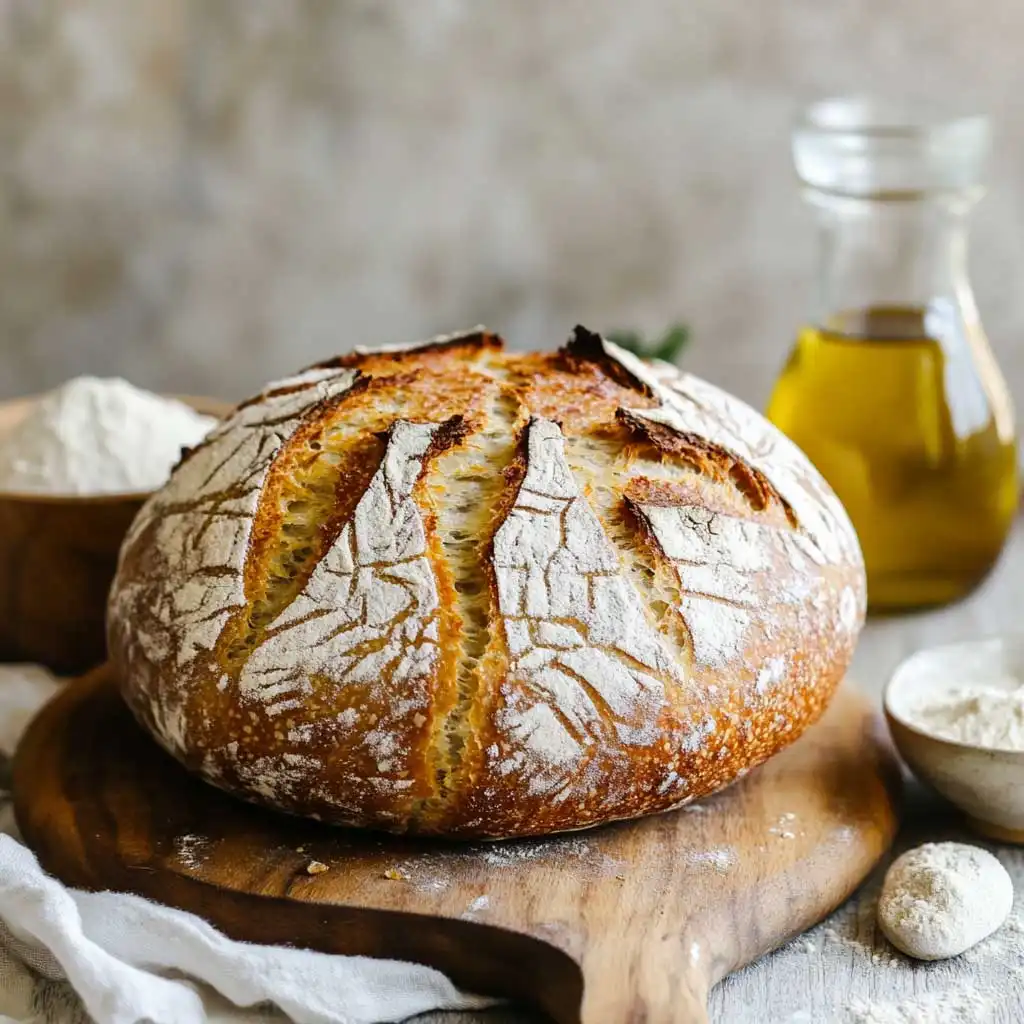

Sourdough focaccia might sound intimidating, but this recipe makes it incredibly simple to achieve that wonderfully airy, dimpled herb flatbread right in your own kitchen. We’re breaking down the process into easy-to-follow steps, ensuring even beginners can master this delightful bread.
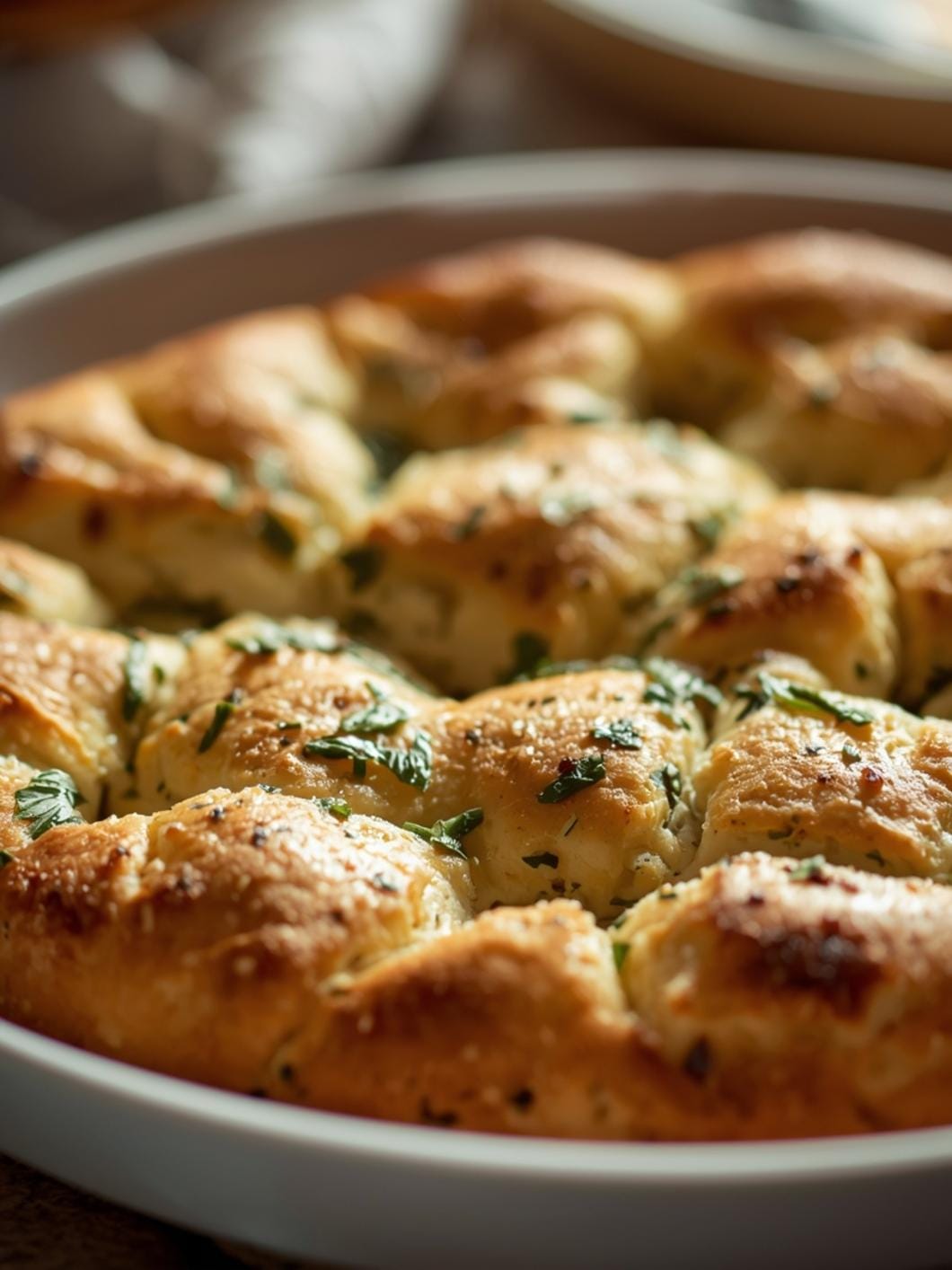
Get ready to impress your family and friends with a homemade focaccia that’s perfect for dipping, sandwiches, or simply enjoying on its own. This recipe focuses on creating a flavorful, tender crumb with a crisp exterior, all thanks to the magic of sourdough.

Simple Sourdough Focaccia with Rosemary
- Total Time: 5-9 hours
- Yield: 1 focaccia 1x
Description
This recipe makes it incredibly simple to achieve that wonderfully airy, dimpled herb flatbread right in your own kitchen. We’re breaking down the process into easy-to-follow steps, ensuring even beginners can master this delightful bread. Get ready to impress your family and friends with a homemade focaccia that’s perfect for dipping, sandwiches, or simply enjoying on its own. This recipe focuses on creating a flavorful, tender crumb with a crisp exterior, all thanks to the magic of sourdough.
Ingredients
Instructions
1. Combine Starter and Water: In a large mixing bowl, gently whisk together the active sourdough starter and warm water until the starter is mostly dissolved. The mixture should look milky and slightly bubbly. This step ensures the starter is evenly distributed.
2. Mix in Flour and Salt: Add the all-purpose flour and fine sea salt to the starter mixture. Use a sturdy spoon or your hands to mix until all the flour is incorporated and no dry spots remain. The dough will be shaggy and sticky. Cover the bowl with a damp kitchen towel or plastic wrap and let it rest for 30 minutes. This rest, called autolyse, helps the flour fully hydrate.
3. Perform Stretch and Folds: After the rest, drizzle 1 tablespoon of olive oil over the dough. With wet hands, grab a portion of the dough from one side, stretch it upwards, and fold it over to the opposite side. Rotate the bowl a quarter turn and repeat this stretch and fold motion three more times, completing one full round. The dough will become smoother and more elastic with each fold. Cover and let rest for 30 minutes. Repeat this stretch and fold process three more times, for a total of four sets of folds over 2 hours.
4. Bulk Fermentation: After the final set of folds, cover the bowl and let the dough rise at room temperature for 3-6 hours, or until it has visibly increased in size (about 50-75%) and looks airy and bubbly. The exact time will depend on your kitchen’s temperature and your starter’s strength.
5. Prepare for Baking: Gently transfer the dough to a well-oiled 9×13 inch baking pan (or a similar size). Drizzle another tablespoon of olive oil over the dough. Using your fingertips, gently dimple the entire surface of the dough, pressing down to create characteristic indentations without tearing the dough.
6. Add Toppings and Bake: Sprinkle the chopped fresh rosemary (or other herbs) and flaky sea salt evenly over the dimpled dough. Let the focaccia proof in the pan for another 30-60 minutes while your oven preheats to 425 F (220 C). Bake for 25-30 minutes, or until the focaccia is golden brown on top and cooked through.
7. Cool and Serve: Once baked, carefully remove the focaccia from the oven and transfer it to a wire rack to cool slightly. Drizzle with a little more olive oil if desired before slicing and serving warm.
- Prep Time: 20 minutes
- Cook Time: 25-30 minutes
- Category: bread
- Method: baking
- Cuisine: italian
Nutrition
- Serving Size: 8 servings
Keywords: sourdough, focaccia, bread, rosemary, homemade, easy, appetizer, italian, baking, starter
What You’ll Love About This Quick And Easy Recipe
This sourdough focaccia recipe is a true gem for anyone looking to add a touch of artisanal baking to their repertoire without the usual fuss. It’s perfect for busy home cooks because while it does involve sourdough, the active hands-on time is surprisingly minimal, allowing the starter to do most of the hard work. You’ll love the satisfying chewiness of the bread, the aromatic herbs, and the beautiful golden crust. This recipe shines as an appetizer with a good olive oil, alongside a hearty soup or salad, or even as a base for a gourmet sandwich. It’s a fantastic way to utilize your active sourdough starter and create something truly special that feels both rustic and refined. It’s also a great introduction to sourdough baking for those who might be hesitant, proving that delicious results are well within reach.
Everything You Need To Make This Recipe Without Stress
Gathering your ingredients before you start is key to a smooth baking experience. This recipe uses common pantry staples alongside your active sourdough starter to create a flavorful and tender focaccia. Don’t worry about exotic flours or hard-to-find items; simplicity is part of the charm here.
INGREDIENTS:
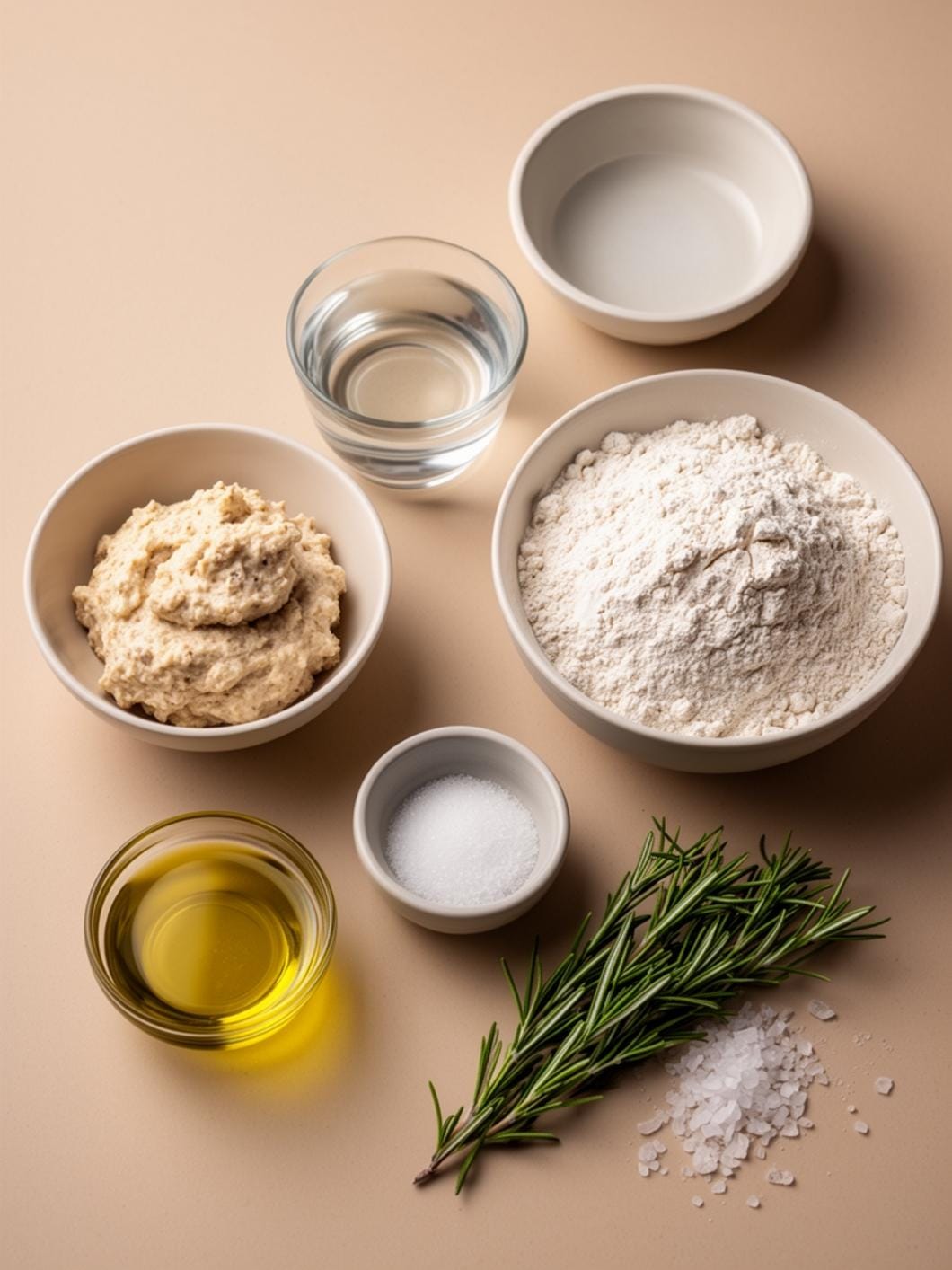
- 150 grams active sourdough starter (fed and bubbly)
- 300 grams warm water (around 90-100°F / 32-38°C)
- 400 grams all-purpose flour
- 10 grams fine sea salt
- 2 tablespoons olive oil, plus more for drizzling
- 1-2 tablespoons fresh rosemary, chopped (or other herbs)
- Flaky sea salt, for topping
When it comes to substitutions, you have a few practical options. If you don’t have fresh rosemary, dried rosemary can be used, though you’ll want to use a bit less (about 1 teaspoon dried for every tablespoon fresh). Other fresh herbs like thyme, oregano, or a mix of Italian herbs also work beautifully. For the flour, while all-purpose is recommended for its ease, you can experiment with a small percentage of bread flour (up to 50 grams) for a slightly chewier texture, but stick to all-purpose for your first attempt. Always use good quality olive oil, as its flavor will shine through in the finished focaccia.
Time Needed From Start To Finish
Understanding the timeline for sourdough focaccia is important, as it involves several rest periods. While the active hands-on time is quite short, the total process spans several hours to allow for proper fermentation.
- Active Prep Time: 15-20 minutes (mixing, folding, dimpling)
- Bulk Fermentation/Proofing Time: 4-8 hours (depending on room temperature and starter activity)
- Baking Time: 25-30 minutes
- Total Time (including rest periods): 5-9 hours
Keep in mind that sourdough timings are flexible and depend heavily on the activity of your starter and the ambient temperature of your kitchen. A warmer kitchen will speed up fermentation, while a cooler one will slow it down.
How To Make It Step By Step With Visual Cues

Making sourdough focaccia is a rewarding process, and these steps will guide you to a perfect loaf. Pay attention to the dough’s texture and appearance as you go.
- Combine Starter and Water: In a large mixing bowl, gently whisk together the active sourdough starter and warm water until the starter is mostly dissolved. The mixture should look milky and slightly bubbly. This step ensures the starter is evenly distributed.
- Mix in Flour and Salt: Add the all-purpose flour and fine sea salt to the starter mixture. Use a sturdy spoon or your hands to mix until all the flour is incorporated and no dry spots remain. The dough will be shaggy and sticky. Cover the bowl with a damp kitchen towel or plastic wrap and let it rest for 30 minutes. This rest, called autolyse, helps the flour fully hydrate.
- Perform Stretch and Folds: After the rest, drizzle 1 tablespoon of olive oil over the dough. With wet hands, grab a portion of the dough from one side, stretch it upwards, and fold it over to the opposite side. Rotate the bowl a quarter turn and repeat this stretch and fold motion three more times, completing one full round. The dough will become smoother and more elastic with each fold. Cover and let rest for 30 minutes. Repeat this stretch and fold process three more times, for a total of four sets of folds over 2 hours.
- Bulk Fermentation: After the final set of folds, cover the bowl and let the dough rise at room temperature for 3-6 hours, or until it has visibly increased in size (about 50-75%) and looks airy and bubbly. The exact time will depend on your kitchen’s temperature and your starter’s strength.
- Prepare for Baking: Gently transfer the dough to a well-oiled 9×13 inch baking pan (or a similar size). Drizzle another tablespoon of olive oil over the dough. Using your fingertips, gently dimple the entire surface of the dough, pressing down to create characteristic indentations without tearing the dough.
- Add Toppings and Bake: Sprinkle the chopped fresh rosemary (or other herbs) and flaky sea salt evenly over the dimpled dough. Let the focaccia proof in the pan for another 30-60 minutes while your oven preheats to 425°F (220°C). Bake for 25-30 minutes, or until the focaccia is golden brown on top and cooked through.
- Cool and Serve: Once baked, carefully remove the focaccia from the oven and transfer it to a wire rack to cool slightly. Drizzle with a little more olive oil if desired before slicing and serving warm.
Easy Variations And Serving Ideas That Fit Real Life
This sourdough focaccia is incredibly versatile and can be adapted to suit any meal or preference. For a kid-friendly twist, you can omit the rosemary and simply top with a generous sprinkle of flaky sea salt, or even a light dusting of garlic powder before baking.
- Tomato and Olive Focaccia: Press halved cherry tomatoes and pitted Kalamata olives into the dimples before baking.
- Caramelized Onion Focaccia: Sauté thinly sliced onions until deeply caramelized, then spread them over the dough before dimpling and baking.
- Garlic and Parmesan: Mix minced garlic into the olive oil you drizzle over the dough, and sprinkle with grated Parmesan cheese before baking.
- Herb Medley: Instead of just rosemary, use a mix of fresh thyme, oregano, and basil for a more complex herbal flavor.
- Appetizer: Serve warm with a small bowl of high-quality olive oil for dipping, perhaps with a balsamic glaze swirl.
- Sandwich Bread: Slice horizontally and use it as a base for delicious sandwiches with deli meats, cheeses, or roasted vegetables.
- Side Dish: It’s a perfect accompaniment to pasta dishes, hearty stews, or a fresh green salad.
- Bruschetta Base: Toast slices lightly and top with fresh tomato bruschetta for an elegant starter.
- Breakfast/Brunch: Serve alongside scrambled eggs and bacon for a savory breakfast treat.
Common Slip-Ups And How To Avoid Them
Even experienced bakers can encounter small issues, but knowing what to look out for can save your sourdough focaccia.
- Dough is too sticky to handle: This is common with high-hydration doughs. Make sure your hands are wet when performing stretch and folds or transferring the dough. Resist the urge to add too much extra flour, as this will make the focaccia dense. A well-oiled pan also helps immensely.
- Focaccia is dense and not airy: This usually indicates insufficient proofing. Your sourdough starter might not have been active enough, or the dough needed more time for bulk fermentation. Ensure your starter is fed and bubbly before you begin, and allow the dough to visibly increase in size and show signs of bubbles before baking.
- Flat focaccia with no rise: Similar to density, this points to under-proofed dough or an inactive starter. Also, be gentle when dimpling and transferring the dough; aggressive handling can deflate the precious air bubbles.
- Burnt bottom: Your oven might have hot spots, or the pan is too thin. Use a heavy-bottomed baking pan, and if you suspect hot spots, rotate the pan halfway through baking. You can also place a baking sheet on a lower rack to shield the bottom of the focaccia.
- Dry or bland focaccia: Don’t skimp on the olive oil

FAQs
- Can I make these ahead? Yes—prep ahead, refrigerate, then serve when ready.
- How long do leftovers last? Store covered in the fridge for 3–4 days for best texture.
- Can I adjust sweetness? Yes—add more or less sweetener to taste.
- Can I change the fruit? Yes—swap strawberries for blueberries, raspberries, or sliced banana.