
Troubleshooting your sourdough starter can feel like a mystery, especially when you’re hoping for that perfect, bubbly activity.

If you’ve been diligently feeding your starter but it’s just not rising as expected, don’t worry – you’re not alone. Many home bakers encounter these common issues.
This guide is designed to help you pinpoint the reasons behind a sluggish starter and provide practical solutions to get it back on track. We’ll cover essential tips to strengthen your sourdough starter, ensuring it’s robust and ready to produce those beautiful, airy loaves you dream of.
Table of Contents
- What You’ll Love About This Quick And Easy Recipe
- Everything You Need To Make This Recipe Without Stress
- Time Needed From Start To Finish
- How To Make It Step By Step With Visual Cues
- Easy Variations And Serving Ideas That Fit Real Life
- Common Slip-Ups And How To Avoid Them
- How To Store It And Make It Ahead Without Ruining Texture

Troubleshooting Your Sourdough Starter: A Guide to Revival
- Total Time: 2-5 days (active troubleshooting period)
- Yield: 1 active sourdough starter
Description
This guide helps home bakers troubleshoot common issues with sluggish sourdough starters, providing practical solutions to strengthen them and ensure they are robust and ready for baking. It covers essential tips for consistent activity and rise.
Ingredients
Instructions
1. Assess Your Starter’s Current State: Observe your starter’s smell, consistency, and look for any mold. This initial assessment will help guide your next steps.
2. Ensure Proper Feeding Ratios: Aim for a 1:1:1 ratio of starter:flour:water by weight. For example, feed 50 grams of starter with 50 grams of flour and 50 grams of water. Use a kitchen scale for accuracy.
3. Use the Right Temperature Water: Always use room temperature (around 70-75 F / 21-24 C) filtered water when feeding your starter. Slightly warmer water can help kickstart activity if your kitchen is cold.
4. Find a Warm Spot for Fermentation: Sourdough starters thrive in warm environments. If your kitchen is cool (below 70 F / 21 C), find a warmer spot like near a sunny window (not direct sunlight), on top of your refrigerator, or in your oven with just the light on (oven off!).
5. Feed Consistently and Frequently: If your starter is sluggish, try feeding it every 8-12 hours until it becomes consistently active. Once strong, you can return to a 12-24 hour feeding schedule at room temperature.
6. Discard Most of Your Starter Before Feeding: Keep only a small amount (e.g., 50 grams) and feed that small amount. This concentrates the active microorganisms and provides ample food.
7. Observe for Peaks and Bubbles: After feeding, watch for small bubbles within a few hours, followed by expansion and rising. A healthy starter will often double or triple in size before deflating. The peak of activity is when it’s strongest.
8. Maintain Cleanliness: Always use clean jars and utensils to prevent introducing unwanted bacteria. A quick wash between feedings is usually sufficient.
- Prep Time: 15 minutes
- Cook Time: N/A
- Category: baking
- Method: fermentation
- Cuisine: american
Nutrition
- Serving Size: N/A
Keywords: sourdough, starter, troubleshooting, baking, fermentation, yeast, flour, water, revival, guide
What You’ll Love About This Quick And Easy Recipe
This guide is perfect for anyone who has a sourdough starter but is struggling to achieve consistent rise and activity. Whether you’re a beginner just starting your sourdough journey or an experienced baker encountering a temporary slump, these tips are designed to be straightforward and actionable. You’ll appreciate how quickly you can implement these changes and see results, transforming a weak, inactive starter into a vibrant, bubbly one. This isn’t about a specific recipe, but rather the foundational knowledge needed to make *any* sourdough recipe successful. It’s for those moments when your starter seems to have a mind of its own and you need reliable advice to bring it back to life.
Everything You Need To Make This Recipe Without Stress
Getting your sourdough starter to rise robustly doesn’t require a long list of fancy ingredients, but rather a focus on consistency and quality of the few items you do use. The “ingredients” here are more about the foundational elements of sourdough starter care.
INGREDIENTS:
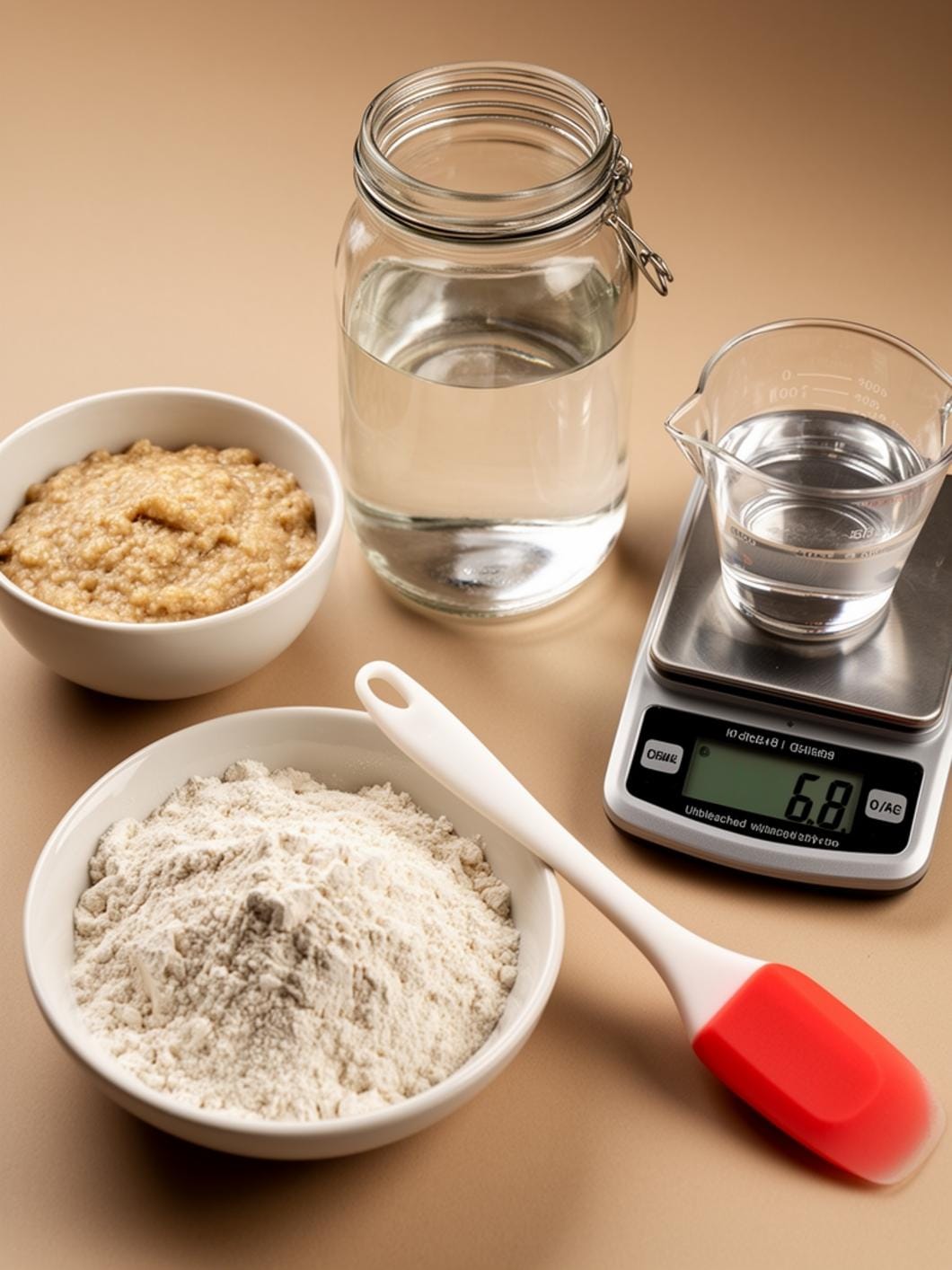
- Active sourdough starter (the one you’re trying to revive)
- Unbleached all-purpose flour or bread flour
- Filtered water (room temperature)
- A clean glass jar or container with a loose-fitting lid
- A kitchen scale for accurate measurements
- A rubber spatula or spoon for mixing
- A warm spot in your kitchen
For the flour, unbleached all-purpose flour is a great starting point, but bread flour can also provide extra protein which some starters thrive on. Avoid bleached flours as the chemicals can inhibit yeast activity. When it comes to water, filtered water is always best to avoid chlorine, which can harm your starter’s delicate ecosystem. If you don’t have filtered water, you can let tap water sit out for a few hours to allow the chlorine to dissipate. A kitchen scale is crucial for precise feeding ratios, which is a common reason for starter issues.
Time Needed From Start To Finish
While getting your starter active is an ongoing process, the hands-on time for troubleshooting is minimal.
- Observation Time: 1-2 hours (to see initial reactions after feeding)
- Active Troubleshooting Period: 2-5 days (to implement changes and observe consistent improvement)
- Total Time for Revival: This can vary, but typically within a week of consistent, correct feeding, you should see significant improvement in your starter’s activity.
How To Make It Step By Step With Visual Cues

Getting your sourdough starter back to its bubbly best involves a few key steps focusing on its environment and feeding routine.
- Assess Your Starter’s Current State: Before making changes, take a moment to observe your starter. Does it smell yeasty and slightly sour, or more like acetone or nail polish remover? Is it thin and watery, or thick and pasty? Is there any visible mold (which means it’s time to discard and start fresh)? This initial assessment will help guide your next steps.
- Ensure Proper Feeding Ratios: A common issue is incorrect feeding. For a strong starter, aim for a 1:1:1 ratio of starter:flour:water by weight. For example, if you keep 50 grams of starter, you would feed it with 50 grams of flour and 50 grams of water. Use a kitchen scale for accuracy. This ensures your starter has enough “food” to consume and grow.
- Use the Right Temperature Water: Cold water can slow down yeast activity. Always use room temperature (around 70-75°F / 21-24°C) filtered water when feeding your starter. If your kitchen is cold, slightly warmer water (not hot!) can help kickstart activity.
- Find a Warm Spot for Fermentation: Sourdough starters thrive in warm environments. If your kitchen is cool (below 70°F / 21°C), find a warmer spot. This could be near a sunny window (but not in direct sunlight), on top of your refrigerator, or in your oven with just the light on (make sure the oven is off!). A consistent warm temperature encourages yeast and bacteria to become more active.
- Feed Consistently and Frequently: If your starter is sluggish, try feeding it more frequently. For a very weak starter, feeding every 8-12 hours might be necessary until it becomes consistently active. Once it’s strong, you can usually go back to a 12-24 hour feeding schedule at room temperature. Don’t wait until it’s completely deflated before feeding.
- Discard Most of Your Starter Before Feeding: This is crucial. If you don’t discard, you’re essentially diluting the starter’s “food” and making it harder for the yeast to thrive. Keep only a small amount (e.g., 50 grams) and feed that small amount. This concentrates the active microorganisms and gives them ample food.
- Observe for Peaks and Bubbles: After feeding, watch your starter closely. A healthy, active starter will begin to show small bubbles within a few hours, then expand and rise, often doubling or tripling in size, before slowly deflating. The peak of its activity is when it’s strongest and ready to be used or fed again. If it’s not peaking, continue troubleshooting.
- Maintain Cleanliness: Always use clean jars and utensils. While a sourdough starter is a living culture, introducing unwanted bacteria from dirty equipment can hinder its progress. A quick wash between feedings is usually sufficient.
Easy Variations And Serving Ideas That Fit Real Life
While this article focuses on troubleshooting your sourdough starter, the ultimate goal is to use it for delicious baking! Once your starter is consistently active and bubbly, you’ll be ready to make a wide range of family-friendly recipes. Think beyond just a basic loaf of bread.
- Sourdough Pancakes or Waffles: Use your discard (the portion you remove before feeding) or a small amount of active starter to make incredibly fluffy and flavorful pancakes or waffles. This is a fantastic way to use up discard and introduce the tangy flavor to breakfast.
- Sourdough Pizza Dough: A strong starter makes an amazing pizza crust with a chewy texture and a hint of tang. It’s a fun family activity to make homemade pizza.
- Sourdough Biscuits: Light, flaky, and with that signature sourdough depth, these are perfect with dinner or for breakfast sandwiches.
- Sourdough Crackers: Another excellent way to use discard, these can be customized with various herbs and seeds for a healthy snack.
- Sourdough Focaccia: A simple, rustic bread that’s great for dipping in olive oil or serving alongside pasta dishes.
The beauty of a strong sourdough starter is its versatility. Once you’ve mastered its care, a world of delicious and healthy baked goods opens up to you.
Common Slip-Ups And How To Avoid Them
Even experienced bakers can run into issues with their sourdough starter. Knowing the common pitfalls can help you avoid them.
- Inconsistent Feeding Schedule: Your starter is a living organism that needs regular nourishment. Skipping feedings or feeding at irregular intervals can weaken it. Try to feed it around the same time each day (or every 12 hours if it’s very active).
- Using Too Much Starter: If you don’t discard enough before feeding, you’re essentially giving a small amount of food to a very large population of microorganisms. This leads to them running out of food too quickly and becoming sluggish. Always discard most of your starter, keeping only a small amount to feed.
- Cold Environment: Yeast activity slows down significantly in cold temperatures. If your kitchen is chilly, your starter will be slow to rise. Find a consistently warm spot to encourage activity.
- Using Chlorinated Water: Chlorine in tap water can inhibit the beneficial bacteria and yeast in your starter. Always use filtered water or let tap water sit out for several hours to allow the chlorine to dissipate.
- Not Enough Flour or Water: Incorrect feeding ratios can starve your starter or make it too watery. Always use a kitchen scale for precise measurements (1:1:1 starter:flour:water by weight is a great starting point).
- Impatience: Sourdough is a slow process. Don’t expect dramatic results overnight. It takes consistent care and observation to build a strong, active starter. Give it time, especially when troubleshooting.
- Airtight Container: While you want to keep your starter covered to prevent it from drying out, an airtight lid can prevent necessary gas exchange, which can hinder activity. A loose-fitting lid or a piece of cloth secured with a rubber band is ideal.
How To Store It And Make It Ahead Without Ruining Texture
Once

FAQs
- Can I make these ahead? Yes—prep ahead, refrigerate, then serve when ready.
- How long do leftovers last? Store covered in the fridge for 3–4 days for best texture.
- Can I adjust sweetness? Yes—add more or less sweetener to taste.
- Can I change the fruit? Yes—swap strawberries for blueberries, raspberries, or sliced banana.