
There’s nothing quite as satisfying as baking with a vibrant, active sourdough starter. It’s the heart of so many delicious recipes, from crusty loaves of bread to fluffy pancakes.

However, even the most dedicated bakers can sometimes find their starter looking a little sluggish, perhaps not rising as expected or developing that characteristic tangy aroma.
Don’t despair if your sourdough starter seems weak or inactive! This guide is designed to help you bring it back to life with simple, straightforward steps. We’ll cover practical feeding and care tips to ensure your starter is robust, bubbly, and ready to infuse your baking with incredible flavor.

How to Revive a Weak Sourdough Starter
- Total Time: 1-3 days
- Yield: 1 active sourdough starter
Description
This guide provides simple, straightforward steps to revive a weak or inactive sourdough starter, ensuring it becomes robust, bubbly, and ready for baking. It covers practical feeding and care tips, helping both novice and experienced bakers troubleshoot common issues and achieve consistent results.
Ingredients
Instructions
1. 1. Assess Your Starter’s Condition: Observe your starter for bubbles, smell (sour, yeasty, or nail polish remover), and the presence of hooch. A weak starter will have few bubbles, thin consistency, and possibly a strong smell or significant hooch.
2. 2. Discard Most of the Starter: Leave about 1-2 tablespoons (20-30 grams) of your weak starter in a clean glass jar. Discard more if you have a very large amount, ensuring enough remains to propagate.
3. 3. Feed with Equal Parts Flour and Water: For a standard feeding, add equal parts (by weight) of flour and water. For example, if you have 20 grams of starter, add 40 grams of unbleached all-purpose flour and 40 grams of filtered water. For very weak starters, consider a 1:2:2 or 1:3:3 ratio (starter:flour:water) for the first few feedings.
4. 4. Mix Thoroughly Until Combined: Use a spoon or spatula to mix the starter, flour, and water until thoroughly combined. Scrape down the sides of the jar to incorporate all dry flour. The mixture should be a thick, paste-like consistency, similar to pancake batter.
5. 5. Mark the Level and Place in a Warm Spot: Place a rubber band around the jar at the level of the freshly fed starter, or use a marker. Cover the jar loosely with a lid or plastic wrap. Place in a warm spot, ideally 75-80 F (24-27 C).
6. 6. Observe and Repeat Feeding: Check your starter every few hours for bubbles and a noticeable rise. A healthy starter doubles or triples in 4-8 hours. If activity is low, wait for some signs of life, then repeat steps 2-5. You may need to feed every 8-12 hours until it consistently doubles in 4-6 hours.
7. 7. Smell and Texture Cues: An active starter will have a pleasant, tangy, slightly sweet, and yeasty aroma, with a bubbly, airy texture. If it still smells strongly of acetone or is sluggish, continue feeding, potentially using the 1:2:2 or 1:3:3 ratio again.
8. 8. Confirm Readiness for Baking: Your starter is ready when it consistently doubles or triples in size within 4-6 hours after feeding, has a bubbly surface, and passes the “float test” (a small spoonful dropped into water floats).
- Prep Time: 5-10 minutes (per feeding)
- Cook Time: N/A
- Category: baking
- Method: fermentation
- Cuisine: american
Nutrition
- Serving Size: N/A
Keywords: sourdough, starter, revive, baking, fermentation, bread, yeast, troubleshooting, feeding, active
What You’ll Love About This Quick And Easy Recipe
This isn’t a recipe in the traditional sense, but rather a crucial guide for anyone who bakes with sourdough. You’ll love how quickly and effectively these methods can revive a weak starter, saving you time and ingredients you might otherwise waste on failed bakes. This information is perfect for both novice sourdough enthusiasts and experienced bakers who occasionally encounter a less-than-lively starter. It’s ideal for those moments when your starter isn’t performing its best, ensuring you can get back to baking delicious, family-friendly treats without delay. Knowing how to troubleshoot your starter means you’ll consistently achieve better results, leading to more satisfying baking experiences and less food waste.
Everything You Need To Make This Recipe Without Stress
Getting your sourdough starter back on track requires just a few basic items you likely already have in your kitchen. The key is consistency and using the right ingredients to nourish the wild yeasts and bacteria that make your starter so special.
INGREDIENTS:
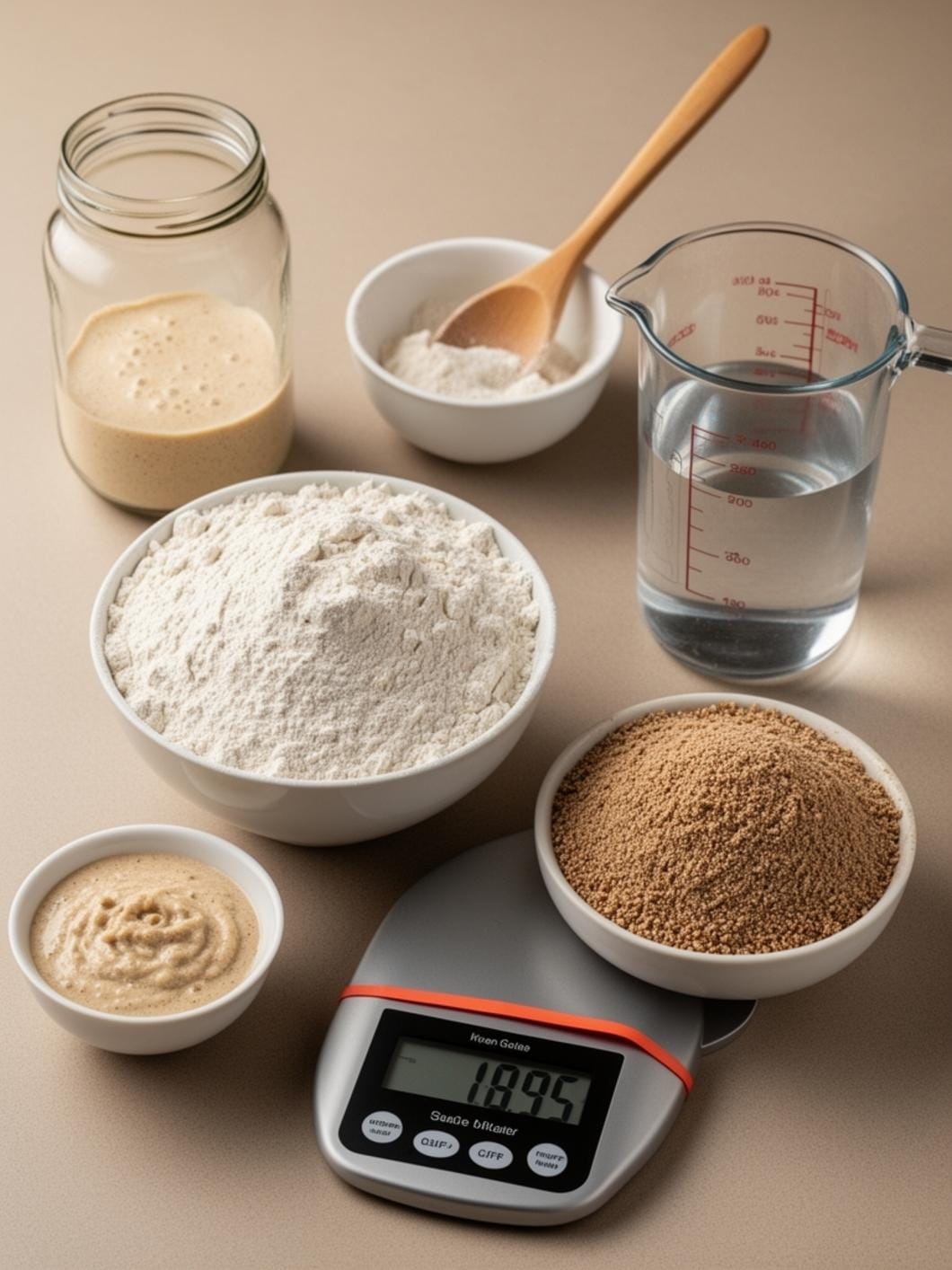
- Weak sourdough starter
- All-purpose flour (unbleached is preferred)
- Whole wheat flour (optional, for an extra boost)
- Filtered water (room temperature)
- Clean glass jar or container
- Spoon or spatula for mixing
- Kitchen scale (for precise measurements)
- Rubber band or marker (to track rise)
For the flour, unbleached all-purpose flour is generally recommended as it contains more natural nutrients for your starter. If your starter is particularly sluggish, incorporating a small amount of whole wheat flour can provide an extra boost of nutrients and microbes, helping to kickstart activity. Always use filtered water, as chlorine in tap water can inhibit yeast activity. If you don’t have filtered water, you can leave tap water out in an open container for a few hours to allow the chlorine to dissipate. A kitchen scale is highly recommended for accurate feeding ratios, which are critical for consistent starter health.
Time Needed From Start To Finish
Reviving a weak sourdough starter isn’t an instant fix, but the active time involved in feeding is minimal. The waiting period for your starter to become active again can vary.
Active Prep Time: 5-10 minutes (per feeding) Waiting Time for Activity: 4-12 hours (per feeding, depending on starter’s state and room temperature) Total Time for Revival: 1-3 days (with consistent feeding and observation)
The total time to fully revive your starter will depend on how weak it is initially and how consistently you feed it. Sometimes, one or two feedings are enough, while a very neglected starter might need several days of consistent care to regain its strength.
How To Make It Step By Step With Visual Cues

Bringing your sourdough starter back to life is a process of consistent, careful feeding. Follow these steps to encourage robust activity.
- Assess Your Starter’s Condition: Before you begin, observe your starter. Does it have any bubbles? Does it smell sour, yeasty, or like nail polish remover (which indicates it’s very hungry)? Is there a layer of dark liquid (hooch) on top? A weak starter might have little to no bubbles, a thin consistency, and possibly a strong, unpleasant smell or a significant layer of hooch.
- Discard Most of the Starter: To give your starter fresh food and reduce its acidity, you’ll need to discard a portion. Leave about 1-2 tablespoons (20-30 grams) of your weak starter in a clean glass jar. If you have a very large amount of weak starter, you can discard more, ensuring you leave enough to propagate.
- Feed with Equal Parts Flour and Water: For a standard feeding, you’ll feed your starter with equal parts (by weight) of flour and water. For example, if you left 20 grams of starter, add 40 grams of unbleached all-purpose flour and 40 grams of filtered water. If your starter is very weak, you might consider using a 1:2:2 ratio (1 part starter, 2 parts flour, 2 parts water) or even a 1:3:3 ratio for the first few feedings to give it a significant boost of new food.
- Mix Thoroughly Until Combined: Use a spoon or spatula to mix the starter, flour, and water thoroughly. Scrape down the sides of the jar to ensure all the dry flour is incorporated. The mixture should be a thick, paste-like consistency, similar to pancake batter. There should be no dry pockets of flour.
- Mark the Level and Place in a Warm Spot: Place a rubber band around the jar at the level of your freshly fed starter, or use a marker to draw a line. This will help you visually track its rise. Cover the jar loosely with a lid or plastic wrap (don’t seal it tightly, as gases need to escape). Place your starter in a warm spot in your kitchen, ideally between 75-80°F (24-27°C). A warm oven with the light on (but the oven off) can work, or near a sunny window.
- Observe and Repeat Feeding: Check your starter every few hours. You’re looking for signs of activity: bubbles forming on the surface and throughout the mixture, and a noticeable rise above your marked line. A healthy, active starter will typically double or triple in size within 4-8 hours after feeding. If you see activity, great! If not, wait until it shows *some* signs of life, then repeat steps 2-5. You may need to feed your starter every 8-12 hours until it consistently doubles in size within 4-6 hours after feeding.
- Smell and Texture Cues: As your starter becomes more active, it should develop a pleasant, tangy, slightly sweet, and yeasty aroma. The texture will be bubbly and airy. If it still smells strongly of acetone or is very sluggish after several feedings, continue the feeding process, perhaps trying the 1:2:2 or 1:3:3 ratio again.
- Confirm Readiness for Baking: Your sourdough starter is considered active and ready for baking when it consistently doubles or triples in size within 4-6 hours after feeding, has a bubbly surface, and passes the “float test” (a small spoonful dropped into water floats). At this point, it’s strong enough to leaven your bread!
Easy Variations And Serving Ideas That Fit Real Life
While this guide focuses on strengthening your starter, an active starter opens up a world of delicious possibilities for your family. Once your starter is robust, you can use it for:
- Classic Sourdough Bread: The most obvious use, yielding a flavorful, chewy loaf perfect for sandwiches or toast.
- Sourdough Pancakes or Waffles: Use your discard or a portion of your active starter for a tangy breakfast treat. These are always a hit with kids!
- Sourdough Pizza Dough: A fantastic way to add depth of flavor to homemade pizza night.
- Sourdough Biscuits or Crackers: Delicious and a great way to use up excess starter.
- Sourdough Discard Focaccia: Even your discard can be turned into a flavorful, easy-to-make bread.
For serving, think about pairing your sourdough creations with simple, wholesome foods. Fresh bread is wonderful with butter, olive oil and balsamic, or alongside a hearty soup. Sourdough pancakes are excellent with fresh fruit and maple syrup. The beauty of a strong starter is its versatility, allowing you to easily incorporate fermented goodness into many family meals.
Common Slip-Ups And How To Avoid Them
Even with the best intentions, reviving a sourdough starter can have its challenges. Knowing what to watch out for can save you frustration.
- Using Chlorinated Water: Chlorine can kill the beneficial microbes in your starter. Always use filtered water or let tap water sit out for several hours to allow the chlorine to dissipate. This is a very common mistake for beginners.
- Inconsistent Feeding Schedule: A weak starter needs consistent nourishment. Skipping feedings or feeding at irregular intervals can hinder its recovery. Try to stick to a schedule, even if it’s just once a day initially.
- Not Discarding Enough: If you don’t discard a significant portion of your starter before feeding, you’re essentially diluting the food and making it harder for the microbes to thrive. Discarding ensures that the remaining microbes get a fresh, concentrated meal.
- Too Cold Environment: Sourdough starters thrive in warmth. If your kitchen is too cold, your starter will be sluggish. Find a warm spot, like on top of your refrigerator, in an oven with the light on, or in a

FAQs
- Can I make these ahead? Yes—prep ahead, refrigerate, then serve when ready.
- How long do leftovers last? Store covered in the fridge for 3–4 days for best texture.
- Can I adjust sweetness? Yes—add more or less sweetener to taste.
- Can I change the fruit? Yes—swap strawberries for blueberries, raspberries, or sliced banana.