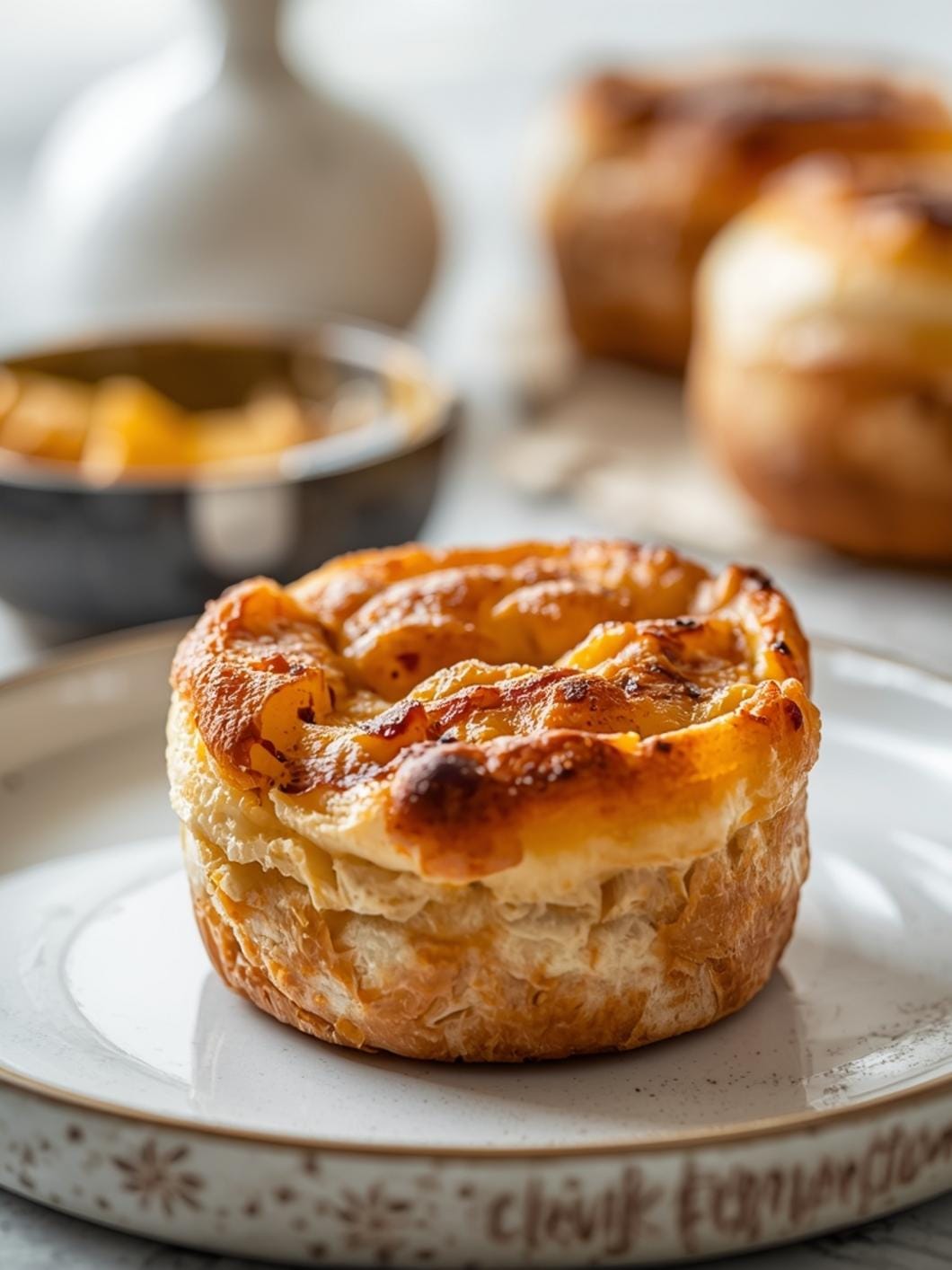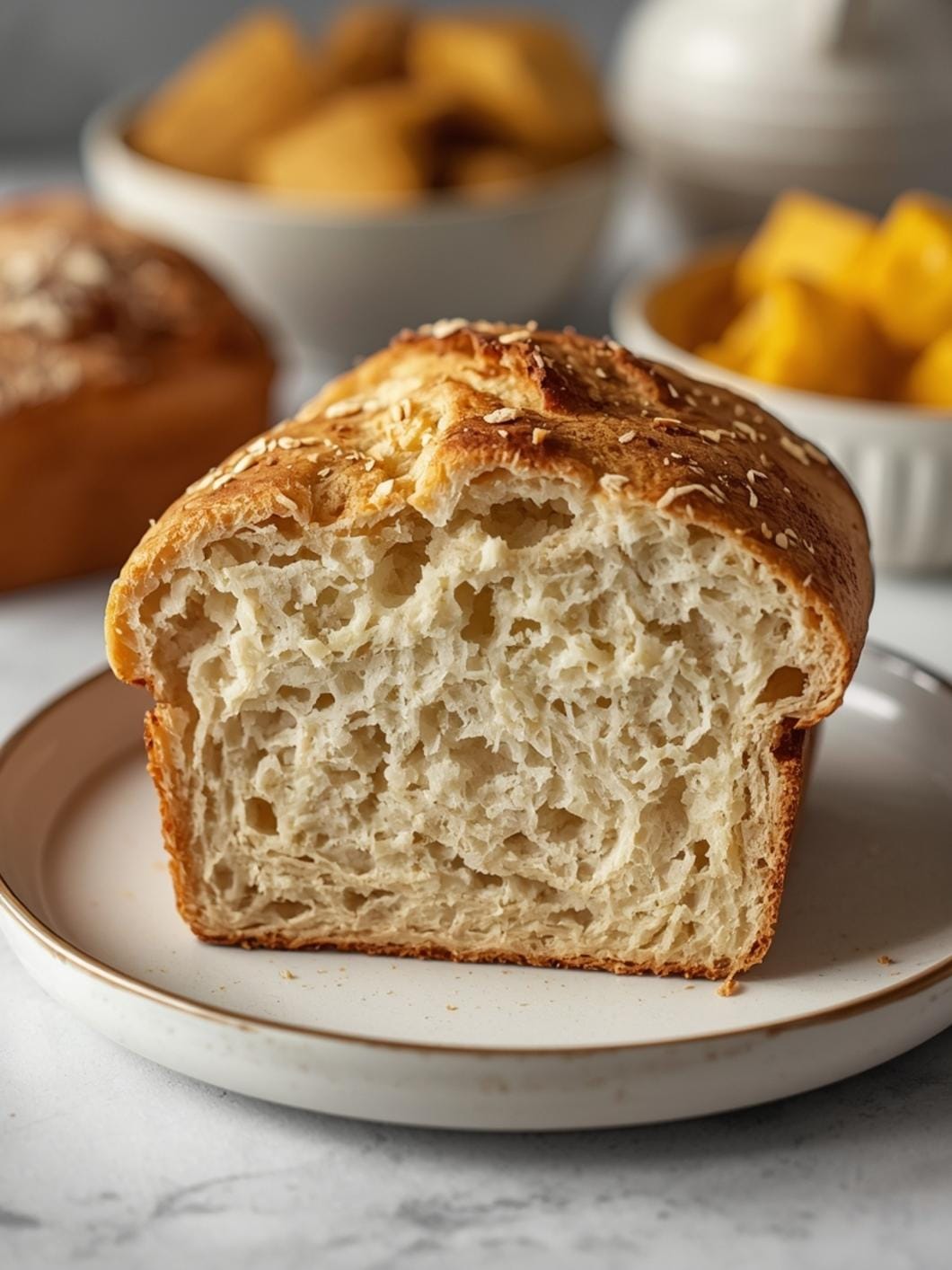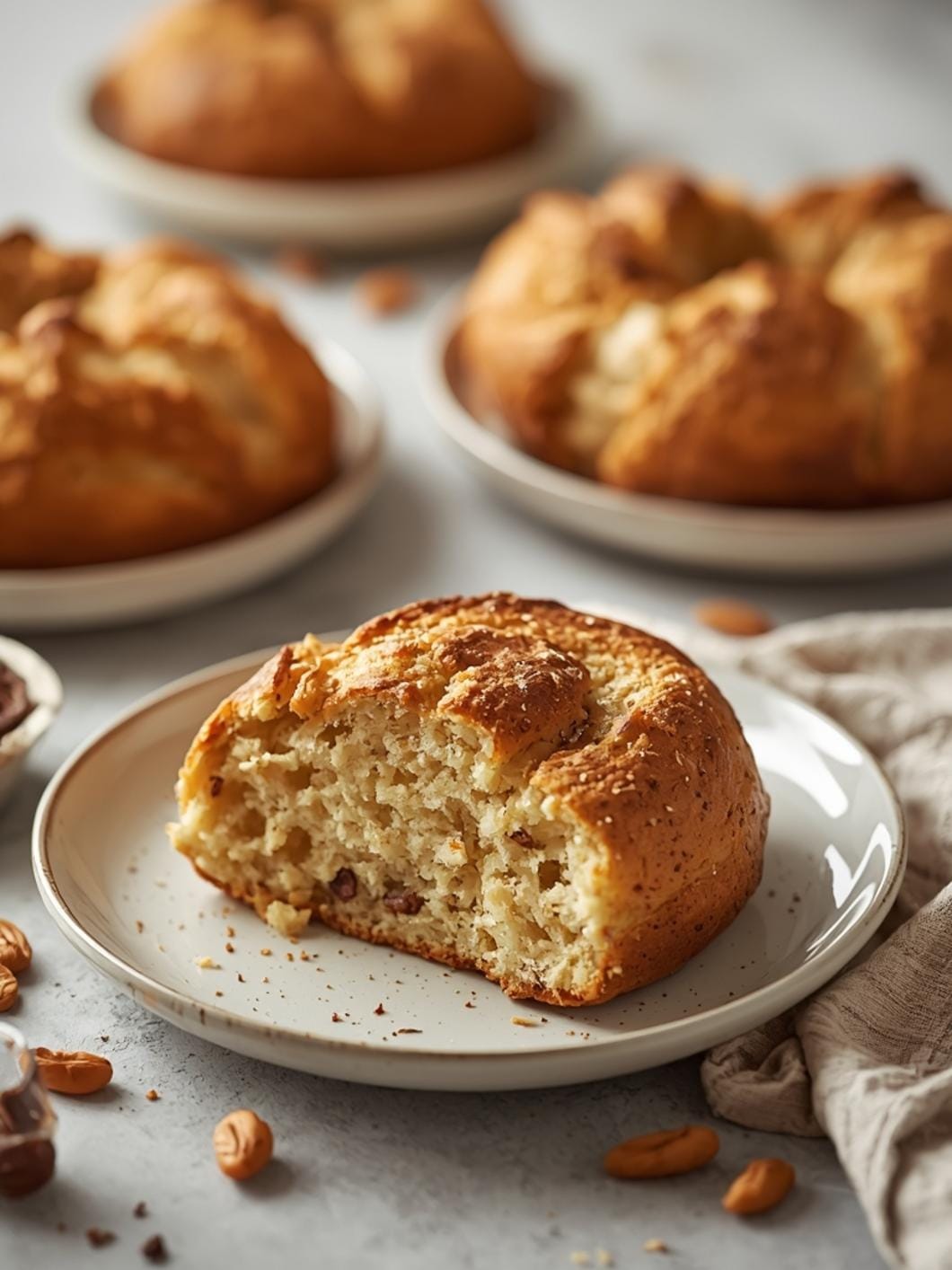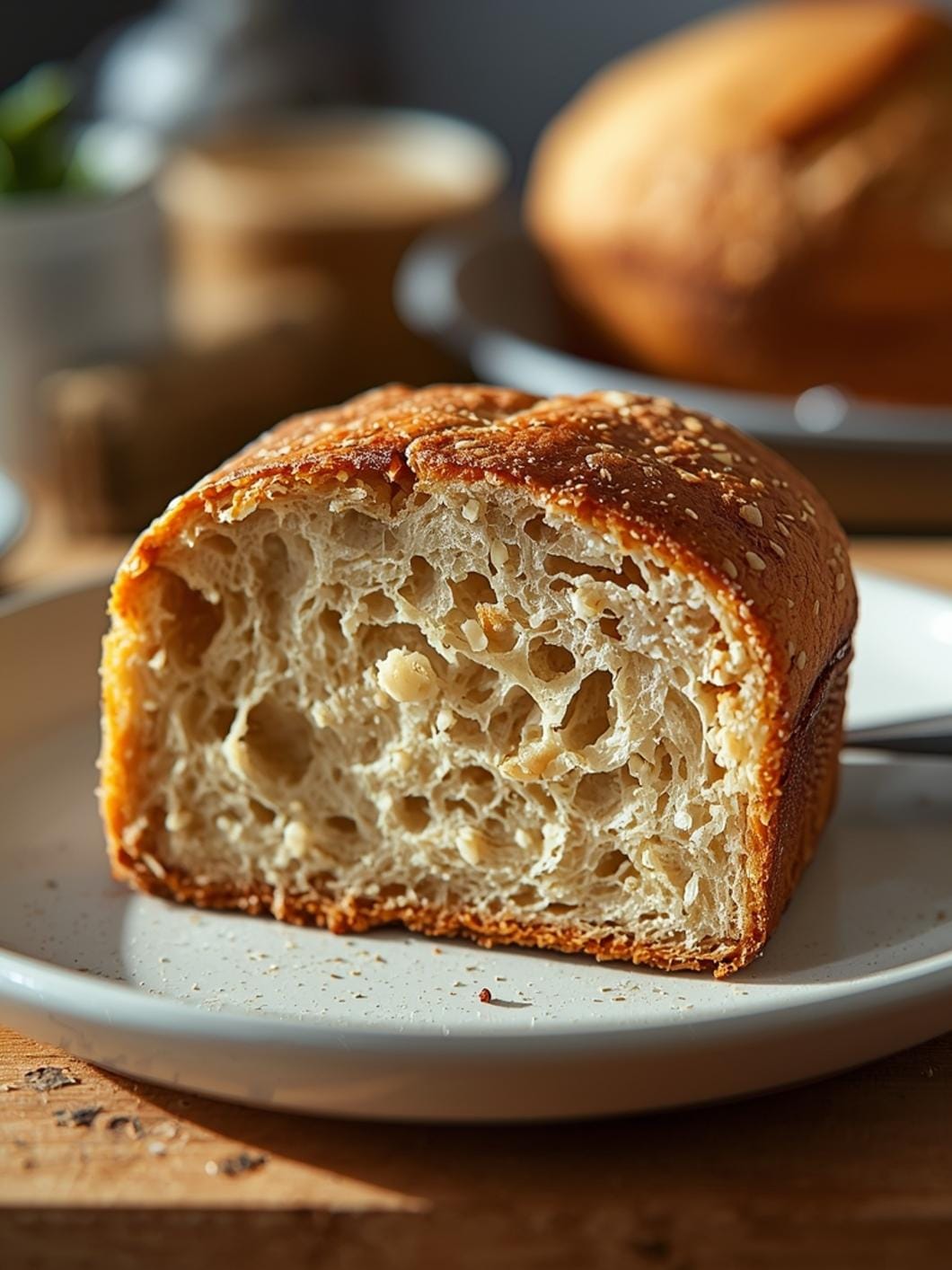

There’s something incredibly comforting about a warm bowl of soup, and when that bowl is edible, it takes the experience to a whole new level.
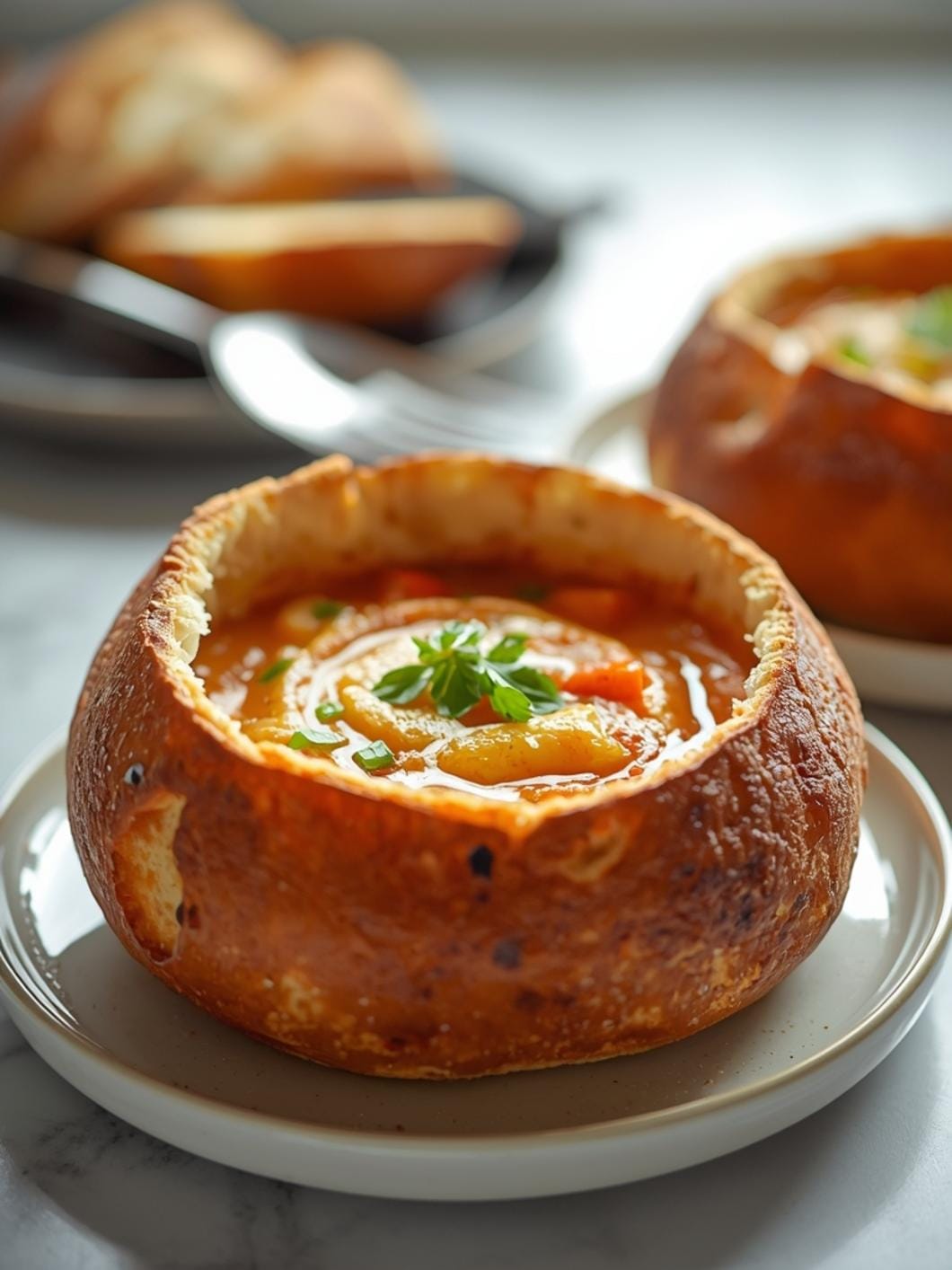
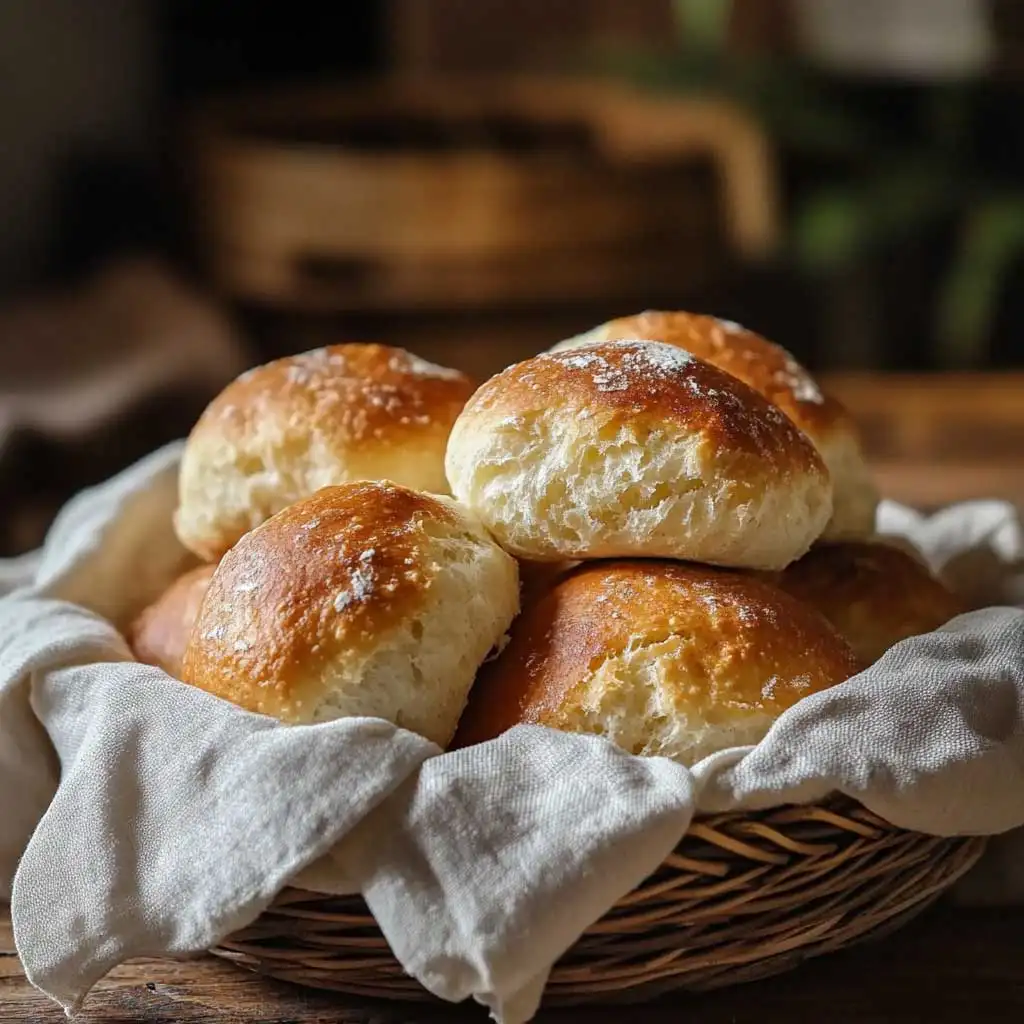
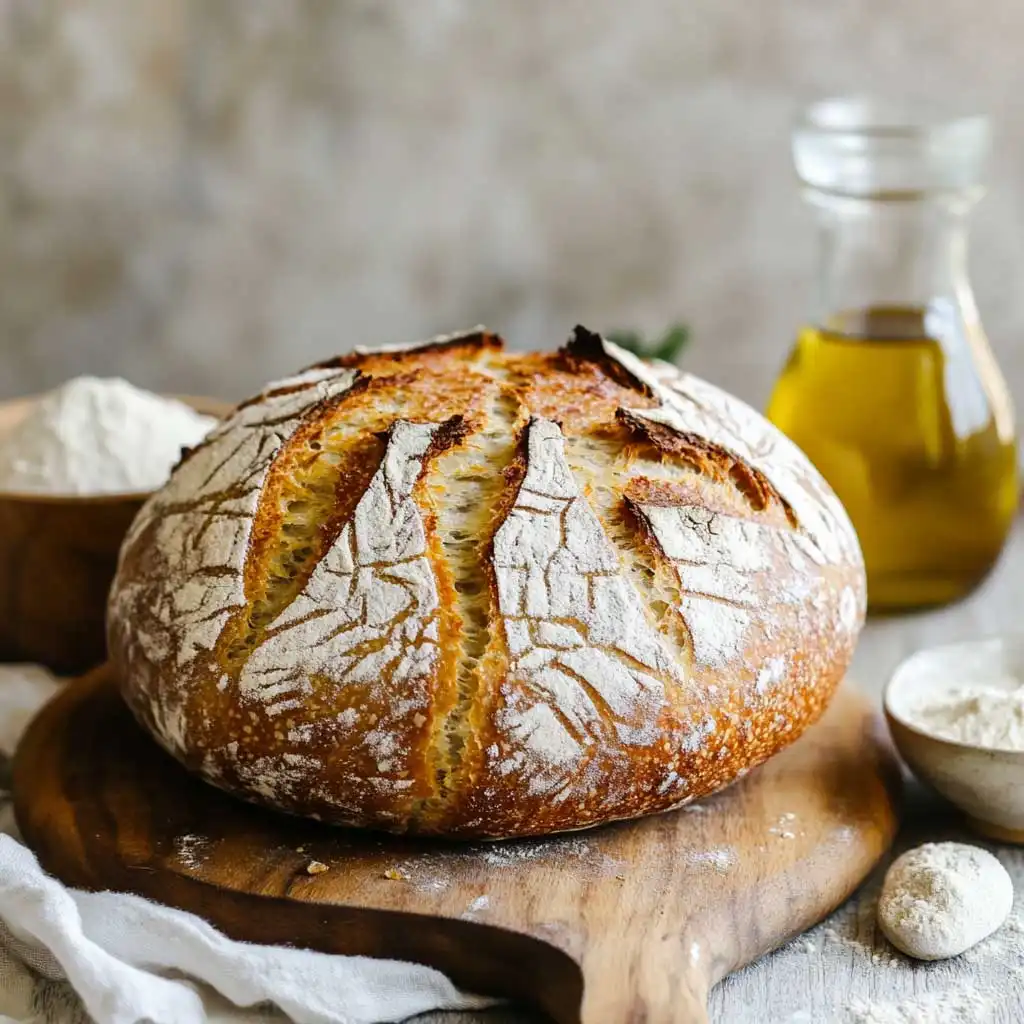
These thick crust sourdough bread bowls are designed to be the perfect vessel for your favorite hearty stews and creamy chowders. They’re sturdy enough to hold up to a delicious filling while offering a wonderfully chewy texture and that signature sourdough tang.
Making your own bread bowls might sound intimidating, but this recipe breaks it down into simple, manageable steps. You’ll end up with beautifully rustic, flavorful bowls that are far superior to anything store-bought. Get ready to impress your family and friends with this delightful and practical way to serve soup!
Table of Contents
- What You’ll Love About This Quick And Easy Recipe
- Everything You Need To Make This Recipe Without Stress
- Time Needed From Start To Finish
- How To Make It Step By Step With Visual Cues
- Easy Variations And Serving Ideas That Fit Real Life
- Common Slip-Ups And How To Avoid Them
- How To Store It And Make It Ahead Without Ruining Texture

Sourdough Bread Bowls
- Total Time: 11-17 hours
- Yield: 4-6 bread bowls 1x
Description
These thick crust sourdough bread bowls are designed to be the perfect vessel for your favorite hearty stews and creamy chowders. They’re sturdy enough to hold up to a delicious filling while offering a wonderfully chewy texture and that signature sourdough tang. Making your own bread bowls might sound intimidating, but this recipe breaks it down into simple, manageable steps. You’ll end up with beautifully rustic, flavorful bowls that are far superior to anything store-bought. Get ready to impress your family and friends with this delightful and practical way to serve soup!
Ingredients
Instructions
1. Prepare the Dough: In a large mixing bowl, combine the active sourdough starter, warm water, sugar, and salt. Stir until the starter is mostly dissolved. Gradually add the bread flour, mixing with a wooden spoon or your hands until a shaggy dough forms. Turn the dough out onto a lightly floured surface and knead for about 5-7 minutes until it’s smooth and elastic.
2. First Rise (Bulk Fermentation): Lightly grease your large mixing bowl with olive oil. Place the kneaded dough in the bowl, turning it once to coat. Cover the bowl tightly with plastic wrap or a damp kitchen towel. Let the dough rise at room temperature (around 70-75 F) for 8-12 hours, or until it has doubled in size. This can also be done overnight.
3. Divide and Shape the Bowls: Gently punch down the risen dough to release the air. Turn it out onto a lightly floured surface. Divide the dough into 4-6 equal pieces, depending on your desired bread bowl size. For each piece, gently form it into a tight ball by pulling the edges underneath and pinching them together at the bottom.
4. Second Rise (Proofing): Lightly dust a baking sheet with cornmeal (if using) or line it with parchment paper. Arrange the shaped dough balls on the prepared baking sheet, leaving ample space between them. Cover loosely with plastic wrap or a damp towel and let them rise in a warm spot for 2-4 hours, or until they look visibly puffy and have increased in size by about 50%.
5. Preheat Oven and Score: About 30 minutes before baking, preheat your oven to 425 F (220 C). If you have a baking stone or Dutch oven, place it in the oven to preheat as well. Just before baking, use a sharp knife or a bread lame to score the top of each dough ball with a simple “X” or a few parallel lines. This helps the bread expand evenly.
6. Bake the Bread Bowls: Carefully transfer the baking sheet to the preheated oven. If using a baking stone, you can slide the bread bowls directly onto it. Bake for 30-35 minutes, or until the crust is deeply golden brown and sounds hollow when tapped on the bottom. For an extra crispy crust, you can place a pan of hot water on the bottom rack of your oven during the first 15 minutes of baking to create steam.
7. Cool and Hollow Out: Once baked, transfer the bread bowls to a wire rack to cool completely. This is crucial for the internal structure to set. Once cool, use a serrated knife to carefully cut a lid off the top of each bread bowl. Scoop out the soft interior bread, leaving a thick crust (about 1/2 to 3/4 inch thick) to hold your soup. Reserve the scooped-out bread for dipping or croutons.
- Prep Time: 20 minutes
- Cook Time: 30-35 minutes
- Category: main dish
- Method: baking
- Cuisine: american
Nutrition
- Serving Size: 1 bread bowl
Keywords: sourdough, bread bowls, soup, homemade, baking, comfort food, edible bowls, rustic, easy, dinner
What You’ll Love About This Quick And Easy Recipe
This recipe is a true gem for anyone who enjoys the satisfying flavor of sourdough and the convenience of an edible serving dish. You’ll adore how these bread bowls transform a simple soup meal into a special occasion without requiring advanced baking skills. They’re perfect for family dinners, casual get-togethers, or even a cozy night in. The sturdy crust ensures your soup stays contained, while the soft, tangy interior is ideal for soaking up every last drop. It’s a fantastic way to use your sourdough starter and elevate any soup, from a classic chili to a creamy broccoli cheddar. Plus, the process, while requiring a bit of time for rising, is largely hands-off, making it suitable for busy home cooks who appreciate homemade goodness.
Everything You Need To Make This Recipe Without Stress
Gathering your ingredients before you begin will make the baking process smooth and enjoyable. Most of these items are likely already in your pantry if you’re a sourdough baker, making this a convenient recipe to whip up.
INGREDIENTS:
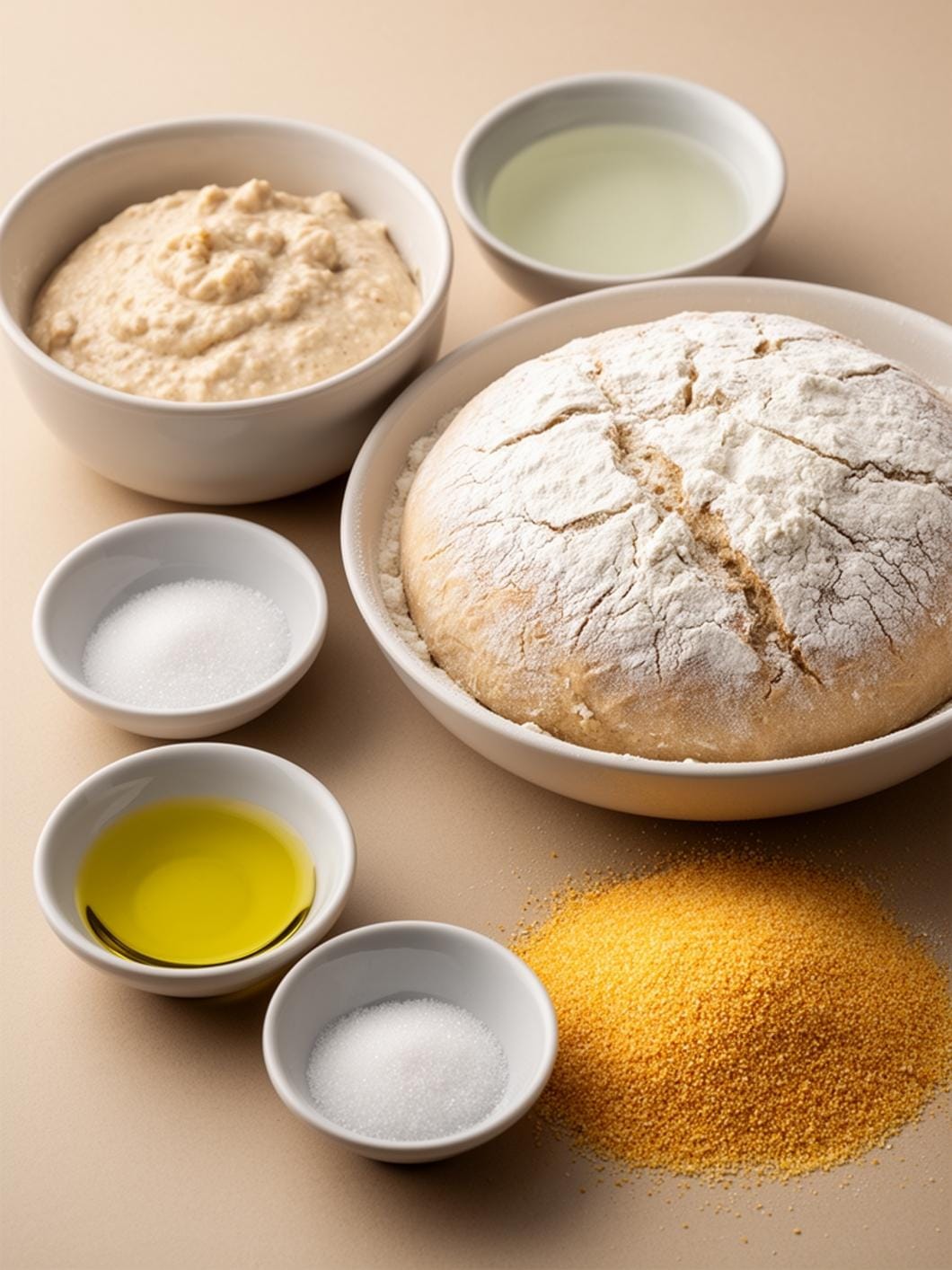
- 1 cup active sourdough starter (fed and bubbly)
- 1 ½ cups warm water (around 95-105°F)
- 1 tablespoon granulated sugar
- 2 teaspoons fine sea salt
- 5 cups bread flour, plus more for dusting
- 2 tablespoons olive oil, plus more for greasing
- Cornmeal, for dusting (optional)
For the bread flour, you can use any good quality bread flour available at your local grocery store. It has a higher protein content than all-purpose flour, which helps create that desirable chewy texture and sturdy crust essential for a bread bowl. If you don’t have bread flour, all-purpose flour can be used in a pinch, but the texture might be slightly less robust. The olive oil helps with the dough’s elasticity and adds a subtle flavor; any neutral oil can be substituted if needed. Active sourdough starter is key here – ensure it’s been fed recently and is showing signs of activity (bubbles, increased volume) for the best rise.
Time Needed From Start To Finish
While sourdough baking does involve waiting for the dough to rise, the hands-on time for these bread bowls is surprisingly minimal, making them a rewarding project.
- Prep Time: 20 minutes (mixing dough, initial shaping)
- Bulk Fermentation (First Rise): 8-12 hours (or overnight)
- Second Rise (Proofing): 2-4 hours
- Bake Time: 30-35 minutes
- Total Time: Approximately 11-17 hours (mostly passive waiting)
How To Make It Step By Step With Visual Cues
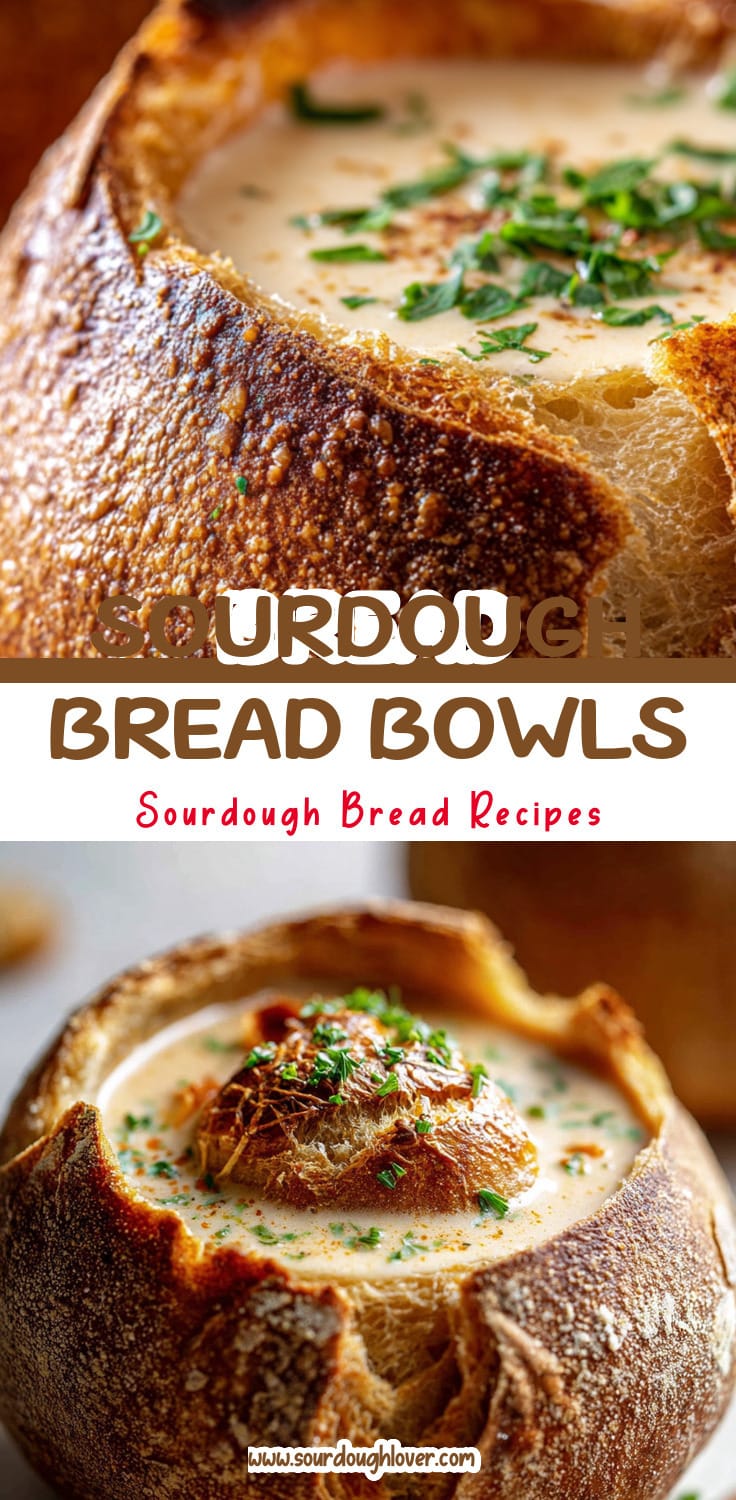
Creating these robust sourdough bread bowls is a process of patience and simple steps. Follow these instructions carefully for the best results.
- Prepare the Dough: In a large mixing bowl, combine the active sourdough starter, warm water, sugar, and salt. Stir until the starter is mostly dissolved. Gradually add the bread flour, mixing with a wooden spoon or your hands until a shaggy dough forms. Turn the dough out onto a lightly floured surface and knead for about 5-7 minutes until it’s smooth and elastic.
- First Rise (Bulk Fermentation): Lightly grease your large mixing bowl with olive oil. Place the kneaded dough in the bowl, turning it once to coat. Cover the bowl tightly with plastic wrap or a damp kitchen towel. Let the dough rise at room temperature (around 70-75°F) for 8-12 hours, or until it has doubled in size. This can also be done overnight.
- Divide and Shape the Bowls: Gently punch down the risen dough to release the air. Turn it out onto a lightly floured surface. Divide the dough into 4-6 equal pieces, depending on your desired bread bowl size. For each piece, gently form it into a tight ball by pulling the edges underneath and pinching them together at the bottom.
- Second Rise (Proofing): Lightly dust a baking sheet with cornmeal (if using) or line it with parchment paper. Arrange the shaped dough balls on the prepared baking sheet, leaving ample space between them. Cover loosely with plastic wrap or a damp towel and let them rise in a warm spot for 2-4 hours, or until they look visibly puffy and have increased in size by about 50%.
- Preheat Oven and Score: About 30 minutes before baking, preheat your oven to 425°F (220°C). If you have a baking stone or Dutch oven, place it in the oven to preheat as well. Just before baking, use a sharp knife or a bread lame to score the top of each dough ball with a simple “X” or a few parallel lines. This helps the bread expand evenly.
- Bake the Bread Bowls: Carefully transfer the baking sheet to the preheated oven. If using a baking stone, you can slide the bread bowls directly onto it. Bake for 30-35 minutes, or until the crust is deeply golden brown and sounds hollow when tapped on the bottom. For an extra crispy crust, you can place a pan of hot water on the bottom rack of your oven during the first 15 minutes of baking to create steam.
- Cool and Hollow Out: Once baked, transfer the bread bowls to a wire rack to cool completely. This is crucial for the internal structure to set. Once cool, use a serrated knife to carefully cut a lid off the top of each bread bowl. Scoop out the soft interior bread, leaving a thick crust (about 1/2 to 3/4 inch thick) to hold your soup. Reserve the scooped-out bread for dipping or croutons.
Easy Variations And Serving Ideas That Fit Real Life
These sourdough bread bowls are incredibly versatile and can be adapted to suit various tastes and occasions.
For a fun twist, consider adding some mix-ins to your dough during the kneading stage. A handful of shredded cheddar cheese and a sprinkle of dried chives would make a savory bowl perfect for a potato or broccoli cheddar soup. For a slightly different flavor profile, try incorporating a tablespoon of dried Italian herbs or a teaspoon of garlic powder into the flour.
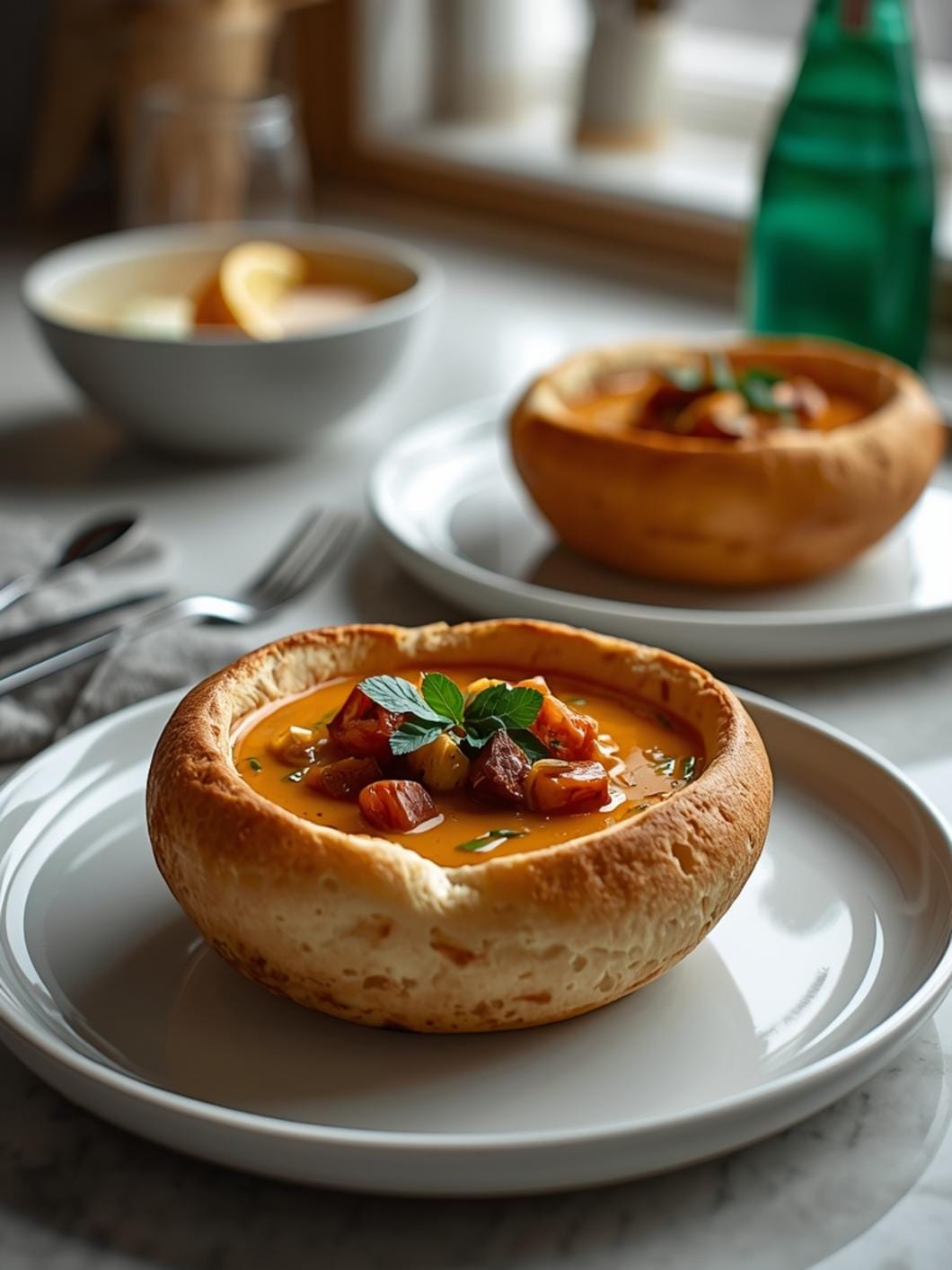
These bowls are, of course, designed for soup! They are fantastic with hearty stews like beef stew, chicken and dumpling soup, or a thick lentil soup. Creamy soups such as clam chowder, tomato bisque, or a rich mushroom soup are also excellent choices. For a kid-friendly meal, fill smaller bread bowls with mac and cheese or a mild chili. Don’t forget to serve the scooped-out bread alongside for dipping! They also make a wonderful presentation for a buffet-style meal, allowing guests to choose their soup and their edible bowl.
Common Slip-Ups And How To Avoid Them
Even experienced bakers can encounter small challenges, but knowing what to look out for can save you a lot of trouble.
One common mistake is using an inactive sourdough starter. If your starter isn’t bubbly and active, your dough won’t rise properly, resulting in dense, heavy bread bowls. Always feed your starter 4-12 hours before you plan to bake and ensure it’s at its peak activity. Another slip-up is not allowing enough time for the rises. Rushing the bulk fermentation or the proofing stage will lead to underdeveloped flavor and a less airy crumb. Sourdough requires patience; let the dough tell you when it’s ready, not the clock.
Over-kneading or under-kneading can also affect the final texture. If the dough is too sticky and doesn’t hold its shape, it might be under-kneaded. If it’s very stiff and difficult to work with, it could be over-kneaded. Aim for a smooth, elastic dough that springs back slightly when poked. Finally, make sure your oven is properly preheated before baking. A cold oven can negatively impact the initial oven spring, leading to flatter bread bowls.
How To Store It And Make It Ahead Without Ruining Texture
These sourdough bread bowls are best enjoyed fresh, but you can certainly prepare them in advance or store leftovers.
To store baked and cooled bread bowls that haven’t been filled, place them in an airtight container or a large zip-top bag at room temperature for up to 2-3 days. For longer storage, you can freeze them. Wrap each cooled bread bowl tightly in plastic wrap, then in aluminum foil, and place in a freezer-safe bag. They will keep in the freezer for up to 3 months. To reheat from frozen, unwrap and bake at 350°F (175°C)
FAQs
- Can I make these ahead? Yes—prep ahead, refrigerate, then serve when ready.
- How long do leftovers last? Store covered in the fridge for 3–4 days for best texture.
- Can I adjust sweetness? Yes—add more or less sweetener to taste.
- Can I change the fruit? Yes—swap strawberries for blueberries, raspberries, or sliced banana.