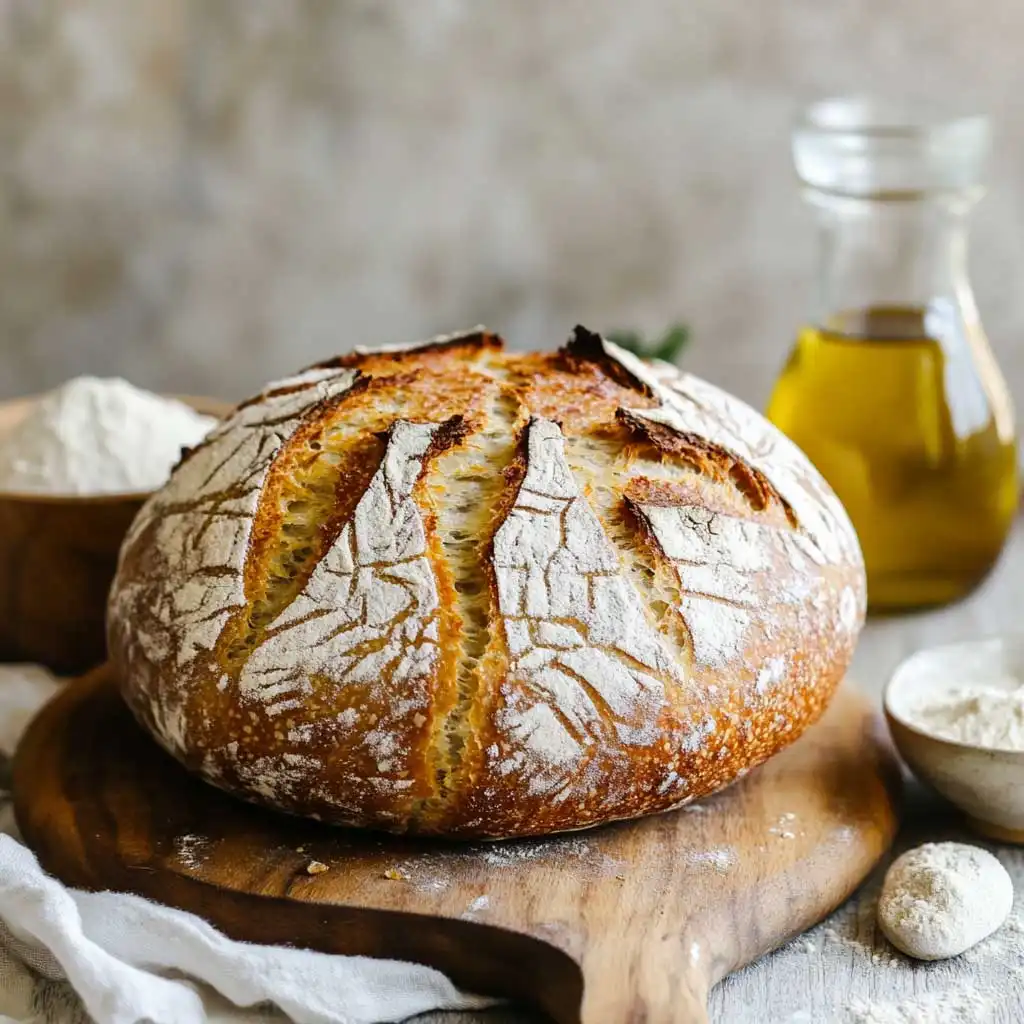

Get ready to bake a truly remarkable loaf of bread with minimal effort! This no-knead cranberry walnut sourdough bread offers the best of both worlds: the tangy depth of sourdough combined with the sweet-tart burst of cranberries and the satisfying crunch of walnuts. It’s a rustic, artisan-style loaf that looks impressive but is incredibly simple to achieve.
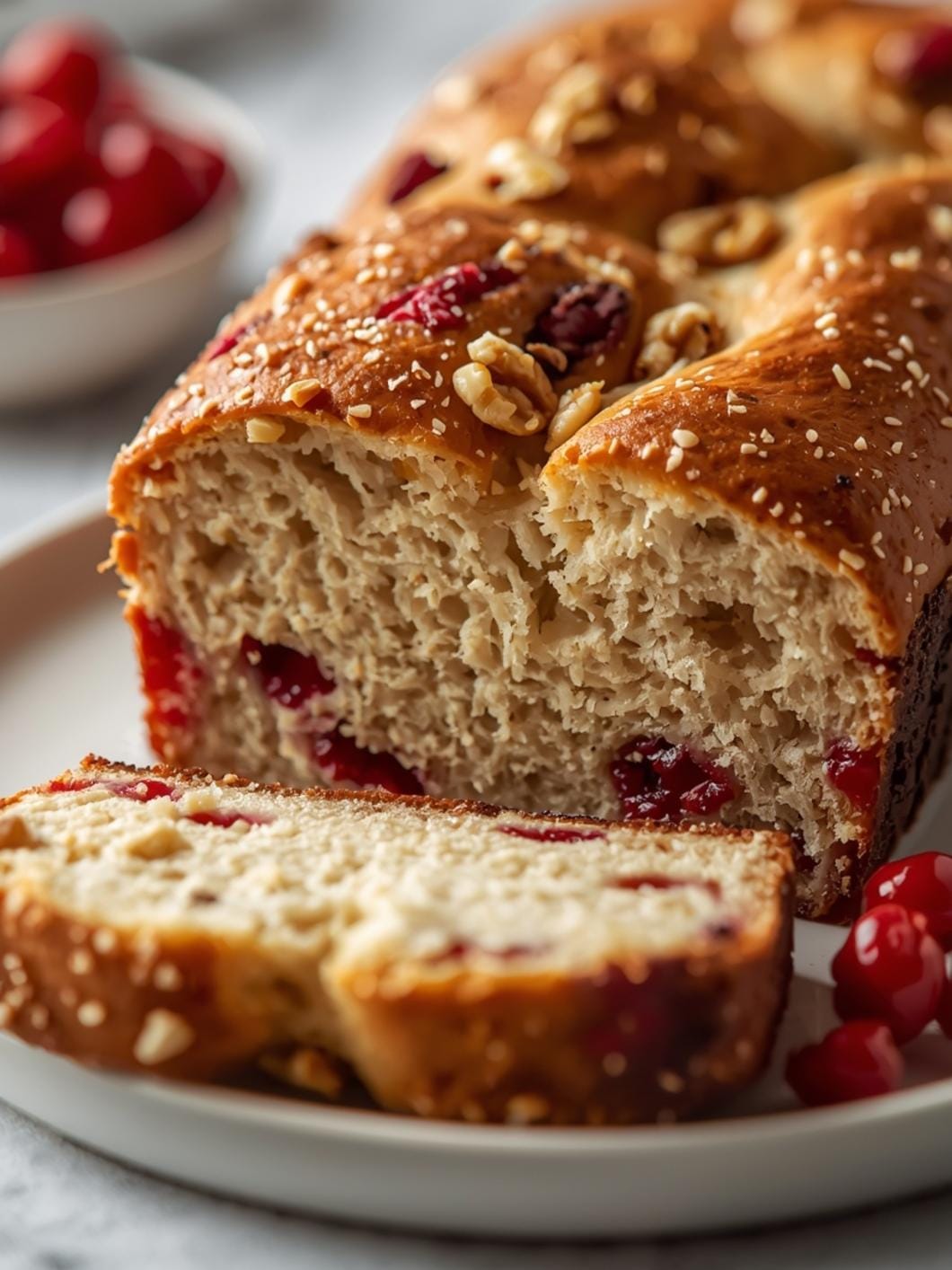
Imagine slicing into a beautiful, golden-brown crust to reveal a soft, chewy interior studded with vibrant cranberries and hearty walnuts. This recipe is designed for busy home bakers who crave that homemade bread experience without the fuss of traditional kneading, making it perfect for a cozy breakfast, a delightful snack, or even as a unique addition to your dinner table.
Table of Contents
- What You’ll Love About This Quick And Easy Recipe
- Everything You Need To Make This Recipe Without Stress
- Time Needed From Start To Finish
- How To Make It Step By Step With Visual Cues
- Easy Variations And Serving Ideas That Fit Real Life
- Common Slip-Ups And How To Avoid Them
- How To Store It And Make It Ahead Without Ruining Texture

No-Knead Cranberry Walnut Sourdough Bread
- Total Time: 14-21 hours (mostly inactive)
- Yield: 1 loaf 1x
Description
This no-knead cranberry walnut sourdough bread offers the best of both worlds: the tangy depth of sourdough combined with the sweet-tart burst of cranberries and the satisfying crunch of walnuts. It’s a rustic, artisan-style loaf that looks impressive but is incredibly simple to achieve, perfect for busy home bakers.
Ingredients
Instructions
1. 1. Combine Dry Ingredients: In a large bowl, whisk together the all-purpose flour, salt, and instant yeast until well combined. This ensures even distribution of the yeast throughout the dough.
2. 2. Mix Wet Ingredients and Form Dough: In a separate medium bowl, gently whisk together the active sourdough starter and warm water. Pour the wet mixture into the dry ingredients. Using a wooden spoon or your hands, mix until a shaggy, sticky dough forms and all the flour is incorporated. Do not overmix; a few dry spots are fine.
3. 3. Add Inclusions and First Rise: Gently fold in the dried cranberries and chopped walnuts until they are evenly distributed. Cover the bowl tightly with plastic wrap or a damp kitchen towel. Let the dough rise at room temperature (around 68-72F) for 12-18 hours, or until it has doubled in size and looks bubbly. The exact time will depend on the temperature of your kitchen and the activity of your starter.
4. 4. Shape the Loaf: Lightly flour a clean work surface. Gently scrape the dough out of the bowl onto the floured surface. Using floured hands, gently shape the dough into a round or oval loaf. Avoid deflating it too much.
5. 5. Second Rise (Proofing): Place the shaped dough into a floured proofing basket (banneton) or a bowl lined with a floured kitchen towel, seam-side up. Cover loosely with plastic wrap or a towel and let it rise for another 1-2 hours, or until it looks puffy and springs back slowly when gently poked.
6. 6. Preheat Oven and Dutch Oven: About 30 minutes before baking, place a Dutch oven with its lid into your oven and preheat to 450 F (232 C). Getting the Dutch oven very hot is crucial for a great crust.
7. 7. Bake the Bread: Carefully remove the hot Dutch oven from the oven. Gently invert the proofed dough into the hot Dutch oven. If desired, score the top of the dough with a sharp knife or razor blade. Cover with the lid and bake for 30 minutes.
8. 8. Finish Baking: Remove the lid from the Dutch oven and continue baking for another 15-20 minutes, or until the crust is deeply golden brown and the internal temperature reaches 200-210 F (93-99 C).
9. 9. Cool Completely: Carefully remove the bread from the Dutch oven and transfer it to a wire rack to cool completely before slicing. This step is vital for the crumb to set properly and prevent a gummy texture.
- Prep Time: 15 minutes
- Cook Time: 45-50 minutes
- Category: bread
- Method: baking
- Cuisine: american
Nutrition
- Serving Size: 1 slice
Keywords: sourdough, no-knead, cranberry, walnut, bread, artisan, homemade, easy, breakfast, snack
What You’ll Love About This Quick And Easy Recipe
This no-knead cranberry walnut sourdough bread is a game-changer for anyone who loves the taste of artisan bread but doesn’t have hours to dedicate to baking. It’s perfect for beginners because the “no-knead” method means you simply mix the ingredients, let time do the work, and then bake. There’s no complicated technique or heavy lifting involved. The long fermentation time (mostly hands-off) develops incredible flavor and a wonderful chewy texture, which is a hallmark of great sourdough. You’ll adore the rustic, crackly crust and the soft, airy crumb inside. It’s an ideal bread to serve at brunch, alongside a cheese board, or simply toasted with a smear of butter. It also makes a fantastic edible gift for friends and family.
Everything You Need To Make This Recipe Without Stress
Making this delicious bread requires just a few basic ingredients, most of which you likely already have in your pantry. The beauty of this recipe lies in its simplicity, proving that you don’t need a long list of specialty items to create something truly extraordinary.
INGREDIENTS:
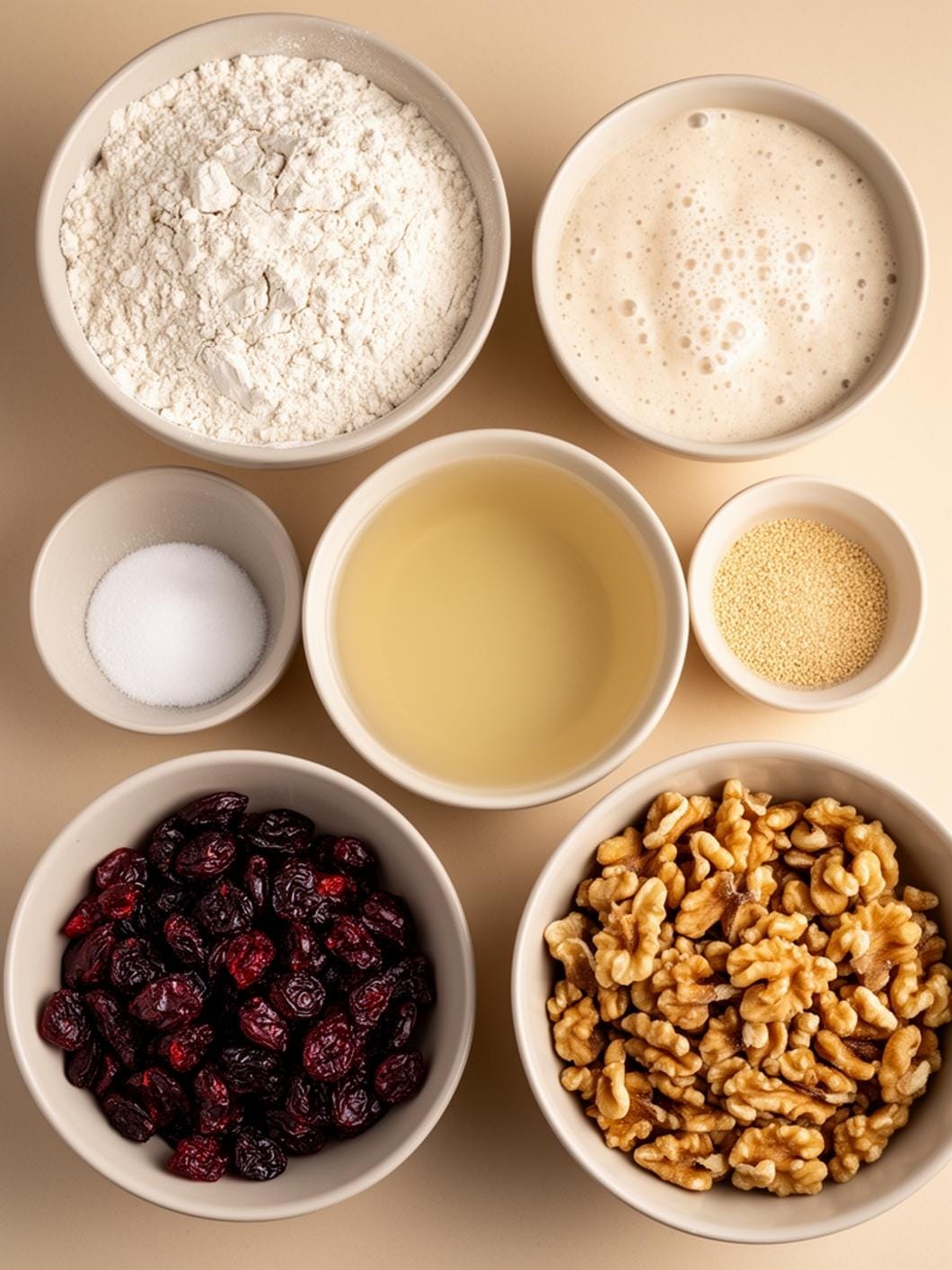
- 3 3/4 cups all-purpose flour
- 1 1/2 teaspoons salt
- 1/2 teaspoon instant yeast
- 1 cup active sourdough starter, fed and bubbly
- 1 1/2 cups warm water (around 100-110°F)
- 1 cup dried cranberries
- 1 cup chopped walnuts
For the flour, all-purpose works wonderfully here, but you could also use bread flour for a slightly chewier crumb. If you prefer a richer flavor, a small portion of whole wheat flour (about 1/4 cup) can be substituted for some of the all-purpose flour, but be aware it might absorb a bit more liquid, so adjust accordingly. For the dried cranberries, you can use sweetened or unsweetened, depending on your preference. Other dried fruits like chopped dried cherries or raisins would also be lovely if you want to experiment with different flavor profiles. As for the walnuts, feel free to use pecans or even a mix of nuts if you like. Just ensure they are roughly chopped to distribute evenly throughout the dough.
Time Needed From Start To Finish
The beauty of a no-knead recipe is that while the total time from start to finish might seem long, most of it is hands-off fermentation.
Prep Time: 15 minutes First Rise (Bulk Fermentation): 12-18 hours (at room temperature) Second Rise (Proofing): 1-2 hours Bake Time: 45-50 minutes Total Time: Approximately 14-21 hours (mostly inactive)
How To Make It Step By Step With Visual Cues
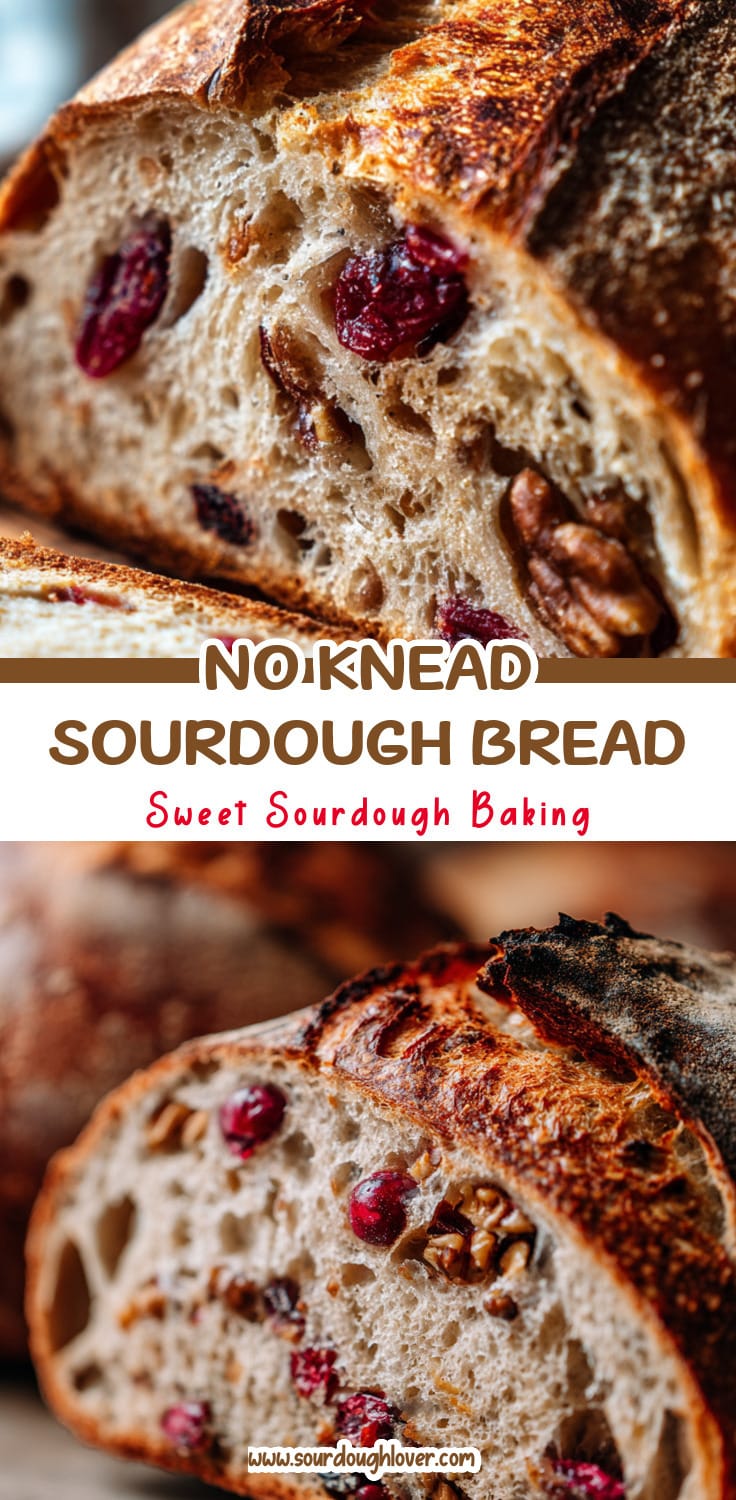
Creating this beautiful cranberry walnut sourdough loaf is a straightforward process. Follow these steps for a perfect bake every time.
- Combine Dry Ingredients: In a large bowl, whisk together the all-purpose flour, salt, and instant yeast until well combined. This ensures even distribution of the yeast throughout the dough.
- Mix Wet Ingredients and Form Dough: In a separate medium bowl, gently whisk together the active sourdough starter and warm water. Pour the wet mixture into the dry ingredients. Using a wooden spoon or your hands, mix until a shaggy, sticky dough forms and all the flour is incorporated. Do not overmix; a few dry spots are fine.
- Add Inclusions and First Rise: Gently fold in the dried cranberries and chopped walnuts until they are evenly distributed. Cover the bowl tightly with plastic wrap or a damp kitchen towel. Let the dough rise at room temperature (around 68-72°F) for 12-18 hours, or until it has doubled in size and looks bubbly. The exact time will depend on the temperature of your kitchen and the activity of your starter.
- Shape the Loaf: Lightly flour a clean work surface. Gently scrape the dough out of the bowl onto the floured surface. Using floured hands, gently shape the dough into a round or oval loaf. Avoid deflating it too much.
- Second Rise (Proofing): Place the shaped dough into a floured proofing basket (banneton) or a bowl lined with a floured kitchen towel, seam-side up. Cover loosely with plastic wrap or a towel and let it rise for another 1-2 hours, or until it looks puffy and springs back slowly when gently poked.
- Preheat Oven and Dutch Oven: About 30 minutes before baking, place a Dutch oven with its lid into your oven and preheat to 450°F (232°C). Getting the Dutch oven very hot is crucial for a great crust.
- Bake the Bread: Carefully remove the hot Dutch oven from the oven. Gently invert the proofed dough into the hot Dutch oven. If desired, score the top of the dough with a sharp knife or razor blade. Cover with the lid and bake for 30 minutes.
- Finish Baking: Remove the lid from the Dutch oven and continue baking for another 15-20 minutes, or until the crust is deeply golden brown and the internal temperature reaches 200-210°F (93-99°C).
- Cool Completely: Carefully remove the bread from the Dutch oven and transfer it to a wire rack to cool completely before slicing. This step is vital for the crumb to set properly and prevent a gummy texture.
Easy Variations And Serving Ideas That Fit Real Life
This cranberry walnut sourdough bread is incredibly versatile and can be adapted to suit various tastes and occasions. For a sweeter loaf, consider adding 1-2 tablespoons of honey or maple syrup to the wet ingredients. If you’re looking for a different flavor profile, swap out the cranberries for dried cherries, golden raisins, or even a mix of dried berries. You could also add a teaspoon of orange zest along with the cranberries for a brighter, citrusy note.
This bread is fantastic on its own, but it truly shines when paired with certain foods. It’s wonderful toasted for breakfast, topped with cream cheese, butter, or even a dollop of ricotta and a drizzle of honey. For a more savory approach, it makes an excellent base for an open-faced sandwich with turkey and brie, or alongside a hearty soup or stew. It’s also a beautiful addition to a holiday cheese board, where the sweet and nutty flavors complement a variety of cheeses and charcuterie. Kids often enjoy it simply with butter or as a side to their morning eggs.
Common Slip-Ups And How To Avoid Them
Even with a simple recipe like this, a few common pitfalls can occur. Knowing how to avoid them will ensure your bread turns out perfectly every time.
One frequent mistake is not allowing enough time for the first rise (bulk fermentation). The sourdough starter needs time to work its magic, developing flavor and structure. If your kitchen is cool, it might take longer than 18 hours. Look for visual cues: the dough should be noticeably larger, bubbly, and jiggle slightly when the bowl is moved. Rushing this step will result in a dense loaf with less flavor.
Another common issue is over-handling the dough during shaping. With no-knead bread, the goal is to preserve as much of the air bubbles created during fermentation as possible. Be gentle when transferring the dough and shaping it; a light touch is key.
Not preheating the Dutch oven adequately can lead to a less crispy crust. The intense heat from the preheated pot creates steam, which is essential for that beautiful, crackly crust. Ensure your oven and Dutch oven have had at least 30 minutes to reach the target temperature.
Finally, slicing the bread before it has cooled completely is a common mistake. While tempting, cutting into hot bread can result in a gummy, doughy texture inside. The bread continues to cook and set as it cools, so patience here will be rewarded with the best possible crumb.
How To Store It And Make It Ahead Without Ruining Texture
Proper storage is key to keeping your cranberry walnut sourdough bread fresh and delicious. Once completely cooled, store the loaf at room temperature in an airtight container, a bread box, or a paper bag inside a plastic bag. This helps maintain its crust and prevents it from drying out. It will stay fresh for 3-4 days.
For longer storage, this bread freezes beautifully. Once completely cooled, slice the loaf and place the slices in a single layer on a baking sheet to freeze for about an hour. Once firm, transfer the frozen slices to a freezer-safe bag or container.
FAQs
- Can I make these ahead? Yes—prep ahead, refrigerate, then serve when ready.
- How long do leftovers last? Store covered in the fridge for 3–4 days for best texture.
- Can I adjust sweetness? Yes—add more or less sweetener to taste.
- Can I change the fruit? Yes—swap strawberries for blueberries, raspberries, or sliced banana.